The Two-Surface Audit – Where to Start
Before you create new content, audit what you already have. The instinct when traffic drops is to cut underperforming content. But a page that lost Google visibility might be cited regularly by ChatGPT.
The Two-Surface Decision Matrix
| Google Performance | LLM Visibility | Decision |
|---|---|---|
| Strong | Strong | Maintain and protect |
| Declining | Strong | Enhance (don't cut!) |
| Weak | Weak | Cut or consolidate |
| Weak | Strong | Keep for LLM value |
Example: A glossary with 600+ terms may have been de-indexed by Google, but 50-80 of those terms could be cited consistently in AI responses. Cutting the entire section would eliminate that LLM visibility.
Step 3: The 12-Step Framework for Quality AI Content
Creating AI-generated content that actually attracts traffic requires structure, not just prompts. Here's a proven framework:
| Step | Action | Why It Matters |
|---|---|---|
| 1. Idea | Pick specific topic and goal | Focus drives quality |
| 2. Sources & Brief | Gather strong source material, set rules | Garbage in, garbage out |
| 3. Validate | Check source credibility | AI trusts authoritative sources |
| 4. Summarize | Pull useful material from each source | Focus on facts, not filler |
| 5. Outline | Create clear article structure | AI needs hierarchy |
| 6. Draft | Generate full article from outline | Execution |
| 7. Edit | Critique draft against brief | Quality control |
| 8. Plagiarism | Compare draft against sources | Originality matters |
| 9. No AI-speak | Ensure natural reading flow | Human readers detect AI slop |
| 10. Optimize | Optimize for search + AI discovery | Dual-surface performance |
| 11. Grade | Score against steps 7-10 | Accountability |
| 12. Refresh Trigger | Set review date | Recency is a ranking signal |
"AI has lowered the cost of producing content. It has not lowered the standard required to compete."
Step 4: GEO (Generative Engine Optimization) – The New Playbook
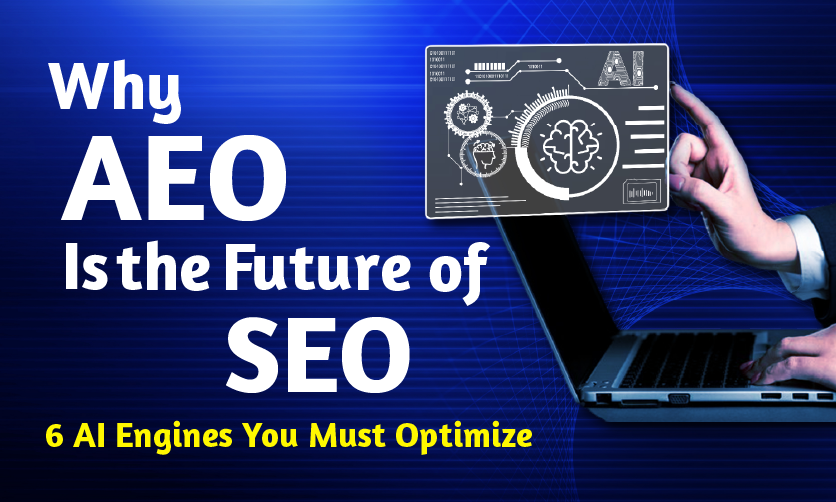
GEO is the practice of optimizing content to be cited by AI-powered search engines. The goal shifts from ranking on a page to being the source the AI references.
GEO vs. Traditional SEO
| Factor | SEO | GEO |
|---|---|---|
| Primary Target | SERP position | AI-generated answer |
| Key Signals | Backlinks, keywords | Mentions, authority, context |
| Success Metric | Click-through rate | Citation rate |
| Optimization Focus | Technical SEO, link building | Entity authority, digital PR |
Six GEO Strategies That Work in 2026
1. Use Structured Data (Schema) to Tell AI Who You Are
Schema markup (Organization, Person, Product, FAQ, HowTo) helps AI systems understand your content's meaning. SameAs properties explicitly tell search engines that your website represents the same entity as your LinkedIn, Crunchbase, and verified social profiles.
2. Build Topical Authority with Topic Clusters
AI evaluates topical depth, not just keyword coverage. Create pillar pages (comprehensive guides) supported by multiple deep-dive articles on related subtopics. Internal linking between them signals authority.
3. Optimize for E-E-A-T – Especially "Experience"
Google's E-E-A-T framework (Experience, Expertise, Authoritativeness, Trustworthiness) now directly influences AI citation. The hardest signal for AI to replicate is genuine Experience: original data, first-person insights, and verifiable methodology.
4. Leverage Earned Media (PR)
Over 95% of AI citations come from non-paid media. Over 27% are journalistic content. AI systems trust third-party sources more than self-promotional content. PR isn't optional for GEO—it's central.
5. Use Recency as a Ranking Signal
AI models prioritize current data to avoid hallucinations. Content published or updated within the last 12 months is significantly more likely to be cited than stale evergreen content.
6. Structure Content for Machine Readability
AI models extract information efficiently from Q&A formats. State the answer directly after the heading. Use bullet points. Lead with the conclusion, then provide supporting detail.
Step 5: The Hybrid Workflow – Humans + AI
The most successful content programs in 2026 use systematic hybrid workflows:
| Phase | AI Role | Human Role |
|---|---|---|
| Research | Keyword clustering, competitor analysis | Strategic prioritization |
| Outline | Generate structure from data | Brand voice, messaging |
| Draft | First draft at scale | Strategic editing, storytelling |
| Optimize | SEO/GEO recommendations | Final approval |
| Measure | Performance tracking | Strategy refinement |
Efficiency gains:
| Task | Traditional | AI-Assisted | Time Saved |
|---|---|---|---|
| Keyword Research | 8-12 hours | 2-3 hours | 70% |
| Outline Creation | 4-6 hours | 1-2 hours | 67% |
| First Draft | 6-8 hours | 1-2 hours | 75% |
| Performance Analysis | 4-5 hours | 30 minutes | 85% |
Step 6: Real Case Study – Smartling's AIO Transformation
When Smartling's content program collapsed, they rebuilt it with a product-led AIO strategy combining SME interviews, AI-assisted brief creation, and human editorial oversight.
Results after 24 months:
| Metric | Change |
|---|---|
| Organic blog traffic | +118% |
| Blog conversions | +31,250% |
| New sales pipeline | $3.7M estimated |
The key wasn't replacing humans with AI. It was using AI to scale what already worked—while keeping human judgment at the center.
Step 7: Measuring What Matters in 2026
Traditional metrics (clicks, rankings) no longer tell the full story. You need a three-dimensional scorecard:
The 2026 Content Scorecard
| Dimension | What to Track | Why |
|---|---|---|
| Mentions | Does AI mention your brand in responses? | Topical authority |
| Citations | Is your content quoted as a source? | Credibility signal |
| Sentiment | How does AI characterize your brand? | Brand perception |
| Share of Model | How often does AI recommend you vs competitors? | Competitive position |
How to Track LLM Visibility
-
Run standardized prompt sets related to your industry through ChatGPT, Perplexity, and Claude
-
Record whether your brand appears in outputs
-
Vary phrasing to pressure-test how different models retrieve your information
-
Run this test monthly to establish baselines
Step 8: Implementation Roadmap – 90 Days
| Phase | Focus | Key Actions |
|---|---|---|
| Days 1-30: Audit | Two-surface assessment | Run LLM prompt tests; identify underperforming pages; prioritize enhancement candidates |
| Days 31-60: Enhance | Strategic updates | Refresh key pillar content; add structured data; strengthen E-E-A-T signals |
| Days 61-90: Launch | New content | Create entity relationship pages; deploy GEO-optimized content; measure baseline |
Quick Start Checklist
Week 1
-
Claim all brand profiles (Google Business Profile, LinkedIn, Crunchbase)
-
Add SameAs schema markup pointing to verified profiles
-
Run LLM prompt tests for top 10 buyer intent queries
Week 2
-
Audit top 50 pages for E-E-A-T signals
-
Add named authors with verifiable credentials
-
Update stale content (refresh stats, add recent examples)
Week 3
-
Create or update pillar pages for core topics
-
Build supporting content clusters
-
Implement internal linking between pillar and cluster content
Week 4
-
Secure 3-5 earned media mentions in target publications
-
Monitor LLM citation changes
-
Establish baseline metrics for ongoing tracking
Step 9: Common Pitfalls and How to Avoid Them
| Pitfall | Why It Fails | The Fix |
|---|---|---|
| Cutting content based only on Google data | Pages with LLM visibility get deleted unnecessarily | Run two-surface audit before cutting |
| Forcing every piece to perform on both surfaces | Produces content mediocre on both | Know which job each piece is doing |
| Treating GEO as SEO 2.0 | AI citation requires different signals than ranking | Build earned media, entity authority, recency |
| No refresh schedule | Stale content loses citation value | Set quarterly review dates for key pages |
| Measuring only clicks | Misses LLM value entirely | Track mentions, citations, sentiment |
Step 10: Frequently Asked Questions
Q1: What's the difference between SEO and GEO in 2026?
SEO optimizes for traditional search engine rankings (blue links). GEO optimizes for AI-generated answers (brand mentions, citations). They work together but require different signals.
Q2: How do I know if my content is being cited by AI?
Run standardized prompt sets through ChatGPT, Perplexity, and Claude. Record whether your brand appears in responses. Some platforms (AthenaHQ, Muck Rack Generative Pulse) offer automated tracking.
Q3: What's the most important signal for AI citation?
Earned media. Over 95% of AI citations come from non-paid sources. Journalistic content accounts for over 27%. PR is central to GEO strategy.
Q4: Can small businesses compete with larger brands in AI search?
Yes. GEO levels the playing field by prioritizing context and credibility over backlink volume. A small brand with genuine expertise and high-context mentions can outrank a larger competitor with weak authority signals.
Q5: How often should I refresh content for AI visibility?
AI models prioritize recency. Content updated within the last 12 months is significantly more likely to be cited. Set quarterly review dates for key pillar content.
Q6: Can I use AI to write content that AI will cite?
Yes, with the right framework. The 12-step process above produces AI-assisted content that performs on both surfaces. The key is human oversight at every stage—validation, editing, strategic direction.
Q7: How can Innovative AI Solutions help?
We help businesses build and implement AI content strategies—from two-surface audits and GEO implementation to hybrid workflow design and performance measurement.
Step 11: Final Tagline
"AI has lowered the cost of producing content. It has not lowered the standard required to compete. The brands winning in 2026 aren't abandoning SEO for GEO. They're auditing both surfaces and making decisions with complete information."
Short version:
How to build an AI content strategy that drives organic traffic in 2026 – two-surface audits, GEO strategies, hybrid human-AI workflows, and 90-day implementation roadmap.
Hashtags:
#AIContent #ContentStrategy #GEO #SEO #GenerativeEngineOptimization #DigitalMarketing #InnovativeAISolutions
Ready to Transform Your Content Strategy?
You don't need to choose between SEO and GEO. You need a strategy that works on both surfaces.
Contact Us
Phone: +91 7464 099 059 / +91 96899 67356
Email: info@innovativeais.com
Address: Netaji Subhash Place, Pitampura, Delhi – 110034
Website: https://innovativeais.co
Related services: to apply this in your business, explore our LLM integration and RAG development.