Why AI Needs Cloud
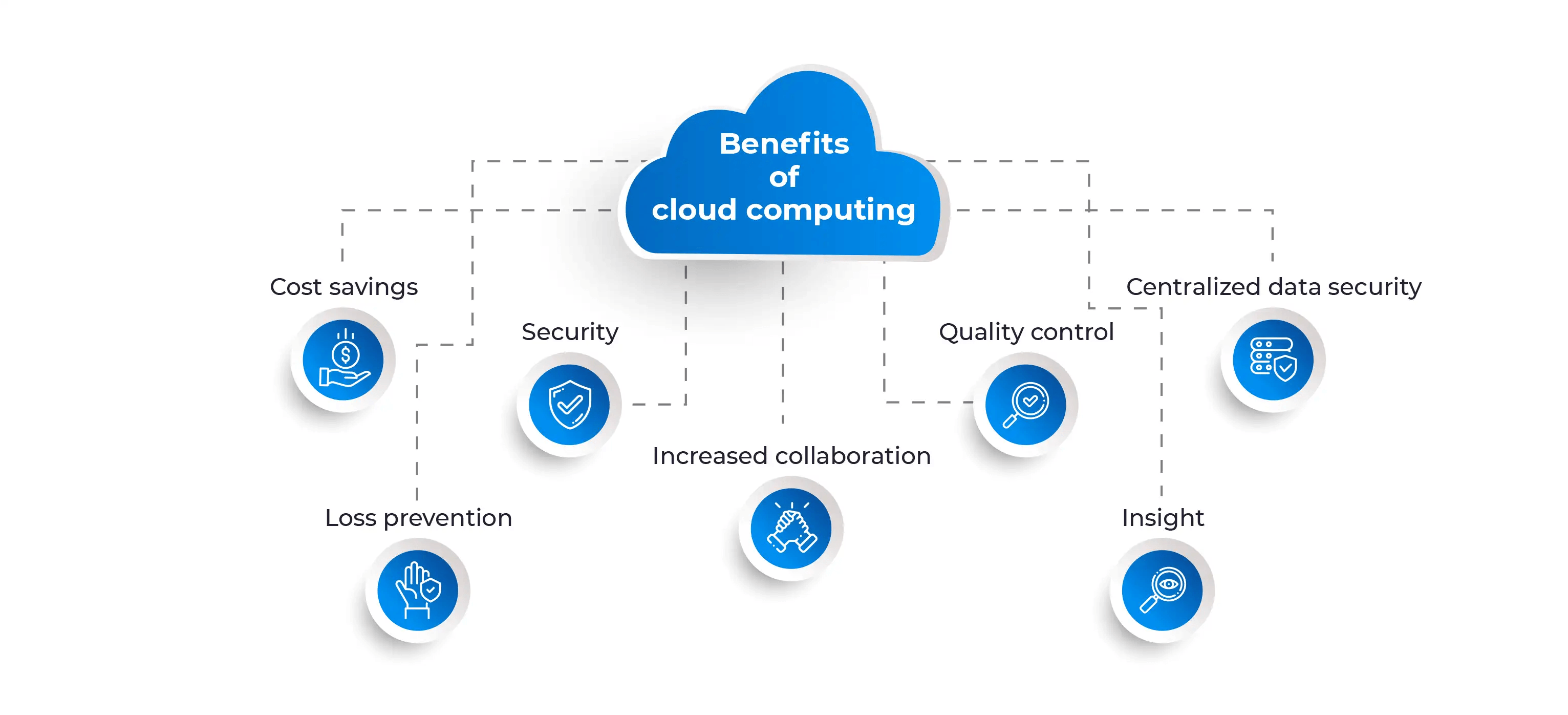
AI is computationally expensive. Training a large language model requires thousands of specialized chips running for weeks or months. The compute cost alone runs into millions of dollars. No single organization could afford to build this infrastructure for itself. The cloud makes it accessible.
| AI Requirement | Cloud Solution | Why It Matters |
|---|---|---|
| Massive compute | On-demand GPU and TPU clusters | Train models without buying hardware |
| Elastic scaling | Auto-scaling inference endpoints | Handle traffic spikes without overprovisioning |
| Global reach | Cloud regions worldwide | Serve customers with low latency anywhere |
| Data storage | Petabyte-scale data lakes | Store and process training data at scale |
| Continuous availability | 99.99 percent uptime SLAs | Keep AI services running 24/7 |
| Cost efficiency | Pay-per-use pricing | Experiment without massive upfront investment |
The cloud does not just make AI possible. It makes AI practical for organizations of any size. A startup with a few thousand dollars can access the same compute power that once required millions in capital investment. The barrier to entry has collapsed.
Step 3: Why Cloud Needs AI
Cloud infrastructure is powerful, but power without intelligence is wasted capacity. The cloud generates massive amounts of data: usage patterns, performance metrics, cost data, security logs. Without AI, this data is noise. With AI, it becomes signal.
| Cloud Capability | AI Enhancement | Business Impact |
|---|---|---|
| Compute resources | Predictive auto-scaling | Right-size capacity before demand spikes |
| Storage tiers | Intelligent data lifecycle | Automatically move cold data to cheaper storage |
| Network routing | Adaptive traffic management | Optimize latency and bandwidth in real time |
| Security monitoring | Anomaly detection | Identify threats before they cause damage |
| Cost management | Usage forecasting | Predict and optimize cloud spend |
| Resource scheduling | Workload optimization | Maximize utilization, minimize waste |
The cloud without AI is infrastructure. The cloud with AI is intelligence. The difference is the ability to adapt, optimize, and improve continuously rather than simply running workloads faster.
Step 4: The Growth Flywheel
The combination of AI and cloud creates a self-reinforcing cycle of improvement.
| Stage | What Happens | Business Impact |
|---|---|---|
| 1 | Cloud enables AI deployment | Lower barriers to entry, faster time-to-market |
| 2 | AI generates insights from cloud data | Better decisions, automated processes |
| 3 | Insights improve business outcomes | Higher revenue, lower costs, better customer experience |
| 4 | Business growth generates more data | More training data for AI models |
| 5 | More data improves AI accuracy | Better predictions, smarter automation |
| 6 | Better AI attracts more customers | Increased usage, more cloud consumption |
This flywheel is why the combination is more powerful than either technology alone. Each turn of the cycle compounds the value of the previous turn. Organizations that get on the flywheel early pull away from competitors who are still experimenting with isolated point solutions.
Step 5: Business Outcomes from AI + Cloud
Faster Time-to-Market
| Traditional | AI + Cloud |
|---|---|
| Provision servers: weeks to months | Spin up compute: minutes |
| Train models: months to years | Train models: days to weeks |
| Deploy globally: months to quarters | Deploy globally: days to weeks |
| Scale for demand: manual forecasting | Scale for demand: automatic |
A retail company launching a new AI-powered recommendation engine can have the infrastructure running in hours, the model training in days, and the global deployment in weeks. The same project five years ago would have required months of hardware procurement, months of model development, and months of rollout planning. The time compression is not incremental. It is an order of magnitude.
Lower Operating Costs
| Cost Category | Traditional | AI + Cloud | Savings |
|---|---|---|---|
| Infrastructure | Fixed (over-provisioned) | Variable (pay for use) | 30 to 50 percent |
| Maintenance | Manual (staff intensive) | Automated (managed services) | 40 to 60 percent |
| Energy | Inefficient (low utilization) | Efficient (high utilization) | 50 to 70 percent |
| Labor | High (routine tasks) | Lower (automation) | 20 to 40 percent |
The cost advantage is not about paying less for the same service. It is about getting more service for the same cost. A company that spends the same amount on cloud as it did on on-premise infrastructure can run ten times the workload because the cloud utilizes resources more efficiently and AI automates management tasks.
Higher Revenue
| Revenue Driver | AI + Cloud Enablement | Typical Impact |
|---|---|---|
| Personalization | Real-time recommendations at scale | 10 to 30 percent higher conversion |
| Customer support | 24/7 AI agents with instant response | 20 to 40 percent lower churn |
| Sales efficiency | Lead scoring and automated follow-up | 30 to 50 percent higher conversion |
| Pricing optimization | Dynamic pricing based on demand | 5 to 15 percent higher margins |
| New products | Faster experimentation and iteration | Faster time-to-market |
A travel company using AI-powered personalization can show each customer the most relevant destinations, hotels, and activities based on their browsing history, purchase behavior, and preferences. The personalization runs on cloud infrastructure that scales to handle millions of concurrent users. The result is higher conversion rates, larger basket sizes, and more repeat business.
Step 6: Real-World Examples
E-commerce: AI Recommendations on Cloud
A fashion retailer moved from on-premise servers to cloud-based AI recommendations. The cloud infrastructure scaled automatically during peak shopping events, handling ten times the normal traffic without performance degradation. The AI recommendation engine personalized product suggestions based on real-time browsing behavior, increasing average order value by 18 percent and conversion rate by 24 percent. The retailer's cloud costs during peak events were higher than normal, but the revenue increase more than offset the additional spend.
Manufacturing: Predictive Maintenance on Edge and Cloud
A manufacturing company deployed sensors on factory equipment that streamed vibration and temperature data to the cloud. AI models analyzed the data to predict equipment failures before they occurred. The cloud enabled the company to aggregate data from factories across multiple countries and continents, training models on the combined dataset. The result was a 35 percent reduction in unplanned downtime and a 25 percent reduction in maintenance costs. The cloud infrastructure cost was offset by the savings within six months.
Financial Services: Fraud Detection at Scale
A digital payments company processes millions of transactions per day. On-premise infrastructure could not keep pace with the volume, and fraud losses were growing. The company moved to cloud-based AI fraud detection, using serverless functions to process each transaction in milliseconds and machine learning models that improved continuously from new fraud patterns. The result was an 80 percent reduction in fraud losses and a 99.9 percent uptime guarantee. The cloud infrastructure cost less than the fraud losses it prevented.
Step 7: The Scale Advantage
One of the most powerful aspects of AI on cloud is that the same infrastructure works for organizations of any size. A startup with a few thousand customers pays a few thousand rupees per month. A global enterprise with millions of customers pays millions. The unit economics are the same. The ability to scale is the same.
This democratization of AI is new. Five years ago, only the largest companies could afford the infrastructure required for production AI. Today, a two-person startup can access the same compute power as a Fortune 500 company. The barrier is not capital. It is creativity and execution.
The scale advantage manifests in several ways:
| Scale Dimension | How Cloud Enables It |
|---|---|
| Compute scale | From one GPU to thousands, on demand |
| Data scale | From gigabytes to petabytes, no limit |
| Geographic scale | From one region to dozens, in minutes |
| User scale | From dozens to millions, auto-scaling |
| Development scale | From one developer to teams, collaborative tools |
Step 8: Implementation Roadmap
Phase 1: Foundation (Months 1 to 2)
| Action | Purpose |
|---|---|
| Move existing workloads to cloud | Establish cloud as the infrastructure standard |
| Set up data lake or warehouse | Centralize data for AI training |
| Enable cloud monitoring and cost tracking | Establish baseline for optimization |
| Train team on cloud and AI fundamentals | Build internal capability |
Phase 2: Experimentation (Months 2 to 4)
| Action | Purpose |
|---|---|
| Identify one AI use case with clear ROI | Focus on business impact, not technology |
| Build prototype using cloud AI services | Prove feasibility quickly |
| Measure results against baseline | Quantify improvement |
| Iterate based on feedback | Improve model and process |
Phase 3: Production (Months 4 to 6)
| Action | Purpose |
|---|---|
| Deploy AI model to production | Real-time inference |
| Integrate with business applications | Embed AI into workflows |
| Automate model retraining | Continuous improvement |
| Scale infrastructure to handle volume | Production readiness |
Phase 4: Optimization (Ongoing)
| Action | Purpose |
|---|---|
| Monitor model performance | Detect drift and degradation |
| Optimize cloud costs | Right-size resources, use spot instances |
| Expand to additional use cases | Broaden impact across organization |
| Build AI-first culture | Embed AI into every function |
Step 9: Key Success Factors
Start with Business Value, Not Technology
The organizations that succeed with AI on cloud are not those with the most advanced models. They are those that start with a clear business problem, measure the current state, and quantify the improvement. Technology is the enabler, not the goal.
Build Data Infrastructure First
AI is only as good as the data it accesses. Investing in a clean, governed, accessible data lake or warehouse is the prerequisite for any AI initiative. Organizations that skip this step will find their AI models underperform or fail.
Embrace Experimentation
Not every AI project will succeed. The cloud makes experimentation cheap. A failed experiment costs a few thousand rupees in compute time. The insight from the failure is valuable. The team that runs ten experiments and learns from nine failures will outperform the team that waits for the perfect idea.
Measure ROI Continuously
Cloud costs are variable. AI benefits are variable. The only way to know if you are winning is to measure both continuously. Track cost per inference, time saved per process, revenue per recommendation, and customer satisfaction per interaction. Use the data to optimize both the AI model and the cloud infrastructure.
Step 10: Frequently Asked Questions
Q1: Is AI on cloud more expensive than on-premise?
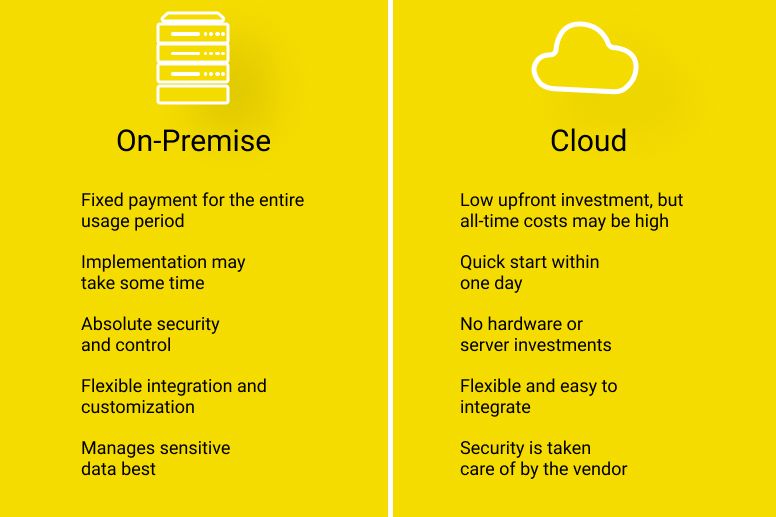
For most workloads, yes, but only if you compare the same level of capability. An on-premise server that sits idle 80 percent of the time is cheap per hour of use but expensive per hour of useful work. Cloud charges only for what you use. For variable or unpredictable workloads, cloud is almost always cheaper. For steady, predictable, high-utilization workloads, reserved instances or on-premise may be cheaper.
Q2: Which cloud provider has the best AI capabilities?
The answer depends on your use case. AWS has the broadest set of AI services and the deepest integration with other cloud services. Azure has the strongest enterprise distribution and integration with Microsoft productivity tools. Google Cloud has the strongest AI research heritage and the most advanced models for certain tasks. Many enterprises use multiple providers, choosing the best tool for each job.
Q3: Do I need to be an AI expert to use AI on cloud?
No. Cloud providers offer pre-trained models for common tasks such as image recognition, text summarization, and language translation. For custom tasks, managed services handle much of the complexity. However, expertise in data preparation, model evaluation, and production deployment is still valuable. The barrier is lower than it was, but it is not zero.
Q4: How do I control AI costs on cloud?
Several strategies help: use pre-trained models instead of training your own, use spot instances for training where interruptions are acceptable, right-size inference resources for expected traffic, cache common responses to avoid repeated inference, and set budget alerts to prevent runaway spend.
Q5: Is my data secure on cloud AI services?
Leading cloud providers invest billions in security. Data is encrypted at rest and in transit. Access is controlled by IAM policies. Compliance certifications are extensive. However, security is a shared responsibility. The provider secures the infrastructure. You secure your data, access keys, and configurations. Most data breaches are caused by customer misconfiguration, not provider vulnerabilities.
Q6: What is the single biggest barrier to AI + cloud adoption?
Data readiness. Most organizations have data scattered across siloed systems, in inconsistent formats, with unknown quality. Cleaning, integrating, and governing this data is the most time-consuming and expensive part of AI projects. Organizations that invest in data infrastructure early will move faster than those that do not.
Q7: How can Innovative AI Solutions help?
We help businesses design, build, and scale AI on cloud solutions, from strategy and platform selection to data infrastructure, model development, and ongoing optimization.
Step 11: Final Tagline
AI needs cloud to scale. Cloud needs AI to be intelligent. Together, they create a flywheel of continuous improvement: more data enables better AI, which drives more usage, which generates more data, which requires more cloud. Organizations that get on this flywheel early will outrun competitors who are still experimenting with isolated pilots. The formula is simple. The execution is the hard part.
Short version: AI + cloud equals faster business growth – why AI needs cloud, why cloud needs AI, the growth flywheel, business outcomes, real-world examples, and implementation roadmap.
Hashtags: #AICloud #CloudComputing #BusinessGrowth #DigitalTransformation #AIScale #CloudAI #InnovativeAISolutions
Contact Us
Phone: +91 7464 099 059 / +91 96899 67356
Email: info@innovativeais.com
Address: Netaji Subhash Place, Pitampura, Delhi – 110034
Website: https://innovativeais.com
About the Author
Abhishek Kumar
Founder & CEO, Innovative AI Solutions
5+ years building AI and cloud solutions for business growth. Based in Delhi, serving clients across India.
Related services: to apply this in your business, explore our cloud services and machine learning and predictive analytics.