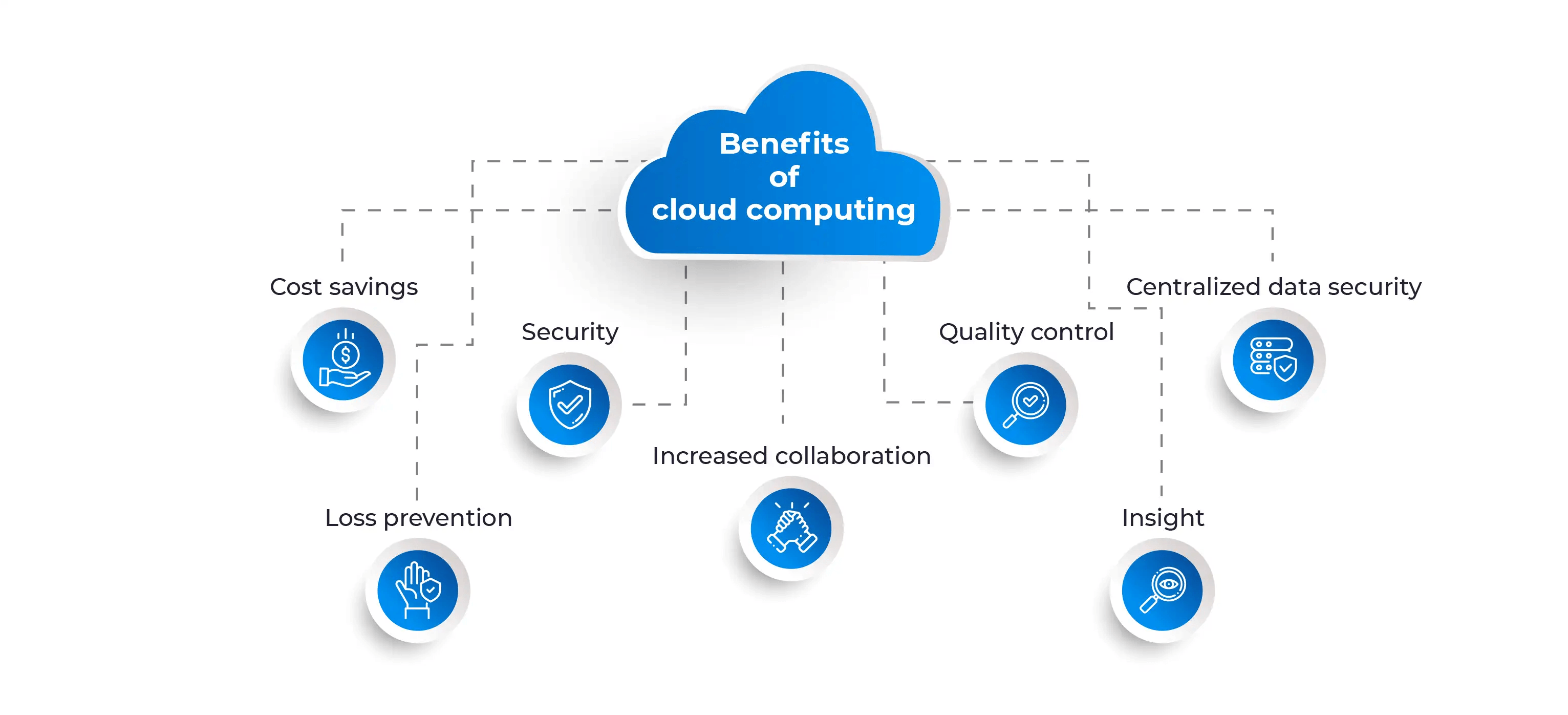
The Big Question
"Abhishek, I keep hearing about cloud computing. Is it really worth it for a small business like mine? Won't it cost too much? And isn't it just for tech companies?"
These are fair questions. And the answers might surprise you.
Here is the honest truth from someone who has helped dozens of Indian SMEs and startups move to the cloud:
Cloud computing is not just for large enterprises anymore. In fact, SMEs and startups have the most to gain.
Let me explain why.
Step 3: What is Cloud Computing? (No Jargon, Just Honesty)
Before we dive in, let me give you a simple explanation.
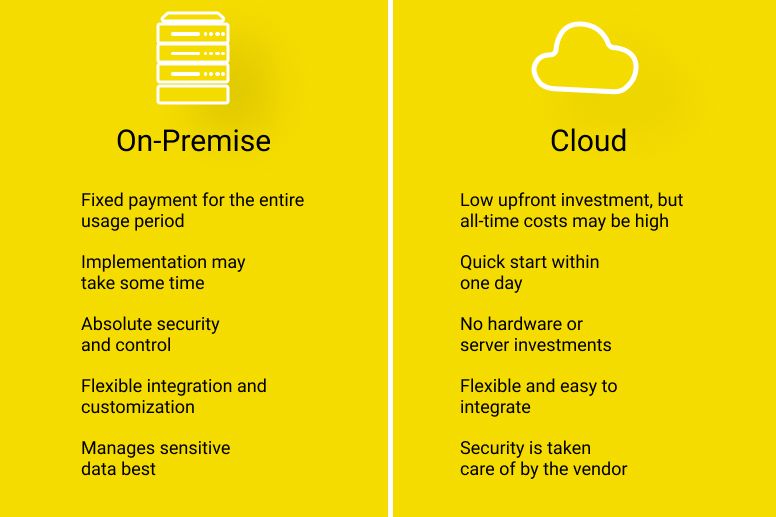
| Traditional IT | Cloud Computing |
|---|---|
| You buy servers, storage, networking equipment | You rent everything from a cloud provider |
| You pay crores upfront for hardware | You pay monthly for what you use (like electricity bill) |
| You need an in-house IT team to maintain everything | The cloud provider handles maintenance and security |
| Scaling takes weeks (order new servers) | Scaling takes minutes (click a button) |
| If a server fails, your business stops | If one server fails, others take over automatically |
The key insight:
Cloud computing replaces large upfront capital expenses with small, predictable operational expenses.
For cash-conscious SMEs and startups, this is a game-changer.
Step 4: The Numbers Don't Lie – Cloud's Economic Impact on India
Let me share some eye-opening statistics from a Nasscom report .
| Metric | Value |
|---|---|
| India's public cloud market (2021) | $5.6 billion |
| Cloud market growth rate (2016-2021) | 44% CAGR |
| Projected GDP contribution by 2026 | $380 billion |
| Projected jobs created by 2026 | 14 million |
| Opportunity cost of slow adoption | $118 billion GDP, 5 million jobs |
What this means for you:
The cloud revolution is not coming. It is already here. And Indian businesses that adopt early are pulling ahead.
The Nasscom report also revealed that 53% of enterprises increased their cloud adoption over the last year, with 84% of large organizations adopting SaaS . The top drivers? Ability to launch new products quickly and better customer engagement.
Step 5: How SMEs Are Leading the Cloud Charge
You might think cloud adoption is only for large enterprises. But the data says otherwise.
According to a study by Tata Tele Business Services, 50% of Indian SMEs have leveraged cloud solutions to drive business expansion in the fiscal year 2024 .
Here is what is driving this transformation :
1. Flexibility to Scale
SMEs can now handle sudden demand spikes without investing in new hardware. During festivals, sales, or unexpected growth, cloud resources scale automatically.
2. Cost Optimization
Pay-as-you-go pricing means you only pay for what you use. No more paying for idle servers.
3. Reduced Vendor Risk
Multi-cloud strategies allow SMEs to spread workloads across multiple providers. If one cloud service fails, others take over.
4. Data Sovereignty
Hybrid cloud models let SMEs keep sensitive data on private infrastructure while using public cloud for other workloads – critical for India's data protection laws.
Step 6: Real Indian Success Stories – From Startups to Unicorns
Let me share real examples of Indian businesses transforming through cloud computing.
Example 1: Setu – From 50,000 to 10 Million Monthly Transactions
The company: Setu by Pine Labs, a fintech startup providing API infrastructure for India's Bharat Bill Payment System (BBPS) .
The challenge: Setu needed to scale from 50,000 monthly transactions to millions, while maintaining security and compliance.
The solution: Setu moved to Amazon Web Services (AWS), using Amazon EC2 instances with AWS Graviton Processors and AWS Auto Scaling .
The results :
-
10 million monthly BBPS transactions (200x growth)
-
5 million daily Account Aggregator requests
-
35% reduction in operational expenses
-
Faster deployment of new features (from weeks to minutes)
What this means for you: A small fintech startup used cloud to become a critical part of India's digital payment infrastructure – competing with much larger players.
"By building on AWS, we've scaled from 50,000 transactions per month to 10 million monthly transactions on BBPS."
— Pete Jaison, Head of Growth at Setu by Pine Labs
Example 2: Dataneers – Building Indigenous Cloud Storage for Indian SMEs
The company: Pune-based Dataneers, a startup building indigenous data storage solutions for Indian SMEs .
The problem: Many Indian SMEs store critical business data on foreign cloud platforms. When these platforms change policies or suspend accounts, businesses risk losing access to years of data .
The solution: Dataneers builds open-source-based storage products that give Indian companies full ownership of their data – without relying on foreign vendors.
The impact: SMEs can now get cloud-like storage flexibility without the financial unpredictability of public cloud providers or the risk of vendor lock-in .
What this means for you: Indian innovators are building alternatives tailored to local needs – giving SMEs more choice and control.
Example 3: Utho Cloud – India's First Indigenous Cloud Platform
The company: Utho Cloud, India's first indigenous cloud platform, built specifically for Indian businesses .
The opportunity: As AI workloads grow and power constraints become real, Indian businesses are turning to local cloud providers for better cost control, regulatory alignment, and resilience .
Key advantages:
-
Data sovereignty – Keeping data within India provides regulatory assurance
-
Predictable pricing – No surprise bills from complex global pricing models
-
Local support – Fast, responsive support from teams in Indian time zones
-
India-optimized performance – Lower latency for Indian users
What this means for you: You no longer need to rely solely on global cloud giants. Indian cloud providers are emerging as strong alternatives – often better suited to local needs.
Step 7: From Cloud-First to Cloud-Smart – The 2026 Evolution
The conversation has shifted. According to Tata Tele Business Services, simply moving workloads to the cloud is no longer enough .
In 2026, Indian SMEs are moving from cloud-first to cloud-smart .
| Cloud-First | Cloud-Smart |
|---|---|
| Default to public cloud for everything | Choose the right environment for each workload |
| Focus on moving workloads | Focus on optimizing cost and performance |
| One-size-fits-all approach | Balanced, outcome-driven approach |
| Public cloud only | Hybrid (public + private + on-premise) |
Why the shift? Rising cloud costs, performance challenges, compliance requirements, and security concerns are pushing businesses to be more strategic .
Step 8: The Rise of Multi-Cloud and Hybrid Setups
Indian SMEs are increasingly adopting multi-cloud and hybrid cloud models .
What is Multi-Cloud?
Using multiple cloud providers (AWS, Azure, Google Cloud, Indian providers) for different workloads.
What is Hybrid Cloud?
Combining public cloud with private infrastructure (on-premise servers or private cloud).
Why SMEs Prefer These Models :
| Benefit | Explanation |
|---|---|
| Flexibility | Divide workloads across systems for optimal performance |
| Cost optimization | Choose the most efficient and affordable cloud for each task |
| Vendor risk reduction | Continue services even if one cloud provider fails |
| Data sovereignty | Keep sensitive data in-house while using cloud for other operations |
Step 9: Challenges Indian SMEs Face with Cloud Adoption
Let me be honest – cloud adoption is not without challenges.
Challenge 1: Skill Shortage
Managing multi-cloud and hybrid systems requires advanced expertise. Finding skilled cloud engineers is difficult and expensive .
Challenge 2: Cost Unpredictability
Without proper knowledge, cloud expenses can spiral. Hidden charges, over-provisioning, and inefficient architectures burn money .
Challenge 3: Security and Maintenance
Any error in configuration could lead to data leaks or system failures. Security must be built in, not added later .
Challenge 4: Connectivity Dependencies
Cloud performance depends entirely on your internet connection. Without reliable, high-speed connectivity, cloud benefits disappear .
Challenge 5: Data Sovereignty and Compliance
Stricter data localisation rules require sensitive financial and personal data to remain within India. Not all cloud providers make this easy .
Step 10: Why 2026 is the Best Time for Cloud Adoption
Several factors are making cloud adoption more attractive than ever for Indian SMEs.
1. Government Support
The Union Budget 2026 introduced a long-term tax holiday until 2047 for foreign cloud service providers using data centres in India, improving cloud availability and cost competitiveness .
2. Local Cloud Providers Are Maturing
Indian cloud platforms like Utho Cloud are offering India-centric economics, predictable pricing, and local support – addressing the gaps left by global providers .
3. Data Centre Capacity is Expanding
India's data centre capacity has crossed 1,123 MW, with demand growing at nearly 50% year-on-year .
4. AI Workloads Demand Cloud
AI applications require massive computing power. The cloud makes this accessible to SMEs without upfront hardware investment .
5. Connectivity is Improving
SD-WAN, high-speed fibre, and secure cloud interconnects are making reliable cloud access more affordable .
Step 11: Practical Steps for Your Cloud Journey
Based on my experience helping SMEs move to the cloud, here is a practical roadmap.
Step 1: Start Small, Not Big
Do not try to migrate everything at once. Start with one non-critical workload – email, document storage, or a simple website.
Step 2: Calculate Your Costs
Use cloud pricing calculators to estimate monthly costs. Compare with your current IT spending.
Step 3: Choose the Right Model
-
Small budget, simple needs: Start with public cloud (AWS, Azure, Google, or Indian providers)
-
Sensitive data: Hybrid cloud (keep sensitive data private)
-
Maximum reliability: Multi-cloud (spread across providers)
Step 4: Invest in Skills
Train your team or hire cloud experts. The skills shortage is real – plan for it .
Step 5: Prioritize Security
Enable encryption, use strong access controls, and monitor continuously. Security is not optional .
Step 6: Measure and Optimize
Cloud is not "set and forget". Continuously monitor usage, right-size resources, and optimize costs.
Step 12: What This Means for Your Business
Here is the bottom line.
If you are an SME owner:
Cloud computing lets you compete with larger players without spending crores on IT. You can scale during demand spikes, launch new products faster, and serve customers better – all with predictable monthly costs.
If you are a startup founder:
Cloud is your launchpad. You can start small, iterate quickly, and scale only when you need to. No more buying expensive servers before you have customers.
If you are a business leader:
The shift from cloud-first to cloud-smart is your opportunity to optimize. Not every workload needs the same treatment. Choose the right environment for each need.
Step 13: Frequently Asked Questions
Q1: Is cloud computing secure for my business data?
Yes, when implemented correctly. Leading cloud providers offer encryption, access controls, and compliance certifications. However, security is a shared responsibility – you must configure things correctly.
Q2: How much does cloud computing cost for an SME?
Costs vary widely based on usage. A small business might pay ₹5,000-20,000 per month. A growing SME might pay ₹50,000-2,00,000 per month. Use pricing calculators to estimate.
Q3: Can I use Indian cloud providers instead of AWS or Azure?
Yes. Indian providers like Utho Cloud offer competitive alternatives, often with better local support and predictable pricing .
Q4: What is the difference between public, private, and hybrid cloud?
-
Public cloud: Shared infrastructure (AWS, Azure, Google)
-
Private cloud: Dedicated infrastructure (more control, higher cost)
-
Hybrid cloud: Combination of both (best for many SMEs)
Q5: Do I need to migrate everything at once?
No. Most successful cloud migrations happen gradually. Start with one workload, learn, then expand.
Q6: What about data localisation requirements?
Hybrid cloud and Indian cloud providers can help keep sensitive data within India, complying with regulations .
Q7: How do I avoid unexpected cloud bills?
Use cost monitoring tools, set budget alerts, right-size resources, and consider reserved instances for predictable workloads.
Q8: What skills does my team need?
Basic cloud literacy is essential for everyone. Deeper skills (architecture, security, cost optimization) may require hiring or training.
Q9: Can cloud help with AI adoption?
Absolutely. AI workloads require massive compute power. Cloud makes this accessible without hardware investment .
Q10: What is the ROI of cloud adoption?
Most businesses see ROI within 6-12 months through reduced infrastructure costs, faster time-to-market, and improved scalability.
Step 14: Final Tagline (SEO & Social Media Friendly)
"Cloud computing is not just for large enterprises anymore. Indian SMEs and startups are leading the charge – and you can too."
Short version for LinkedIn/Twitter:
Cloud adoption could add $380 billion to India's GDP and create 14 million jobs by 2026. Is your business ready?
Hashtags:
#CloudComputing #DigitalIndia #SMEGrowth #StartupIndia #CloudAdoption #MakeInIndia #InnovativeAISolutions
Ready to Start Your Cloud Journey?
You do not need to migrate everything at once. Start small. Learn. Scale. Let us help you make the right choices for your business.
Contact Us
Phone:
+91 7464 099 059
+91 96899 67356
Email:
info@innovativeais.com
Office Address:
Netaji Subhash Place, Pitampura, Delhi – 110034
Working Hours:
Monday–Friday, 10:00 AM – 7:00 PM IST
Related services: to apply this in your business, explore our cloud services and RAG development.