Step 2: What Is the Agentic Enterprise?
The agentic enterprise is an organization where AI agents are not just assistants but autonomous actors that execute work. Unlike traditional automation that follows rigid rules, agentic AI reasons, plans, adapts, and takes actions within defined boundaries.
Key characteristics of the agentic enterprise:
| Characteristic | Description |
|---|---|
| Autonomous execution | Agents complete multi-step workflows without human intervention at every step |
| Proactive action | Agents anticipate needs rather than simply responding to requests |
| Cross-system orchestration | Agents coordinate across applications, data sources, and business processes |
| Continuous learning | Agents improve from outcomes and feedback |
| Human-in-the-loop governance | Humans set goals and boundaries; agents execute within them |
According to Google Cloud, nearly 75 percent of its customers are now using AI products to power their businesses. In the last 12 months, more than 230 of those customers processed over 1 trillion tokens each. The scale is unprecedented, and it is growing rapidly.
Step 3: The Unified Stack Approach
One of the defining trends in 2026 is the move toward unified AI platforms rather than fragmented point solutions. For years, enterprises have treated AI like a kit: models from one vendor, orchestration from another, data pipelines from a third, and governance as an afterthought. This approach worked well enough in pilot mode but has proven difficult to scale into something dependable.
The unified stack promises to cut the integration tax and accelerate AI at scale. For enterprises, this means:
-
Reduced integration risk
-
Faster pilot-to-production trajectories
-
Consistent governance and security across all AI initiatives
-
Single vendor accountability
Google Cloud's Gemini Enterprise platform exemplifies this unified approach. It combines access to frontier AI models, an intuitive user interface, a secure development framework, and the ability to deploy agents at scale. While AWS and Microsoft are pursuing similar strategies, the specifics of implementation vary meaningfully, and enterprises must map these differences to their existing estate and governance model.
Step 4: The Technology Stack
The cloud-based AI stack for enterprises typically includes several layers: infrastructure, models, development platform, data foundation, and security.
Infrastructure Layer
At the infrastructure level, specialized AI hardware is essential for running agents at scale. Google's eighth-generation TPUs exemplify the kind of purpose-built infrastructure required:
| Chip | Purpose | Key Specification |
|---|---|---|
| TPU 8t | Training | Scales to 9,600 TPUs; 2 petabytes of shared memory; 3x processing power of previous generation |
| TPU 8i | Inference | Connects 1,152 TPUs in a single pod; 3x more on-chip SRAM for low-latency inference |
Source:
Having control over the hardware layer provides a competitive advantage in both performance and cost. Google Cloud is not reliant on NVIDIA for chips, which allows it to optimize the entire stack.
Model Layer
Access to frontier models is the foundation of agentic AI. The Gemini Enterprise platform provides first-class access to:
-
Gemini 3.1 Pro for complex workflow orchestration
-
Gemini 3.1 Flash Image for generating visual assets
-
Lyria 3 for professional-grade audio and music generation
-
Anthropic models including Claude Opus 4.7, Sonnet, and Haiku
The value, however, is shifting from the models themselves to how those models work with tools and data to create value.
Development Platform
The development platform is where agents are built, tested, and deployed. Key components include:
| Component | Purpose |
|---|---|
| Agent Studio | Low-code interface for building agents using natural language |
| Agent Development Kit (ADK) | Graph-based framework for defining agent collaboration logic |
| Agent Registry | Single point of control indexing every agent and tool across the organization |
| Agent Gateway | Centralized policy enforcement for agent-to-agent and agent-to-data interactions |
| Agent Identity | Unique cryptographic ID for every agent with traceable authorization policies |
Source:
These tools allow both professional developers and business users to build agents, with appropriate governance controls applied consistently across both groups.
Data Foundation: The Agentic Data Cloud
Agents are only as smart as the context they can access. The Agentic Data Cloud is an AI-native architecture that evolves the enterprise data platform from a static repository into a dynamic reasoning engine.
Key capabilities include:
Knowledge Catalog: Maps and infers business meaning across the entire data estate, using aggregation, continuous enrichment, and sophisticated hybrid search combining semantic and lexical matching.
Cross-Cloud Lakehouse: Provides borderless access to data across AWS and Azure as if it were local to Google Cloud, eliminating massive egress fees through dedicated high-speed private networking and Apache Iceberg REST Catalog.
Data Agent Kit: A portable suite of skills and tools that drops into environments developers already use, including VS Code, Gemini CLI, and Codex. It autonomously orchestrates business outcomes, selecting the right frameworks and generating production-ready code.
Security and Governance
Security is not an add-on. It is built into every layer. Key security capabilities include:
| Capability | Purpose |
|---|---|
| Model Armor | Protects against prompt injection, tool poisoning, and sensitive data leakage |
| Agent Anomaly Detection | Flags suspicious behavior by analyzing intent behind agent actions |
| Access-control-aware search | Ensures agents only retrieve assets they are authorized to see |
| Agent Identity | Cryptographic identity for every agent with traceable policies |
Source:
Step 5: Real-World Enterprise Use Cases by Industry
Retail
Retailers are deploying AI agents that make expert knowledge available to every customer, on every channel, at any hour.
| Company | Application | Result |
|---|---|---|
| The Home Depot | Magic Apron assistant and AI voice agents for customer service | Delivering "Orange Apron" expertise online, on phone, and in store |
| Ulta Beauty | Personalized shopping assistant (Ulta AI) powered by Gemini Enterprise | Agentic shopping on Google surfaces |
| Macy's | Ask Macy's conversational AI shopping assistant | Built in just four weeks |
Source:
Financial Services
Financial institutions are moving from reactive analysis to proactive intelligence.
| Company | Application | Result |
|---|---|---|
| Citi Wealth | Citi Sky AI-powered experience built on Gemini Enterprise Agent Platform | Real-time, expert-driven insights |
| BNY | Gemini Enterprise for deep research capabilities | Accelerated research for global workforce |
| Starling Bank | Starling Assistant AI financial assistant | Automates basic banking tasks |
Source:
Manufacturing
Manufacturers are building the factory of the future by connecting IT, operational technology, and engineering technology data.
| Company | Application | Result |
|---|---|---|
| GE Appliances | More than 800 AI agents deployed across manufacturing, logistics, and supply chain | AI in the hands of the people closest to the work |
| Tata Steel | Fleet of more than 300 autonomous AI agents built on Gemini Enterprise Agent Platform | Transformed global operations |
Source:
Healthcare and Life Sciences
Healthcare organizations are deploying agents that accelerate drug discovery, resolve denied claims, and translate lab results into plain language.
| Company | Application | Result |
|---|---|---|
| Merck | Gemini Enterprise-powered "agentic engine" across value chain | Improved probability of success and time-to-market |
| CVS Health | Health100 agentic AI "Health Concierge" platform | Integrates data from wearables, EHRs, and pharmacy claims |
| American Society of Clinical Oncology | Gemini Enterprise for trusted cancer expertise | Delivered to 50,000 oncology professionals worldwide |
Source:
Telecommunications
Telecommunications companies are using agents to autonomously manage entire workflows, from real-time network healing to proactive customer issue resolution.
| Company | Application | Result |
|---|---|---|
| Vodafone | Hundreds of agents delivering uninterrupted service | Expected to save millions of euros annually |
| Deutsche Telekom | MINDR next-generation autonomous network solution | Built with Google's Autonomous Network Operations framework |
| Virgin Media O2 | AI-powered Knowledge Catalog | Activated 20,000+ data assets for product teams |
Source:
Small and Midsize Businesses
Agentic AI is not only for large enterprises. SMBs are also using Gemini Enterprise to solve complex challenges:
| Company | Application | Result |
|---|---|---|
| Apex Leaders | Internal search engine for consultant teams | Easy access to internal data with automated summarization |
| SAI360 | Ethics training design and localization | 99 percent faster course creation; 95 percent reduction in production costs |
| Tirol (Brazilian dairy producer) | Interactive knowledge base | Democratized data access across entire value chain |
| whisky.fr | "Digital Sommelier" | Transforms technical data into high-end storytelling and marketing copy in seconds |
Source:
Step 6: The Shift to Private Cloud for Production AI
An important trend in 2026 is the movement of production AI workloads from public cloud to private cloud. According to Broadcom's Private Cloud Outlook 2026, 56 percent of enterprises globally are now running or planning to run production AI inferencing on private cloud, up from 41 percent using public cloud for the same workloads, down from 56 percent a year earlier.
| Driver | Percentage Citing |
|---|---|
| Data protection and privacy | 37 percent |
| Security and control | 36 percent |
| Cost (as top public cloud concern) | 31 percent (up from security) |
Source:
The shift is being driven by cost, governance, and control. Cost has overtaken security as the top public cloud concern. The survey found that 97 percent of IT leaders believe at least some of their public cloud spending is wasted, while 52 percent estimate that more than a quarter of their total public cloud budget is not delivering value.
Geopolitical pressures are also reshaping IT planning. Four in five IT leaders said geopolitics are affecting their strategy and operations, while 54 percent named data sovereignty and residency requirements as a leading factor in infrastructure decisions.
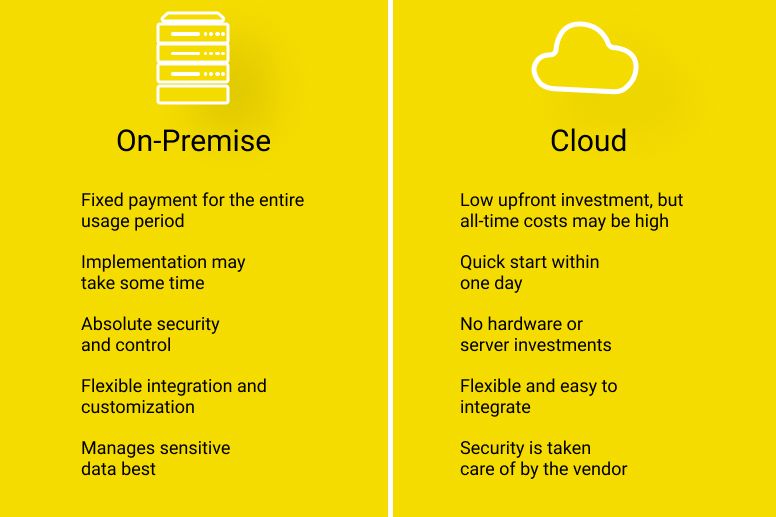
For enterprises, this means a hybrid approach is likely the long-term reality. Training and experimentation will remain in public cloud where elastic compute is most cost-effective. Production inferencing, particularly for regulated data, will shift toward private cloud where control and predictability are paramount.
Step 7: Implementation Roadmap for Enterprises
Phase 1: Assessment and Strategy (Months 1 to 2)
| Action | Output |
|---|---|
| Inventory existing AI pilots and production systems | Visibility into current state |
| Identify high-value, cross-functional processes for agent automation | Prioritized use cases |
| Assess data readiness (quality, governance, accessibility) | Data maturity assessment |
| Define success metrics (containment rate, cost per ticket, time saved) | KPI dashboard |
| Select cloud AI platform and deployment model (public vs. private) | Platform decision |
Phase 2: Foundation (Months 2 to 4)
| Action | Output |
|---|---|
| Establish AI Center of Excellence (CoE) | Governance framework and team |
| Set up data lakehouse and knowledge catalog | Unified data access layer |
| Implement security controls (identity, authorization, audit) | Security baseline |
| Train first wave of agent developers | Internal capability |
Phase 3: Pilot (Months 4 to 6)
| Action | Output |
|---|---|
| Build one agent for a high-value, bounded use case | Working agent |
| Run in parallel with human process for validation | Measured baseline |
| Refine based on feedback and exceptions | Improved agent |
| Document lessons learned | Best practices |
Phase 4: Scale (Months 6 to 12)
| Action | Output |
|---|---|
| Expand to additional use cases | Portfolio of agents |
| Implement agent orchestration for cross-functional workflows | Coordinated agent teams |
| Deploy observability and monitoring for all agents | Production visibility |
| Continuous optimization of cost and performance | Ongoing improvement |
Step 8: Key Considerations for Enterprise Buyers
Total Cost of Ownership
Unified stacks promise simplified pricing, but analysts caution that bundling infrastructure, models, data services, and agents into a single narrative does not necessarily simplify costs. It can make pricing harder to predict and optimize. Enterprises should expect more pricing complexity, not less, as they scale AI. FinOps disciplines will be increasingly important to manage AI spending.
Vendor Lock-in vs. Interoperability
The cloud providers are converging on similar top-line narratives, which makes the decision swing on non-technical factors such as existing relationships, migration costs, and trust. However, the dream of a single vendor owning both the agent control plane and the data reasoning layer may not survive procurement. Enterprises may standardize on two distinct layers: a primary agent control plane aligned with where enterprise applications reside, and a separate data reasoning layer anchored in governed data environments.
Open Standards
Open standards such as Apache Iceberg for data and the Model Context Protocol (MCP) for agent-to-tool communication are becoming essential for avoiding lock-in. Google Cloud's support for Iceberg and MCP is a recognition that the value lies not in the format in which data is stored, but in how that data is governed and managed.
Partner Ecosystem
No organization can build every agent they need from scratch. The agentic enterprise thrives on an open, interoperable ecosystem. Google Cloud's partner network includes over 330,000 experts trained on Google AI, with major system integrators such as Accenture, Deloitte, PwC, and Infosys building agentic capabilities. The Agent Gallery features validated agents from partners including Atlassian, Box, Oracle, Salesforce, ServiceNow, and Workday.
Step 9: Frequently Asked Questions
Q1: What is the difference between a chatbot and an agentic AI system?
A chatbot answers questions. An agentic AI system takes actions, completes multi-step workflows, and orchestrates across systems. The distinction is capability and autonomy, not just conversation.
Q2: Which cloud provider has the best AI offering?
There is no single answer. According to industry analysts, Microsoft is best positioned on enterprise distribution and workflow adjacency. AWS is strongest on operational breadth, developer familiarity, and cloud maturity. Google is strongest where AI infrastructure, analytics, and model-platform integration matter most. Enterprises should align vendor strengths with their priorities.
Q3: Is private cloud or public cloud better for AI?
Both, depending on the workload. Training and experimentation remain cost-effective in public cloud. Production inferencing, particularly for regulated or sensitive data, is shifting toward private cloud for cost predictability, control, and compliance. A hybrid approach is likely the long-term reality.
Q4: How do I secure AI agents?
Security must be designed in from the start, not added after. Key controls include: unique cryptographic identity for every agent, role-based access control enforcing least privilege, audit trails for every action, input validation to prevent prompt injection, and human-in-the-loop for high-risk actions.
Q5: How many agents will my enterprise need?
Leading organizations are already deploying hundreds or thousands of agents. GE Appliances has over 800 agents deployed. Tata Steel has a fleet of more than 300 autonomous agents. The number depends on your business processes, but the trend is toward large-scale deployment.
Q6: What is the ROI of agentic AI?
ROI varies by use case. Early adopters report meaningful improvements: WPP releases AI-led campaigns at twice the speed with 2.5 times more value for clients. Virgin Voyages reduced mass itinerary rebooking from six hours to eleven minutes with a single specialized agent. Organizations should measure containment rate, cost per ticket, time saved, and revenue impact from faster response.
Q7: How can Innovative AI Solutions help?
We help enterprises design, build, and scale cloud-based AI solutions, from strategy and platform selection to agent development, security, governance, and ongoing optimization.
Step 10: Final Tagline
The agentic enterprise is no longer a vision. It is a reality, deployed at scale across every major industry. Cloud-based AI solutions provide the infrastructure, models, development platform, data foundation, and security needed to turn autonomous action into a competitive advantage. The organizations that master this stack will outrun those that do not.
Short version: Cloud-based AI solutions for enterprises – the agentic enterprise, unified stack, industry use cases, private cloud shift, and implementation roadmap for 2026.
Hashtags: #CloudAI #AgenticEnterprise #EnterpriseAI #GoogleCloud #GeminiEnterprise #AgenticAI #DigitalTransformation #InnovativeAISolutions
Contact Us
Phone: +91 7464 099 059 / +91 96899 67356
Email: info@innovativeais.com
Address: Netaji Subhash Place, Pitampura, Delhi – 110034
Website: https://innovativeais.com
About the Author
Abhishek Kumar
Founder & CEO, Innovative AI Solutions
5+ years building enterprise AI solutions. Based in Delhi, serving clients across India.
Related services: to apply this in your business, explore our AI agent development and AI development services.