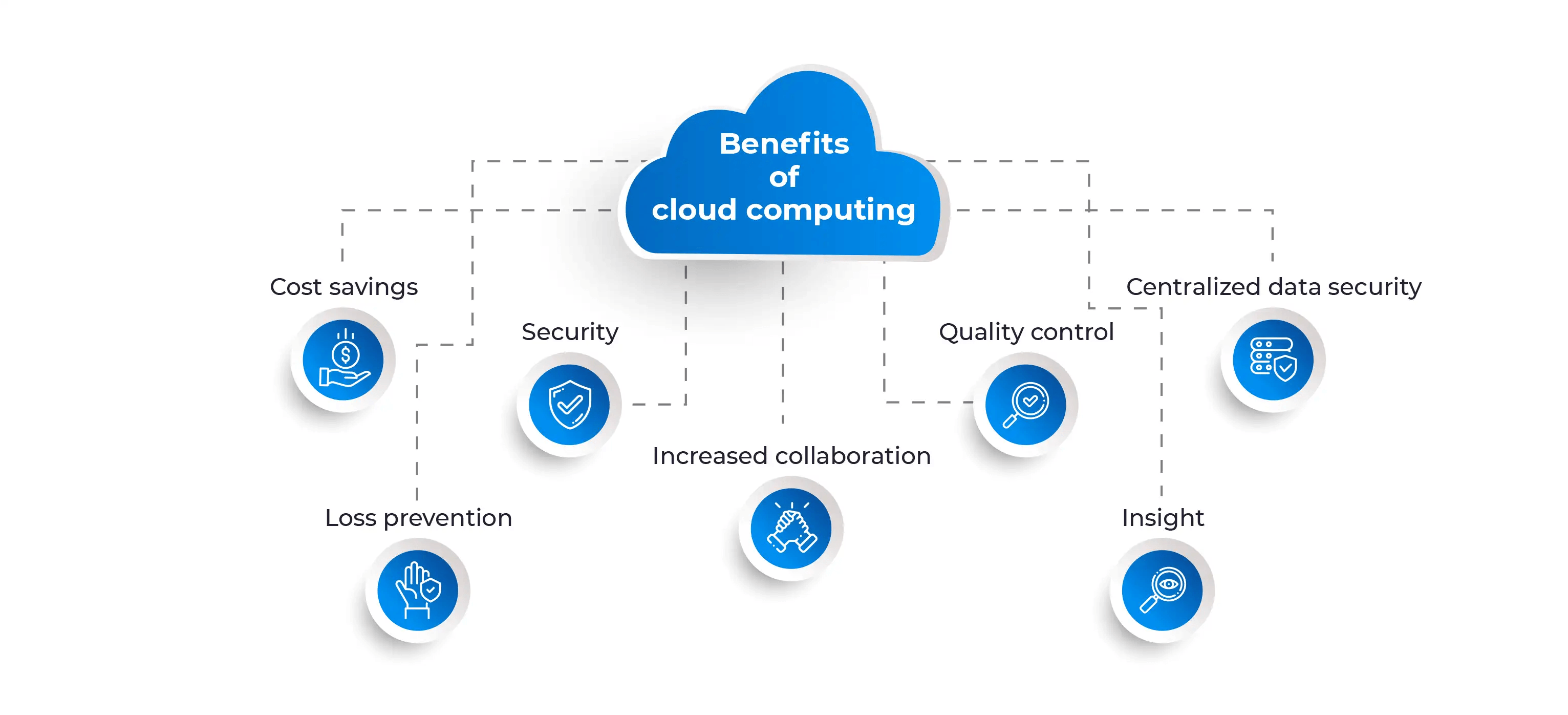
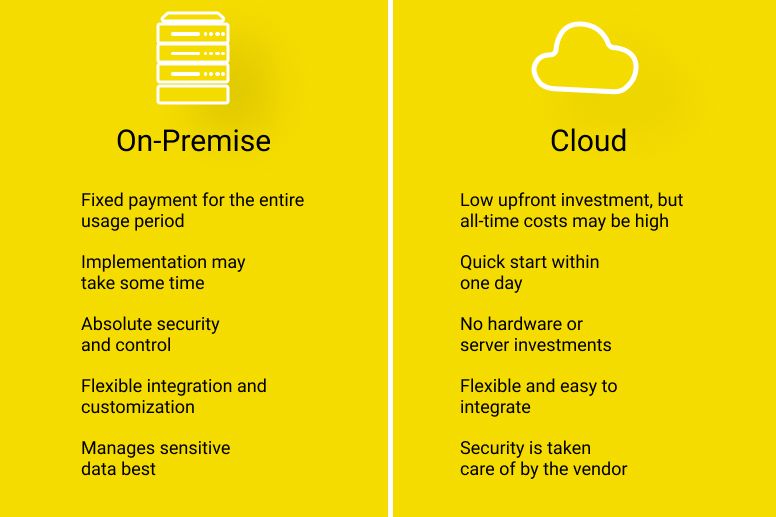
The Core Trade-Off – Edge vs. Cloud
| Factor | Edge AI | Cloud AI |
|---|---|---|
| Latency | Sub-millisecond to <10ms | 50–200ms (plus network variability) |
| Bandwidth dependence | Minimal (local processing) | High (raw data transfer required) |
| Connectivity | Can operate offline or with intermittent connectivity | Requires reliable, persistent connection |
| Compute capacity | Limited by device (edge AI accelerators, CPUs) | Essentially unlimited (GPU clusters, TPUs) |
| Data sovereignty | Data stays on device/in local network | Data leaves local jurisdiction |
| Privacy | Raw data never leaves controlled environment | Raw data transmitted to cloud provider |
| Update frequency | Periodic model updates (days, weeks) | Continuous model improvement |
| Power consumption | Device-dependent (optimized for efficiency) | Data-center scale (high, but per-inference efficient) |
| Cost model | Upfront hardware + periodic updates | Pay-per-inference + data egress |
| Best for | Real-time, safety-critical, bandwidth-constrained, privacy-sensitive | Complex models, burst workloads, centralised analytics |
"Edge AI is not going to replace the cloud — and the cloud is not going to replace the edge. Edge will handle time-sensitive, local workloads; the cloud will handle everything else." – Dan Miller, Senior Analyst, Opus Research
Step 3: The Three Constraints Driving Edge Adoption
Edge AI is not a universal replacement for cloud inference. It is the right choice when one of three constraints makes cloud inference impractical:
Constraint 1: Latency
Safety-critical and real-time applications demand response times that exclude cloud round-trip:
| Use Case | Maximum Acceptable Latency | Why Edge Is Required |
|---|---|---|
| Autonomous vehicle braking | <10ms | Physical safety requires immediate reaction |
| Industrial robot collision avoidance | <5ms | Preventing equipment damage and worker injury |
| Real-time video analytics (surveillance) | <50ms | Identifying threats before they act |
| Augmented reality (AR) head tracking | <15ms | Preventing motion sickness |
| Voice assistants (wake word detection) | <100ms | User perception of "instant" response |
Constraint 2: Bandwidth / Data Gravity
Some applications generate so much data that transmitting raw streams to the cloud is technically or economically prohibitive:
| Use Case | Data Volume | Why Edge Is Required |
|---|---|---|
| Factory machine vision (multiple 4K cameras) | 10-50 Gbps per production line | Cloud upload requires impractical bandwidth |
| Oil/gas pipeline monitoring (continuous sensors) | Terabytes per day | Satellite/backhaul bandwidth insufficient |
| Retail store shelf monitoring | Continuous video from dozens of cameras | Cellular costs exceed business value |
| Agricultural drone imagery | Gigabytes per flight | No reliable connectivity in remote fields |
Constraint 3: Data Sovereignty / Privacy
Regulatory requirements may prohibit raw data from leaving controlled environments:
| Use Case | Regulatory Constraint | Why Edge Is Required |
|---|---|---|
| Healthcare diagnostic imaging | HIPAA, GDPR, local data residency laws | Raw patient data cannot leave hospital network |
| Financial fraud detection at ATM | PCI DSS, local banking regulations | Card-present data cannot be transmitted |
| Defense/military sensor fusion | National security classification | Data cannot leave classified environment |
| Employee voice monitoring (manufacturing) | Works council / union agreements | Local processing required by labor agreements |
"The more you push intelligence to the edge, the less raw data you need to backhaul to the cloud. That improves response times and reduces bandwidth costs simultaneously." – Francisco Criado, General Manager, Industrial IoT, ADLINK
Step 4: Where Edge AI Is Landing in 2026 – By Industry
Manufacturing
Edge AI applications in manufacturing have moved beyond pilot to production across several high-value use cases:
| Use Case | Technology Stack | Edge Dependency |
|---|---|---|
| Predictive maintenance | Vibration + thermal sensors + time‑series models | Milliseconds-to-failure prediction requires local sensor fusion |
| Visual quality inspection | Edge ML on camera feeds + NVIDIA Jetson | Real-time defect detection prevents scrapped product batches |
| Worker safety monitoring | Pose estimation models | Immediate alerting for PPE violations or zone intrusions |
| AR-assisted assembly | HoloLens + local SLAM + LLM integration | Next‑step generation requires sub-second response |
Gartner predicts:
-
By 2027, 75% of industrial data will be processed at the edge, up from 15% in 2022
-
Real-time data analysis at edge locations will reduce manufacturing downtime by 20% year-over-year
Energy & Utilities
The energy sector has been an early adopter of edge AI, driven by the combination of remote locations, unreliable connectivity, and the high cost of downtime:
-
Fault detection and isolation on power grids (sub-50ms response)
-
Wildfire risk monitoring using pole-mounted cameras
-
Solar and wind farm optimization with local weather + generation forecasting
Healthcare
Edge AI in healthcare is growing faster than many other sectors, but remains constrained by rigorous validation requirements:
| Application | Maturity | Edge Driver |
|---|---|---|
| Wearable ECG analysis (Apple Watch, consumer wearables) | Production | Continuous monitoring without phone dependency |
| Portable ultrasound with AI guidance (e.g., Clarius, Butterfly Network) | Emerging | Rural/remote diagnosis without specialist |
| AI-assisted robotic surgery | Experimental | Sub-millimeter latency required |
| Hospital fall detection (room cameras) | Production | Privacy + latency (cannot transmit video) |
Retail & Logistics
Retailers have embraced edge AI for labor reduction and inventory accuracy:
-
Amazon Go style checkout-free stores (hundreds of ceiling-mounted cameras, edge ML)
-
Shelf inventory monitoring (robots or fixed cameras)
-
Loss prevention (real-time detection of known shoplifting patterns)
Automotive (Connected and Autonomous Vehicles)
The automotive industry is arguably the largest single driver of edge AI hardware demand:
-
Advanced driver-assistance systems (ADAS) are now standard on most new vehicles
-
Driver monitoring for fatigue/distraction (in-cabin camera analysis)
-
Voice assistants with local wake word and inference (e.g., Cerence, Alexa Auto)
"In the automotive sector, every microsecond counts, so edge AI is already the standard. That capability is now being pulled into industrial and logistics environments." – ANZUS Consulting, 2026
Step 5: The Edge AI Hardware Landscape
The Inference Market Fragments
Unlike cloud AI, where Nvidia GPUs dominate, the edge inference market is highly fragmented:
| Hardware Category | Examples | Best For | Power Range |
|---|---|---|---|
| CPU-only inference | Intel Core Ultra, AMD Ryzen AI | Lightweight models (<100M params), legacy workloads | 5–25W |
| Edge AI accelerators | Google Coral TPU, Hailo-8, Kinara Ara-2 | Vision models, transformers at the edge | 1–10W |
| Integrated NPUs | Qualcomm Hexagon, Apple Neural Engine, MediaTek APU | Mobile and consumer devices (billions of units) | <5W |
| Low-power GPUs | NVIDIA Jetson Orin (AGX, NX, Nano) | Industrial, robotics, advanced vision | 5–25W |
| FPGAs | Altera (Intel), Xilinx (AMD) | Specialized, reconfigurable inference | 10–50W |
| ASICs | Google Edge TPU, Amazon Inferentia Edge | Single‑task, high‑volume fixed function | <5W |
Key Benchmark – NVIDIA Jetson Orin Nano
NVIDIA's entry-level edge AI platform, the Jetson Orin Nano, is now shipping at scale (since early 2025). It delivers up to 40 TOPS at 7–15W, making production-grade transformer deployment at the edge viable for the first time at volume price points (sub-$500).
Limitation: Orin Nano still cannot run state-of-the-art LLMs locally (e.g., Llama 3 70B). That requires Orin AGX (100 TOPS) or multi-device clusters — still emerging for most enterprise use cases.
"The recent proliferation of efficient small language models (SLMs) and hardware price points have finally made transformer-level intelligence at the edge viable for volume industrial deployment." – Industry analyst, 2026
Step 6: The Cloud AI Argument – What Edge Cannot Do
Edge is not a panacea. Cloud AI remains the right choice for many workloads:
Large Model Complexity
| Model | Size (parameters) | Inference Memory | Edge Viability |
|---|---|---|---|
| MobileBERT | 25M | ~100MB | Yes (CPU/NPU) |
| Whisper (tiny) | 39M | ~150MB | Yes (Jetson) |
| Llama 2 7B | 7B | ~14GB (FP16) | Orin AGX (edge) or cloud |
| Llama 3 70B | 70B | ~140GB (FP16) | Cloud only (or massive edge cluster) |
| GPT-4 class | 1T+ | ~2TB+ | Cloud only |
General rule of thumb: Models under 1B parameters are practical at the edge today (2026). Models between 1B–10B are emerging edge-capable with quantization and pruning. Models above 10B remain cloud-only for all but the most specialized deployments.
Burst and Variable Workloads
| Workload Pattern | Edge | Cloud |
|---|---|---|
| Steady-state, predictable | Good fit | Good fit |
| High burst (e.g., tax season, flash sale) | Edge devices underprovisioned for peak | Cloud auto-scaling handles burst |
| Highly variable (unpredictable) | Overpay for idle capacity | Serverless pay-per-inference |
Centralised Analytics and Cross-Location Learning
If your AI needs to learn from data distributed across thousands of locations, cloud training is usually more practical than federated edge learning (though federated approaches exist, they are still emerging).
Rapid Model Iteration
Cloud deployment allows model updates in seconds or minutes. Edge deployment requires device updates (hours to weeks, depending on device counts and connectivity).
Step 7: The Hybrid Reality – Distributed Inference Pipelines
In practice, most enterprise AI workloads today are neither pure cloud nor pure edge. They are distributed pipelines:
┌─────────────────────────────────────────────────────────────────────────────┐
│                    DISTRIBUTED INFERENCE PIPELINE                           │
├─────────────────────────────────────────────────────────────────────────────┤
│                                                                             │
│   EDGE LAYER 1          EDGE LAYER 2           CLOUD LAYER                  │
│   (Sensor/Device)       (Local Gateway)                                     │
│                                                                             │
│   Wake word detection   Speaker              Large language                 │
│   Keyword spotting      diarization          model (LLM)                    │
│   Basic feature         Transcription        Complex reasoning              │
│   extraction            (small model)        RAG over knowledge             │
│                                              base                           │
│   <10ms latency         <100ms latency       <1s-3s latency                 │
│                                                                             │
└─────────────────────────────────────────────────────────────────────────────┘
Real example – Voice assistant in a smart factory:
| Stage | Location | Model | Latency | Why Edge/Cloud |
|---|---|---|---|---|
| 1 | On-device (earpiece) | Wake word detection (1M params) | <5ms | Must detect "Hey robot" before user finishes phrase |
| 2 | Local gateway (factory server) | Speech-to-text + small intent classifier (500M params) | <100ms | Cannot afford cloud round-trip for safety commands ("Stop") |
| 3 | Cloud (Azure/ AWS) | LLM for complex maintenance queries | 1-3s | Acceptable latency, requires knowledge base not stored on edge |
This distribution of inference across edge and cloud is now standard practice in advanced deployments .
Step 8: Decision Tree – Edge, Cloud, or Hybrid
Use this decision framework to guide your architecture choices:
Step 1: Determine Your Sharpest Constraint
| If your primary constraint is... | Then start with... |
|---|---|
| Latency (must respond in <50ms) | Edge-first |
| Bandwidth/data gravity (cannot move raw data to cloud) | Edge-first |
| Data sovereignty (data cannot leave jurisdiction) | Edge-first (or sovereign cloud) |
| Compute complexity (model >10B parameters) | Cloud-first |
| Burst/variable workload (unpredictable spikes) | Cloud-first (serverless) |
| Rapid iteration (model updates daily) | Cloud-first |
Step 2: Evaluate Edge Capability
| If edge can run your model... | Recommendation |
|---|---|
| Sub-1B parameter model | Edge viable today |
| 1B–5B with quantization | Emerging edge viable (test) |
| >10B parameter model | Cloud only (for now) |
Step 3: Determine Hybridization
Even if you start with edge, most edge deployments eventually need cloud for:
-
Model orchestration (updates, versioning, rollback)
-
Monitoring and observability
-
Training from edge-sourced data
-
Handling edge-fallback for out-of-capability requests
"Edge AI is not an alternative to cloud computing. It is a complementary technology that shifts some processing closer to the data source, improving speed and privacy while reducing bandwidth use." – Tredence
Step 9: Implementation Roadmap – Getting Started
Phase 1: Discovery (2-3 weeks)
| Action | Deliverable |
|---|---|
| Inventory existing AI workloads | List of inference tasks with latency, bandwidth, and sovereignty requirements |
| Profile actual latency needs | Measured acceptable threshold (not assumed) |
| Estimate data volumes | Raw data size, frequency, retention requirements |
Phase 2: Proof of Concept (4-6 weeks)
| Action | Hardware | Success Criteria |
|---|---|---|
| Run representative inference task on edge device | Jetson Orin Nano, Google Coral, or CPU-only | Achieves required latency and accuracy |
| Compare to cloud baseline | Same model on cloud GPU | Document trade-offs (latency, accuracy, cost) |
Phase 3: Pilot Deployment (8-12 weeks)
| Action | Key Steps |
|---|---|
| Deploy to 5-10 production locations | Install hardware, configure orchestration, establish monitoring |
| Establish model update pipeline | Over-the-air updates, version control, rollback procedures |
| Monitor for 4-8 weeks | Track latency, accuracy drift, hardware failure rates, network dependency |
Step 10: Frequently Asked Questions
Q1: Is edge AI cheaper than cloud AI?
It depends. Edge has higher upfront hardware costs but lower recurring inference costs at scale. Cloud has zero upfront costs but pay-per-inference can exceed edge hardware costs at high volume.
Rough breakeven point: For steady-state workloads, edge becomes cheaper than cloud inference after 1-6 months (varies by hardware cost and cloud inference pricing).
Q2: What is the most common mistake enterprises make with edge AI?
Underestimating the supporting network layer. Edge devices need secure, reliable model updates, monitoring, and fallback mechanisms. Treating them as standalone appliances leads to deployment failures.
Q3: Can I run LLMs at the edge in 2026?
| Model Size | Edge Viability |
|---|---|
| <5B parameters | Yes (Jetson Orin AGX, some high-end NPUs) |
| 7B–13B | Emerging (quantized, 4-bit, pruning) |
| >20B | Not practical (cloud only) |
Q4: How does edge AI handle model updates across thousands of devices?
Standard practice uses over-the-air (OTA) update frameworks (Eclipse hawkBit, AWS IoT Device Management, Azure IoT Hub) with phased rollouts and rollback capabilities. Expect 24-72 hours to update a large fleet.
Q5: What about edge AI security?
Edge AI introduces new attack surfaces: physical device access, model theft, and adversarial examples at inference time. Mitigations include secure boot, encrypted storage, model obfuscation, and input validation.
Q6: When should I consider cloud-only vs. edge-only?
| If you have... | Choose... |
|---|---|
| No latency or sovereignty constraints, unpredictable volume | Cloud-only (serverless) |
| Identical workload across thousands of fixed locations with steady volume | Edge-only (manufacturing, retail) |
| Combination of latency-sensitive and non-sensitive subtasks | Hybrid (distributed pipeline) |
Step 11: Final Tagline
"Edge AI is not going to replace the cloud — and the cloud is not going to replace the edge. Edge will handle time-sensitive, local workloads; the cloud will handle everything else. The winning architecture is hybrid."
Short version:
Edge AI vs. Cloud AI – how to choose the best deployment model in 2026. Latency, bandwidth, sovereignty, and compute constraints determine the right choice. Most production architectures are hybrid.
Hashtags:
#EdgeAI #CloudAI #ArtificialIntelligence #EdgeComputing #AIDeployment #HybridAI #Industry40 #InnovativeAISolutions
Ready to Deploy AI at the Edge?
Edge AI is not a science project. It is a production technology with proven ROI in manufacturing, energy, retail, and healthcare. Let us help you design the right deployment model.
Contact Us
Phone: +91 7464 099 059 / +91 96899 67356
Email: info@innovativeais.com
Address: Netaji Subhash Place, Pitampura, Delhi – 110034
Website: https://innovativeais.com
Related services: to apply this in your business, explore our cloud services and LLM integration.