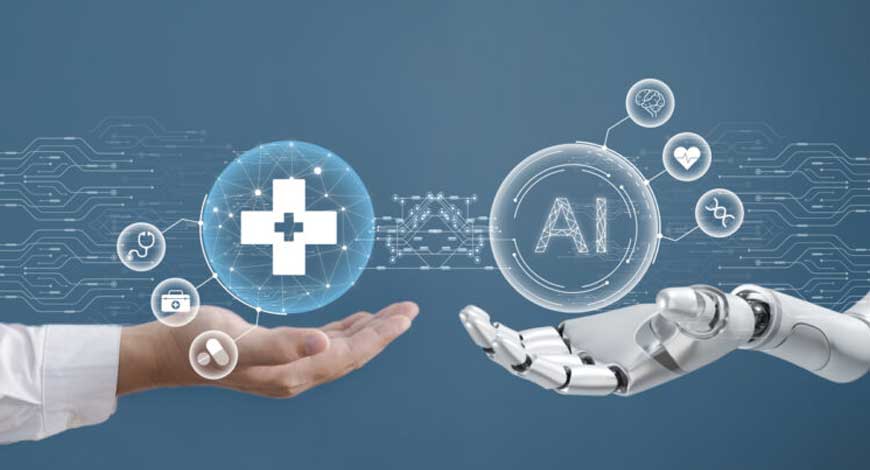
The Big Question
"If AI can already read chest X-rays and detect diabetic retinopathy, why haven't we seen a healthcare revolution in India?"
The honest answer:
Because the technology is ready, but the governance, infrastructure, and legal frameworks are not yet fully aligned.
Here is the truth:
AI's potential to improve safety and quality—from earlier sepsis risk signals to lighter documentation load—is tangible. Realizing these benefits demands deliberate governance, transparent validation, and relentless monitoring to keep patients—not algorithms—at the center of care .
Step 3: Public Health Surveillance—AI on the Front Lines
The Ministry of Health and Family Welfare has designated AIIMS Delhi, PGIMER Chandigarh, and AIIMS Rishikesh as Centres of Excellence for AI, promoting development and use of AI-based solutions in health .
Media Disease Surveillance
'Media Disease Surveillance' (MDS) is an AI-driven tool supporting event-based surveillance for infectious diseases since April 2022. The system scans digital news sources across the country and shares relevant information with districts for early action and response. Since April 2022, it has published over 4,500 event alerts, contributing to timely prevention and mitigation of disease outbreaks .
TB Elimination Program
Under the Tuberculosis elimination program, the 'Cough against TB' AI solution is used for community screening of pulmonary TB. In deployed geographies, the solution has shown an additional yield of 12-16% in TB reported, which may have been missed using conventional methods .
The 'Prediction of Adverse TB Outcomes AI Solution' helps identify TB patients at high risk for adverse outcomes as soon as treatment is initiated. A 27% decline in adverse outcomes has been reported after deployment of the AI Solution .
Diabetes and Eye Care
MadhuNetrAI is an AI solution developed to enable non-specialist health workers to conduct screenings for Diabetic Retinopathy. It automates DR detection by analysing retinal fundus images, ensuring standardized, accessible, and efficient triage. The solution has been implemented across 38 facilities in 11 states and provided AI assistance during screening of more than 14,000 retinal images, benefiting 7,100 patients .
Step 4: Clinical Decision Support—AI in the Consultation Room
The integration of AI into clinical workflows is perhaps the most transformative application in Indian healthcare. The 'Clinical Decision Support System' (CDSS) has been integrated into the national telemedicine platform, eSanjeevani, enhancing consultation quality by streamlining patient complaints entry and providing AI-based differential diagnosis recommendations. Since CDSS integration, 282 million eSanjeevani consultations have benefited from standardized data capture, ensuring consistency across health and wellness centres .
AI has been instrumental in enhancing diagnostics, imaging, and other aspects of clinical and surgical healthcare. Stanford's algorithm interprets chest X-rays for 14 distinct pathologies within seconds . Machine learning-based clinical software for detecting diabetic retinopathy using diagnostic imagery has been approved by the FDA in the United States . AI is also leveraged in oncology, organ allocation, and robotics-assisted surgeries .
Step 5: Administrative Efficiency and Patient Engagement
Administrative overhead can be cut significantly through automation—extracting data from therapeutic notes, pulling key vital data from past medical notes, and gathering patient encounter information .
Eka Care, an Electronic Medical Records (EMR) platform, goes beyond conventional EMRs by incorporating automated follow-up reminders for patients. It uses Optical Character Recognition (OCR) and Natural Language Processing (NLP) to interpret and link patients' medical records to their unique ABHA ID, providing patients with a secure repository for their longitudinal medical history .
The Ayushman Bharat Digital Mission is laying the foundation for a healthcare revolution by encouraging stakeholders to create more digital health transactions, ensuring interoperability across various health systems and greatly enhancing reach to doctors via telemedicine .
Step 6: The Governance Framework
AI's potential to improve safety and quality—from earlier sepsis risk signals to lighter documentation load—is tangible. But realizing these benefits demands deliberate governance .
The ICMR Ethical Guidelines
The Indian Council of Medical Research (ICMR) 2023 guidance mandates model risk tiering, prospective validation, and postdeployment audit . Key requirements include:
| Requirement | What It Means |
|---|---|
| Model Risk Tiering | Critical, assistive, and administrative categories with escalating controls |
| Prospective Validation | Benchmarking on local data before go-live |
| Postdeployment Audit | Continuous monitoring of performance, bias, and clinician override rates |
The Pragmatic Roadmap for Indian Hospitals
A 2026 commentary in the Parul University Journal of Health Sciences and Research proposes a pragmatic roadmap for Indian tertiary hospitals :
1. Constitute a Quality-AI Governing Board
Co-chaired by microbiology (infection control) and institutional quality to oversee all deployments. Maintain a single registry of algorithms in use, their intended purpose, risk tier, and performance targets.
2. Adopt Three-Tier Model Risk Categories
Align with ICMR guidance with escalating controls. For critical uses (e.g., sepsis early warning), require prospective benchmarking on local data and a staged rollout with guardrails.
3. Insist on Transparent Benchmarking
Use open platforms and Indian reference datasets. Prioritize real-world, prospective validation. Report sensitivity/specificity alongside operational metrics such as alert-to-action time and net workflow minutes saved.
4. Continuous Postdeployment Monitoring
Track documentation errors, bias metrics, and clinician override rates. Publish dashboard summaries to governance committees. Include stop/go criteria and a rapid rollback plan.
5. Embed Explainability and Patient Communication
Use "AI fact cards" to support consent and medico-legal defensibility. Provide clinicians with brief primers on how each tool works and its limitations.
6. Build Workforce Capacity
Use short, accredited modules for clinicians and infection control nurses. Pair each AI tool with a named clinical champion and a quality analyst.
7. Integrate Privacy-Preserving Approaches
Use federated learning to enable multi-site learning while minimizing data transfer .
Step 7: The Regulatory Gap
The rapid integration of AI and telemedicine has raised a wide spectrum of ethical and legal issues that Indian law has not fully addressed .
The Current Legal Framework
The legal environment in India for AI and telemedicine consists of :
| Law | What It Covers |
|---|---|
| Information Technology Act, 2000 | Electronic communication for telemedicine |
| Aadhaar Act, 2016 | Data protection for identity verification |
| Clinical Establishments Act, 2010 | Governs telemedicine |
| NMC Guidelines | Professional standards for medical practitioners |
| Digital Personal Data Protection Act, 2023 | Mandates stringent consent and data handling |
However, these rules do not directly address AI use, creating uncertainty regarding malpractice and liability in consultations that employ AI .
Key Legal and Ethical Concerns
1. Informed Consent and the "Black Box" Problem
In AI-powered treatment, the "Black Box" problem impedes informed consent—the reasons why an AI decision-maker has arrived at its decision are not understandable to the patient or those involved in their care because the system itself is not understandable .
2. Liability and Accountability
Determining liability for AI-generated errors is complex. Until AI gains independent agency, it is the human intelligence behind designing, using, and employing AI that must take responsibility .
3. Data Privacy and Security
The DPDP Act 2023 mandates stringent consent and data handling procedures but lacks comprehensive AI-specific guidelines. India currently lacks a mandatory telemedicine data breach notification framework .
4. Bias and Fairness
Bias in AI algorithms can perpetuate health disparities, disproportionately affecting marginalized communities. Article 14 of the Indian Constitution ensures equality before the law, making it essential for AI systems to be trained on diverse datasets .
Global Comparison
Several key elements present in the GDPR and EU AI Act remain absent in the Indian regulatory landscape :
-
India lacks AI-specific legislation that classifies applications by risk level
-
No mandatory requirement for algorithmic audits or bias assessments
-
No formal framework for telemedicine-specific data breach notification
-
Cross-border data transfer governance for healthcare AI remains inadequate
-
No right to explanation for AI-assisted medical decisions
Step 8: Indian Innovations in AI Healthcare
Notable Indian AI Health Startups
| Company | Application | Impact |
|---|---|---|
| Qure.ai | AI-based health application diagnosing TB, heart failure, stroke using radiological images | Widespread deployment in diagnostic imaging |
| Niramai | Radiation-free, painless, touchless device for early detection of breast cancer | Breaking barriers in accessible cancer screening |
| Artelus and Remidio | Remote ophthalmic screening coupled with telemedicine | Democratizing tertiary eye care |
Wadhwani AI
Wadhwani AI has pioneered an AI solution to predict the risk of "loss to follow-up" and mortality among TB patients when they start TB treatment, contributing to India's TB elimination efforts .
Step 9: The Three Levels of AI-Human Collaboration
Based on research, AI use in healthcare can be classified into three levels :
| Level | What It Means | Example |
|---|---|---|
| Minimal | AI as stenographer; doctor endorses | AI prepares discharge summary transcript |
| Intermediate | AI triages patients; doctor diagnoses and treats | AI identifies consultation order; doctor performs clinical work |
| High | AI interprets patient data, generates diagnosis and treatment; doctor implements | AI-generated treatment plan with doctor implementation |
Step 10: Implementation Roadmap—90 Days
Phase 1: Assessment (Weeks 1-4)
| Action | Output |
|---|---|
| Audit current AI tools in use or planned | AI asset inventory |
| Assess data governance and privacy controls | Data governance baseline |
| Identify high-impact use cases (diagnostics, surveillance, administration) | Priority roadmap |
| Establish a Quality-AI Governing Board | Governance structure |
Phase 2: Governance and Standards (Weeks 5-8)
| Action | Output |
|---|---|
| Implement ICMR-aligned risk tiering | Risk classification framework |
| Set up transparent benchmarking and validation | Validation protocols |
| Establish postdeployment monitoring | Performance dashboards |
| Embed explainability and patient communication | "AI fact cards" and clinician primers |
Phase 3: Scale and Improve (Weeks 9-12)
| Action | Output |
|---|---|
| Deploy or expand AI solutions | Production deployments |
| Implement stop/go criteria and rollback plans | Risk management |
| Build workforce capacity | Training modules |
| Integrate privacy-preserving approaches | Federated learning capabilities |
Step 11: Frequently Asked Questions
Q1: Does India have a specific AI law for healthcare?
No. India does not have a standalone AI law. However, the ICMR has issued Ethical Guidelines for the Application of AI in Biomedical Research and Healthcare (2023), and the DPDP Act 2023 governs data protection. The legal environment remains fragmented, with gaps in addressing AI-specific liability and accountability .
Q2: What are the most successful AI implementations in Indian healthcare?
The Clinical Decision Support System in eSanjeevani has benefited 282 million consultations. The 'Cough against TB' AI solution has increased TB detection yield by 12-16%. MadhuNetrAI for diabetic retinopathy has screened over 14,000 images across 11 states .
Q3: What is the "Black Box" problem in AI healthcare?
The "Black Box" problem refers to the inability to understand why an AI system arrived at a particular decision. This impedes informed consent and accountability, as patients and doctors cannot fully comprehend or explain AI-generated recommendations .
Q4: Can AI replace doctors in India?
No. The Indian Telemedicine Practice Guidelines (2020) do not permit AI platforms to independently provide consultations, diagnose conditions, or prescribe medicines. AI functions strictly as a decision-support tool under the supervision of a registered medical practitioner, who retains full responsibility for all clinical decisions .
Q5: What is the role of the ICMR in AI governance?
The ICMR has issued Ethical Guidelines for the Application of AI in Biomedical Research and Healthcare (2023), mandating model risk tiering, prospective validation, and postdeployment audit. These guidelines form the foundation for responsible AI adoption in Indian healthcare .
Q6: How can Innovative AI Solutions help?
We help healthcare organizations design, implement, and govern AI solutions—from clinical decision support and public health surveillance to governance frameworks and regulatory compliance.
Step 12: Final Tagline
"AI's potential to improve safety and quality—from earlier sepsis risk signals to lighter documentation load—is tangible. Realizing these benefits demands deliberate governance, transparent validation, and relentless monitoring to keep patients—not algorithms—at the center of care. Institutions that treat AI as an extension of patient safety and stewardship programs, not a separate technology project, will capture value sooner and with fewer harms" .
Short version:
AI in Indian healthcare beyond chatbots and diagnostics—public health surveillance, clinical decision support, governance frameworks, and implementation roadmap for 2026.
Hashtags:
#AIHealthcare #IndianHealthcare #PublicHealth #AIGovernance #DigitalHealth #AyushmanBharat #InnovativeAISolutions
Ready to Transform Healthcare with AI?
The technology is ready. The governance is emerging. Let us help you navigate the implementation.
Contact Us
Phone: +91 7464 099 059 / +91 96899 67356
Email: info@innovativeais.com
Address: Netaji Subhash Place, Pitampura, Delhi – 110034
Website: https://innovativeais.com
About the Author
Abhishek Kumar
Founder & CEO, Innovative AI Solutions
5+ years building AI systems for healthcare and enterprise. Based in Delhi, serving clients across India.
Related services: to apply this in your business, explore our AI development services and RAG development.