What Makes an App Intelligent?
A traditional mobile app is built to follow instructions. It performs fixed actions based on what users click. It is useful, but limited. An AI-powered app is different. It can analyze behavior, identify patterns, and make decisions based on real-time data. This transforms a simple mobile app into a smart business platform.
Key Distinctions:
| Aspect | Traditional App | AI-Powered App |
|---|---|---|
| Core operation | Fixed logic, predefined rules | Learns from data, adapts over time |
| User experience | Same for every user | Personalized based on behavior |
| Decision-making | Relies on manual input | Makes predictions and recommendations |
| Evolution | Requires code changes | Improves continuously from data |
| Interaction | Navigational | Conversational and anticipatory |
Traditional apps are rule-driven and static. AI apps are data-driven and adaptive, enabling more intelligent and responsive user experiences .
Step 3: Key AI Capabilities Driving Mobile Innovation
Personalization That Adapts to User Behavior
AI enables mobile apps to understand individual users and customize experiences based on their behavior. Shopping apps can recommend products based on preferences, fitness apps can suggest personalized plans, and financial apps can provide smarter insights based on spending patterns.
Advanced AI-driven personalization works at multiple layers simultaneously. It considers not just what a user has done, but when they typically use the app, what device they are on, what their current session behavior suggests about their intent, and how their behavior compares to similar users .
The simplest version starts with basic user preferences. AI-driven personalization analyzes behavior: what they click, how long they spend on different screens, what they search for. Machine learning models find patterns in this data and use them to surface relevant content automatically .
Conversational AI and Smart Assistants
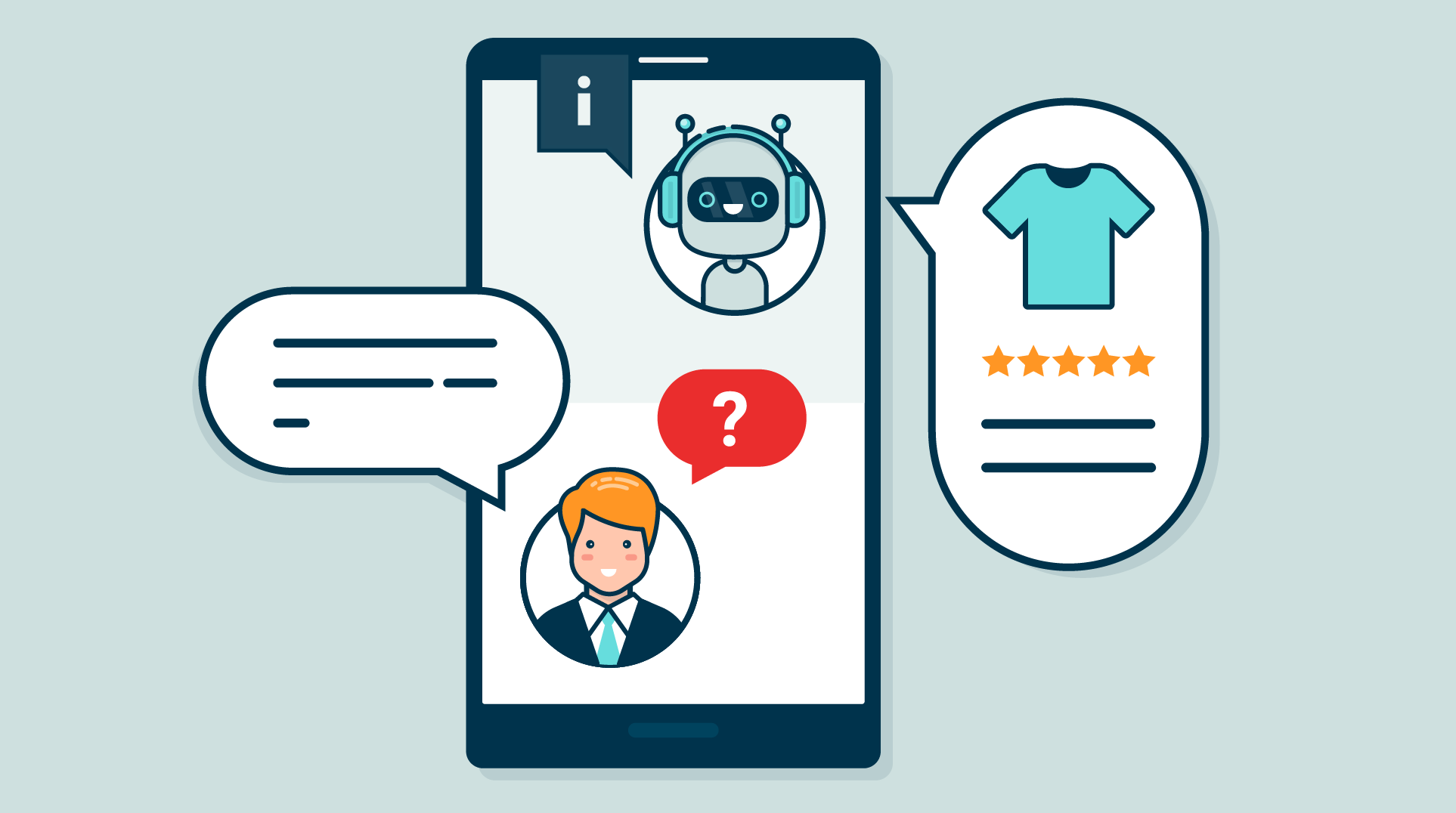
Conversational AI means users can type or speak naturally instead of navigating menus. A chatbot in a banking app can answer "How much did I spend on food last month?" without requiring the user to find transaction filters. A voice assistant can set reminders, send messages, or control smart home devices .
The key difference from traditional chatbots: AI-powered conversations understand context and intent. Users don't need to phrase things perfectly. The system interprets what they mean, pulls the right data, and takes action .
Computer Vision and Visual Search
Computer vision turns your device camera into an input method. Point your phone at a product and search for it online. Scan a document and auto-fill form fields. Try on clothes virtually before buying.
Visual search works especially well for mobile because the camera is always there. Apps like Google Lens already prove this—users take photos instead of describing what they want. Document scanning apps use optical character recognition to read receipts, business cards, or contracts and turn them into structured data .
Predictive Features That Anticipate User Needs
One of the most powerful applications of AI in mobile is predicting what a user needs before they explicitly ask for it.
In financial apps, AI models analyze spending patterns and proactively alert users when they are approaching budget limits, when a subscription is about to renew, or when an unusual transaction occurs. Users do not have to check. The app tells them.
In health and fitness apps, AI tracks activity, sleep, and biometric data to surface personalized insights and suggest adjustments before a pattern becomes a problem. The app moves from being a logging tool to something closer to a personal health advisor .
The common thread is proactivity. The app is working for the user even when the user is not actively using it.
Enhanced Security and Fraud Detection
AI-powered mobile apps can detect unusual activity and prevent fraud by monitoring patterns. If a login attempt looks suspicious, AI can trigger extra verification steps.
Financial apps like PayPal and many fintech apps use AI to detect fraud by analyzing transaction behavior. If a payment looks abnormal, the system flags it instantly. This builds customer confidence and protects business revenue .
Step 4: The Rise of On-Device AI
A growing concern among mobile users is data privacy. On-device AI offers a meaningful solution.
When AI processing happens directly on the user's device rather than on a server, sensitive data does not need to leave the phone. This is relevant for features like voice recognition, facial recognition, health monitoring, and behavioral analysis.
Beyond privacy, on-device processing improves performance. There is no round trip to a server, which means responses are faster. Features work even without an internet connection.
Google AI Edge Gallery now supports the Model Context Protocol (MCP), local notification reminders, and persistent chat history—providing developers with a showcase to build connected, automated, on-device agentic experiences .
The "Intelligent OS" initiative is also expanding this capability. Android AppFunctions allows apps to expose data and functionality directly to AI agents and assistants. With the AppFunctions Jetpack library, developers can create self-describing functions that agentic apps can discover and execute via natural language .
Step 5: Agentic Commerce and AI-Native Apps
By 2026, e-commerce will not be only about flashy web pages or huge advertising campaigns. The actual game-changer is the development of AI-native mobile apps which will form the basis of any winning online brand .
AI-native applications are applications that are developed with AI in mind, and not as an afterthought. They provide unparalleled personalization, automation and retention.
In 2026, it is all about agentic commerce, in which AI agents are used independently to provide support to users :
| Agentic Capability | Description |
|---|---|
| Smart shopping assistants | AI picks products, deliveries, and subscriptions |
| Automated support | Real-time resolution of issues without human intervention |
| Adaptive user experiences | App alters interface, layout, or content depending on user behavior |
This reactive to proactive shift in AI is turning apps from passive helpers into active partners .
Step 6: Industry Applications
Healthcare
Healthcare is one of the best examples of AI-powered app impact.
AI-powered healthcare apps support doctors, patients, and providers by improving diagnosis accuracy, patient monitoring, and treatment planning. These apps analyze large volumes of medical data to deliver faster and more personalized care .
Applications include symptom checking and virtual health assistants, diagnostic support and medical image analysis, personalized treatment recommendations, and predictive patient monitoring and alerts.
E-commerce
AI enhances shopping experiences by personalizing recommendations, optimizing pricing, and improving operational efficiency.
Applications include personalized product recommendations, AI chatbots for customer support, visual search and product discovery, and inventory forecasting and demand planning .
Apps built on AI are better than websites because they can adjust to the user, as opposed to the user adjusting to the platform .
Banking and Finance
AI-driven finance apps improve security, automate services, and offer personalized financial insights. They analyze transaction data to detect fraud and enhance user experience .
Applications include fraud detection and risk analysis, AI-powered chatbots for banking support, personalized financial recommendations, and algorithmic trading and forecasting.
Manufacturing
AI helps manufacturers increase efficiency, reduce downtime, and improve product quality through predictive insights and automation .
Applications include predictive maintenance, quality inspection using computer vision, supply chain optimization, and production planning and forecasting.
Transportation and Logistics
AI-powered mobile apps optimize logistics operations, improve delivery efficiency, and enhance safety across transportation networks .
Applications include route and delivery optimization, fleet performance monitoring, predictive vehicle maintenance, and demand forecasting.
Step 7: Building AI-Powered Mobile Apps
Core AI Capabilities
| Capability | Description |
|---|---|
| Machine Learning | Enables apps to learn from data and improve over time |
| Natural Language Processing (NLP) | Powers conversational interfaces and text understanding |
| Computer Vision | Enables image and video recognition, visual search |
| Recommendation Systems | Delivers personalized content and product suggestions |
| Predictive Analytics | Anticipates user needs and behaviors |
| Speech Recognition | Enables voice-based interaction |
| Anomaly Detection | Identifies fraud, unusual patterns, security threats |
Source:
Development Process
Most AI-powered mobile apps operate through a continuous improvement loop that allows them to learn, adapt, and get better over time :
| Stage | Description |
|---|---|
| Data Input | App gathers data from user interactions, images, audio, location, device signals |
| Model Processing | AI models identify patterns and generate insights |
| Output | App delivers response, suggestion, or automated decision |
| Learning | AI improves from new data and feedback |
| Evaluation | Teams monitor accuracy, speed, engagement, error rates |
Source:
On-Device vs Cloud Processing
Most production apps use both: on-device for speed and privacy, cloud for features that need more power. A fitness app might use on-device ML to count reps during a workout, then sync to the cloud for detailed progress analytics .
Rapid Development Tools
Google AI Studio now enables building native Android apps from natural language prompts. You can go from a single prompt to a high-quality, Kotlin-based Android app in AI Studio, with no software installation required .
The tool supports the Android SDK, Jetpack Compose, and Kotlin, and includes built-in emulators. You can install the app directly to your device, share it for testing, or send it to Android Studio for further development .
Step 8: Future Trends
Generative AI in Mobile
Google's Gemini Omni allows users to transform simple text or images into high-quality cinematic videos, edit footage, or change backgrounds through natural dialogue.
AI-Powered App Discovery
Google's "Ask Play" AI-powered overlay will allow users to discover new apps by having natural conversations with AI within the Play Store.
Multimodal Interactions
Mobile apps that can process voice, image, and text simultaneously will enable interaction patterns that feel closer to human conversation than anything available today.
Emotion-Aware AI
Systems that can detect user frustration, confusion, or disengagement through behavioral signals and adapt accordingly will take personalization to a new level .
Step 9: Implementation Considerations
Start with the Customer Problem
The most effective AI features solve a specific, well-understood problem that users have. Starting with the technology and working backwards to find a use case usually leads to features that are technically impressive but practically unimportant .
Data is the Foundation
AI features that are meant to personalize, predict, or learn require data. Businesses that do not have a clear data strategy, including what data is collected, how it is stored, and how it is used responsibly, will struggle to build AI features that actually work well .
Plan for Iteration
AI models improve over time as they are exposed to more data and refined based on real-world performance. Businesses should build their AI features with ongoing monitoring and improvement in mind. Launching and leaving is not a viable approach .
User Trust is Not Optional
Transparency about how AI is being used, what data is involved, and how users can opt out or adjust is not just good ethics. It is good product design. Users who trust an AI feature engage with it more, which generates better data, which improves the feature further .
Step 10: Frequently Asked Questions
Q1: Are AI-powered mobile apps expensive to build?
Costs vary widely. Basic AI integrations using pre-built APIs are affordable. Custom model development and complex AI features require significant investment. Start with one high-impact feature and expand based on measured ROI .
Q2: Do I need to be an AI expert to build an AI mobile app?
Not necessarily. Many platforms offer pre-built AI services and integrations. However, understanding the capabilities and limitations of AI, and having a clear data strategy, is essential for success .
Q3: What is the difference between an AI-powered app and an AI-native app?
An AI-powered app adds AI as a feature. An AI-native app is built with AI as the core architecture, designed from the ground up to learn, adapt, and personalize experiences .
Q4: How do I choose between on-device and cloud AI?
On-device is faster and more private but limited by device hardware. Cloud AI is more powerful but requires internet and raises privacy considerations. Most production apps use both .
Q5: What is the ROI of AI in mobile apps?
AI drives ROI through increased retention, higher engagement, reduced operational costs, and improved customer satisfaction. Businesses report higher conversion rates, larger basket sizes, and lower churn from AI-powered personalization .
Q6: How long does it take to build an AI-powered mobile app?
Timelines vary from weeks for simple AI integrations to months for complex custom AI development. Generative AI tools are accelerating development, with some platforms allowing app generation in minutes .
Q7: How can Innovative AI Solutions help?
We help businesses design, build, and deploy intelligent mobile applications, from strategy and AI use case selection to development and launch. Based in Delhi, serving clients across India.
Step 11: Final Tagline
AI-powered mobile applications are not improving customer experience at the margins. They are redefining what a good mobile experience looks like. The gap between apps that use AI thoughtfully and those that do not is becoming increasingly visible to users. For businesses, the opportunity is real. It requires a clear understanding of the customer problems worth solving, a strong data foundation, careful attention to user trust, and the technical capability to build and maintain intelligent systems that actually deliver in production.
Short version: Intelligent mobile apps for modern businesses – AI capabilities, industry applications, building considerations, and future trends in 2026.
Hashtags: #AIMobileApps #IntelligentApps #MobileAI #AppDevelopment #DigitalTransformation #InnovativeAISolutions
Contact Us
Phone: +91 7464 099 059 / +91 96899 67356
Email: info@innovativeais.com
Address: Netaji Subhash Place, Pitampura, Delhi – 110034
Website: https://innovativeais.com
About the Author
Abhishek Kumar
Founder & CEO, Innovative AI Solutions
5+ years building AI systems and intelligent mobile applications. Based in Delhi, serving clients across India.
Related services: to apply this in your business, explore our mobile app development and machine learning and predictive analytics.