The Big Question
What happens when your interface no longer has fixed screens, menus, or navigation paths? When the system generates exactly what you need, when you need it, based purely on what you're trying to accomplish? And what if the boundary between you and the software becomes so fluid that you're no longer "using" an application—you're collaborating with an intelligent system?
This is the promise of AI-native user interfaces. And it's redefining how we think about interaction design.
From Pages to Answers: The Fundamental Shift
For decades, the web was structured around pages and links that required clicking, parsing, and interpretation. Traditional app experiences were built around menus, filters, and tabs where users had to navigate to find what they needed . The interface was the destination.
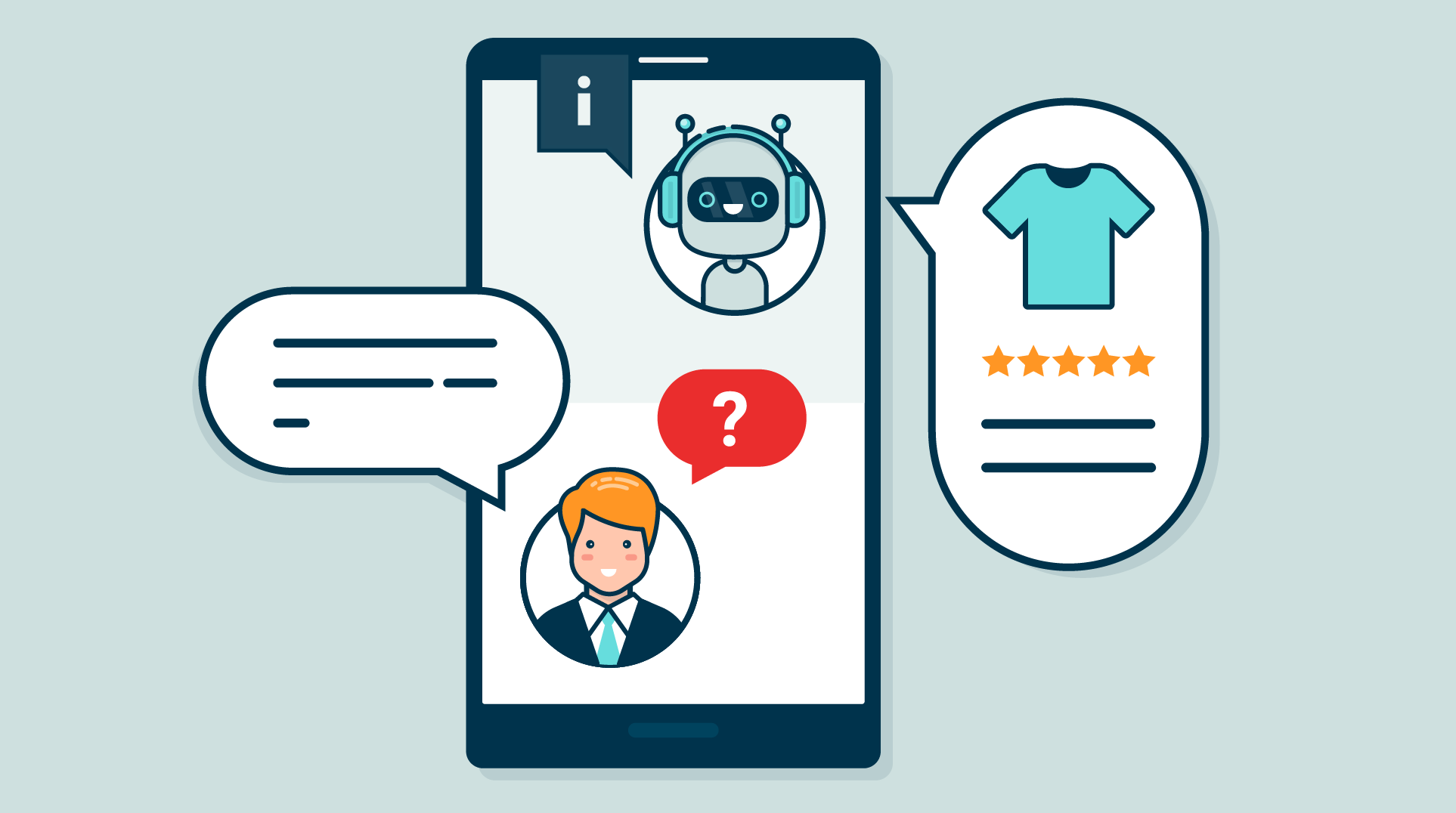
With LLMs like ChatGPT, Claude, and Perplexity, this paradigm is being flipped. They don't send you to a page; they become the page, synthesizing relevant content directly into a conversational response . The interface isn't navigation—it's interaction.
What Makes UX LLM-Native?
An LLM-native user experience is not just a chatbot embedded into an app. It's a design philosophy that embraces :
-
Directness: The UI provides the answer directly, not just through links or menus
-
Personalization: Responses adapt to a user's context, history, and preferences
-
Interactivity: Answers are not static; they evolve as the conversation deepens
-
Actionability: The LLM doesn't just tell you what to do; it can trigger actions (e.g., booking, scheduling, generating)
Think of how Perplexity AI delivers citations inline, or how Notion AI writes directly inside your document instead of sending you elsewhere. That's LLM-native UX in action .
Generative UI: When the Interface Writes Itself
What Is Generative UI?
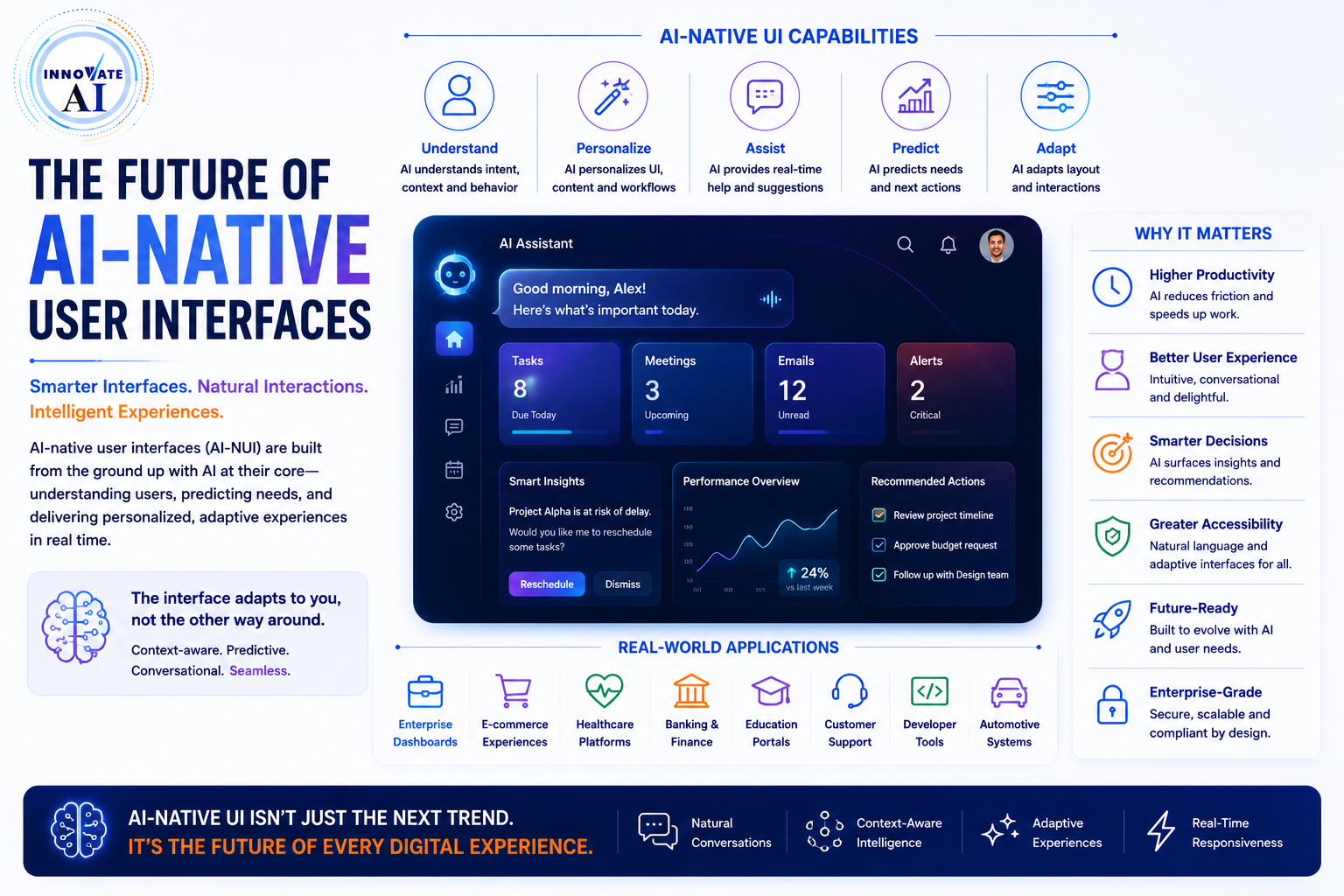
Generative UI is an interface paradigm where the UI is partially or fully generated by an AI model rather than predefined by developers. Instead of designing every screen, developers define capabilities, and the model determines how the interface should appear and behave .
This shift enables interfaces that are :
-
Context-aware and adaptive
-
Generated in real time based on user intent
-
Capable of restructuring themselves dynamically
The Google Research Breakthrough
In November 2025, Google Research introduced a novel implementation of generative UI, enabling AI models to create immersive experiences and interactive tools and simulations generated completely on the fly for any prompt. This is now rolling out in the Gemini app and Google Search .
The implementation uses Gemini with three key additions :
-
Tool access: A server provides access to image generation and web search
-
Carefully crafted system instructions: Detailed instructions include the goal, planning, examples, and technical specifications
-
Post-processing: Outputs pass through a set of post-processors to address potential issues
When using dynamic view, Gemini designs and codes a fully customized interactive response for each prompt. It customizes the experience with an understanding that explaining the microbiome to a 5-year-old requires different content and features than explaining it to an adult .
The Results
In user preference evaluations, interfaces from generative UI implementations were strongly preferred by human raters compared to standard LLM outputs. The results were second only to sites designed by human experts, with a substantial gap from all other output methods .
Generative UI vs. Traditional UI
| Component | Traditional UI | Generative UI |
|---|---|---|
| UI | Static, Predefined | Dynamic, Generated |
| Backend | API-driven | Context-driven |
| Workflows | Hardcoded | Adaptive |
| Interaction | Click-based | Intent-based |
The Agentic Interface: Beyond Conversational UI
The AI Era: From Interactions to Intentions
In 2026, advances in AI are moving systems from reactive tools to goal-driven agents. Users express intent; the system determines the steps. Human-Computer Interaction (HCI) is moving beyond interface optimization to reducing interaction overhead altogether .
This shows up in two clear ways :
-
AI agents that handle multi-step tasks with minimal input
-
Interfaces that recede into the environment: voice, sensors, and context-aware systems
The result is a shift in what we design. If interaction becomes implicit, design moves up a level from actions to intent. This transition, from interaction design to intention design, is shaping the next phase of HCI .
The Interface as Fallback Layer
In agentic systems, the interface is no longer the product. The agent is. The UI becomes a fallback layer used for oversight, correction, or edge cases .
Key design patterns include :
-
Observability: What is the agent doing?
-
Explainability: Why did it choose this path?
-
Intervention: How does a user step in?
The CUI-GUI Spectrum
Interaction with LLMs is expanding beyond strictly Conversational User Interfaces (CUIs), with systems starting to incorporate direct-manipulation mechanisms typical of Graphical User Interfaces (GUIs) .
The current landscape can be described as a continuum, ranging from strictly conversational to increasingly visual and interactive interfaces built on top of a basic CUI. Research aims to develop adaptive LLM interfaces that dynamically adjust the balance between conversational and graphical elements in response to users' needs and contextual factors .
The Challenge: Will Conversation Replace Clicks?
The Efficiency Argument
Not everyone agrees that conversation-driven interfaces are universally superior. Some designers caution against the "blank slate/black box problem"—a conversational interface has less visibility into what's possible, and the interaction cost of asking for things in natural language can sometimes exceed clicks .
In enterprise software, GUI often remains more efficient :
-
Humans think in structured terms; GUI enables fast, precise input
-
GUI provides richer information density than dialogue
-
Complex operations (like editing documents or analyzing data) are often faster through direct manipulation
When CUI Makes Sense
AI-driven conversation is effective when :
-
AI can directly output results without requiring human confirmation
-
The system can handle complex workflows autonomously (e.g., automatic procurement and replenishment)
-
The user can delegate to the AI as a manager delegates to a subordinate
The Practical Middle Ground: Buttons Within Chats
True genUI is no longer purely theoretical. Simple interactive elements—buttons, form fields, checkboxes—are starting to appear contextually within conversations, generated by the AI when it determines they'd be useful .
Claude's AskUserQuestion Module: Claude can generate a set of interactive form fields to collect additional context from the user before generating a response. This is a predesigned module that Claude can decide to load and populate when it needs the user to answer more questions .
Google AI Mode Checkboxes: Users can select multiple options (e.g., hotel recommendations) and they're automatically populated into the chat input for follow-up questions. Users don't have to read, memorize, and retype .
These simple design patterns help the system gather the context it needs without forcing users to plan ahead, remember a list of questions, or format their answers perfectly .
AG-UI: The Protocol for AI-Native Interfaces
What Is AG-UI?
AG-UI (Agent-User Interaction Protocol) is an open, lightweight, standardized protocol that creates a common language for AI agents and interfaces to communicate through a real-time stream of events .
It's the missing piece between AI agents and user interfaces, allowing messages, tool calls, state updates, and user approvals to flow seamlessly between the agent's backend and the interface on the frontend .
How It Works
AG-UI creates a continuous, two-way conversation between the agent and the interface. Instead of waiting for the model to finish generating a full response, the agent streams small, structured updates as they happen. The UI listens, reacts, and updates in real time .
The Loop:
-
User prompt → Agent request: Interface sends the request through AG-UI
-
Agent reasoning → Event stream: Agent emits JSON events describing progress
-
UI rendering → Live synchronization: Frontend updates interface with progress indicators, partial outputs, and visualizations
-
User interaction → Feedback loop: Users can respond mid-flow to approve actions, cancel runs, or refine prompts
Why AG-UI Matters
The impact of AG-UI goes beyond simply linking agents and interfaces. It turns AI from something you interact with into something you work alongside :
-
Real-Time Collaboration: Users can follow an agent's reasoning as it unfolds
-
Interoperability: Any agent backend can connect to any frontend that speaks the protocol
-
Production-Ready Foundation: Brings reliability and structure to move AI products from demo to deployment
The Coexistential AI Era: From Tools to Partners
HCI's evolution reflects a progression from basic usability toward complex collaboration and partnership with intelligent systems .
| Era | Metaphor | Key Characteristic |
|---|---|---|
| Equipment Era (pre-1970s) | Tools | Command-line, punch cards |
| Interactive System Era (1980s-90s) | Dialog Partners | GUIs, desktop metaphor |
| Autonomous Agent Era (1990s-2010s) | Team Members | Proactive AI, autonomy |
| Coexistential AI Era (2020s-present) | Creative Partners | Co-creation, intimacy, mutual adaptation |
In the Coexistential AI Era, traditional metrics like trust and transparency may prove insufficient, requiring expansion to partnership-characteristic measures: intimacy, mutual adaptability, and social bonding .
The New Stack: Generative UI + MCP
The Missing Backend
Generative UI alone introduces flexibility but does not guarantee reliability. Without a structured backend layer, systems face :
-
Inconsistent access to tools and data
-
Fragile multi-step workflows
-
Limited ability to execute real-world actions
MCP: The Orchestration Layer
MCP (Model Context Protocol) is a framework for structuring how AI systems access tools, data, and context. It standardizes how models :
-
Discover tools
-
Execute actions
-
Retrieve and manage context
The Complete Stack
When both layers operate together :
-
User provides intent
-
Model generates a dynamic UI
-
MCP connects to data sources and tools
-
UI updates in real time with results
This creates a closed loop between intent, execution, and presentation.
What This Means for Practitioners
For Designers
-
Move from interface flows to behavior design
-
Define how systems interpret intent, not just how users navigate
-
Design for uncertainty and recovery, not just ideal paths
For Engineers
-
Build agent architectures with planning, memory, and tool use
-
Support observability and debugging of agent decisions
-
Handle partial failures and edge cases explicitly
For Product Teams
-
Redefine success metrics (task completion over engagement)
-
Evaluate systems based on outcomes, not interactions
-
Align automation levels with user trust and context
Frequently Asked Questions
Q1: What is Generative UI?
Generative UI is an interface paradigm where the UI is partially or fully generated by an AI model in real time based on user intent, rather than being predefined by developers.
Q2: Will AI interfaces replace all traditional interfaces?
No. In enterprise environments, GUI often remains more efficient for complex operations. The future is a spectrum—interfaces will dynamically balance conversational and graphical elements based on context.
Q3: What is AG-UI?
AG-UI (Agent-User Interaction Protocol) is an open protocol that creates a common language for AI agents and interfaces to communicate through real-time event streams, enabling dynamic, synchronized interaction.
Q4: What is the "Coexistential AI Era"?
A paradigm shift where AI systems move from being tools to becoming creative partners. Interactions become more proactive, adaptive, and affectively aware, with metrics expanding to include intimacy, mutual adaptability, and social bonding.
Q5: What are the trust challenges with AI-native interfaces?
Key challenges include transparency (users need to understand what the system is doing), explainability (systems must justify key decisions), and control (users must be able to intervene and correct outcomes). As interaction disappears, accountability must not.
Q6: How can Innovative AI Solutions help?
We help organizations design, build, and operationalize AI-native user interfaces—from Generative UI strategy and AG-UI implementation to trust-building and governance frameworks. Based in Delhi, serving clients across India.
Why Delhi is a Great Hub for AI Development
Delhi is emerging as a significant hub for AI development, backed by concrete government support and infrastructure. The recent Delhi Budget 2026-27 allocated ₹8.20 crore for two Artificial Intelligence centres of excellence (AI-CoEs), functioning as hubs for research, innovation, and startup incubation.
The city's AI infrastructure is expanding rapidly. Under the IndiaAI Mission, more than 38,000 high-end GPUs have been onboarded and are available at approximately ₹65 per hour—roughly one-third of the global average cost.
The government has also announced a ₹350 crore startup policy over five years, aiming to support the emergence of at least 5,000 startups by 2035, with key focus areas including artificial intelligence, machine learning, and automation.
The AI ecosystem in Delhi combines: cost-effective infrastructure, government support, a growing talent pool, and proximity to the country's business decision-makers.
What We Offer at Innovative AI Solutions
After five years of building AI solutions for businesses, we've developed a practical approach that focuses on what actually works:
-
AI-Native UX Strategy: We help you assess your current UX and design an AI-native roadmap
-
Generative UI Implementation: We help you implement dynamic, intent-based interfaces
-
AG-UI Integration: We help you connect agent reasoning with interface rendering
-
Trust and Transparency: We help you implement explainability, editability, and reversibility
-
Platform Selection: We help you choose between Google, Anthropic, or custom solutions
-
Change Management: We help your organization shift from click-based to intent-based culture
Our approach is built on the reality that AI-native interfaces aren't just a UX trend—they're a fundamental rethinking of how humans interact with software.
Final Thought
Looking beyond 2026, the trajectory is clear. Systems will continue to absorb complexity. Interaction layers will thin out. The boundary between user and system will become less defined. We'll see more autonomous multi-agent systems, deeper integration with physical environments, and early forms of direct human-system interfaces. HCI will increasingly focus on collaboration models between humans and intelligent systems, not just interaction techniques .
The shift is straightforward: from designing interactions to designing intent-driven systems. The execution is not .
Contact Us:
Phone: +91 7464 099 059 / +91 9689967356
Email: info@innovativeais.com
Address: Netaji Subhash Place, Pitampura, Delhi – 110034
Website: https://innovativeais.com
About the Author
Abhishek Kumar
Founder & CEO, Innovative AI Solutions
5+ years building AI systems for enterprises. Based in Delhi, serving clients across India.
Hashtags: #AINativeUI #GenerativeUI #AgenticInterface #HCI #AGUI #UXDesign #InnovativeAISolutions
Related services: to apply this in your business, explore our AI agent development and LLM integration.