The Big Question
For decades, enterprise security operated on a simple assumption: keep the bad guys out, and everyone inside the castle is safe. Firewalls, VPNs, and network perimeters were the walls. Once you were inside, you were trusted.
That model is dead.
The modern enterprise doesn't have a perimeter. Your data lives in the cloud. Your employees work from home. Your contractors access systems from their own devices. Your applications talk to third-party services over the internet. The castle walls have been replaced by a sprawling, interconnected ecosystem with no clear boundary.
The consequences are visible in every major breach report. Attackers who compromise a single device can move laterally across the network without detection. Credential theft allows them to impersonate legitimate users. Insider threats operate with the implicit trust the network grants them .
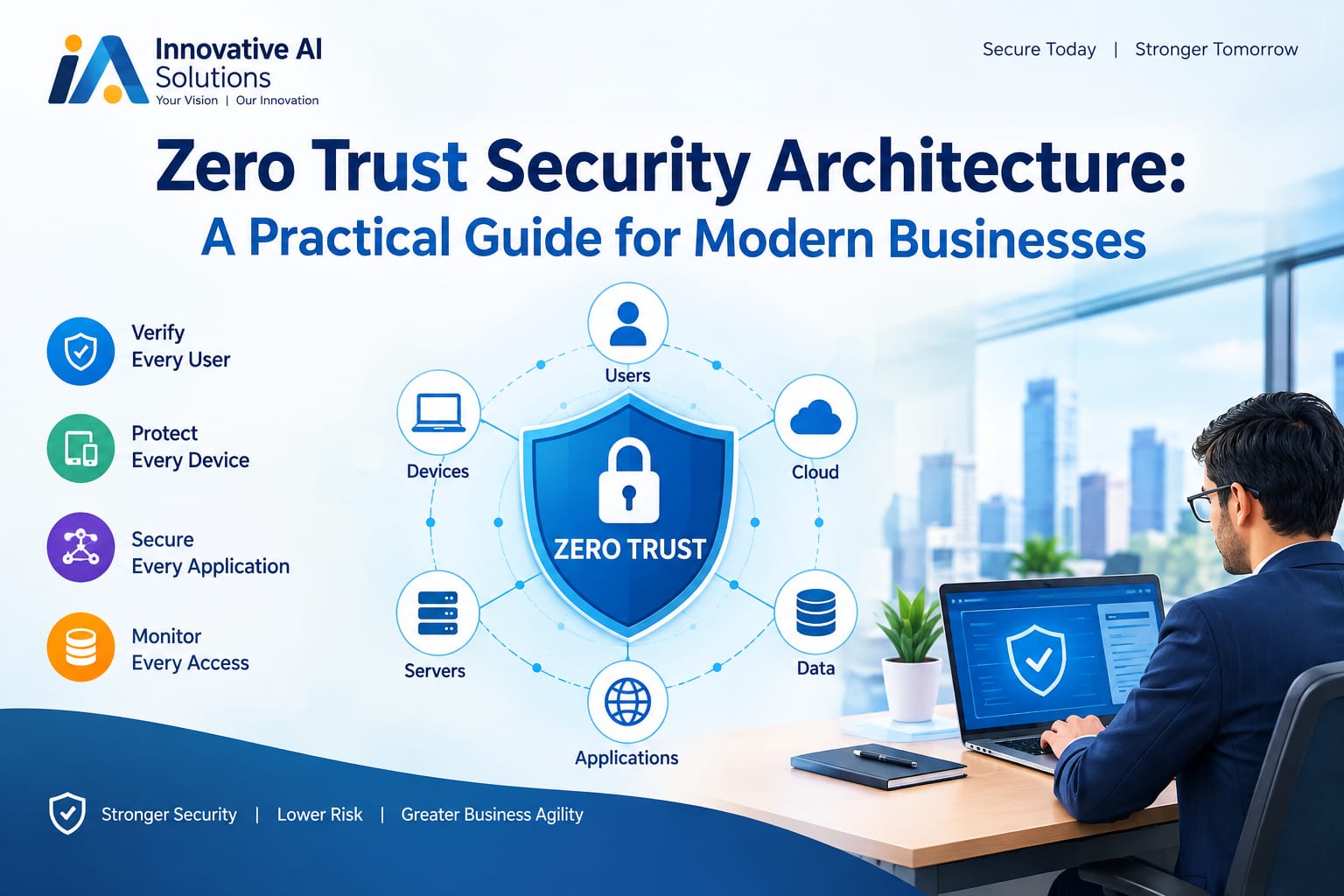
Zero Trust Architecture (ZTA) emerged as the answer. It rejects the idea that anything inside the network deserves trust. The core principle is simple: "never trust, always verify" . Every user, every device, every request must be authenticated and authorized before access is granted. Trust is not a location. It is a continuously evaluated state.
The UK's National Cyber Security Centre (NCSC) defines Zero Trust as an architectural approach where "inherent trust in the network is removed, the network is assumed hostile, and each request is verified based on an access policy" .
That sounds straightforward. Implementation is anything but.
Cost Based on Organization Type
Zero Trust costs vary dramatically based on your size, industry, and existing infrastructure. There is no single price tag only a range of investments that scale with complexity.
| Organization Type | Typical Investment Range | What It Covers |
|---|---|---|
| SMB / Startup | ₹3,00,000 – ₹15,00,000/year | SSO, MFA everywhere, basic RBAC, audit logging |
| Mid-Market Enterprise | ₹15,00,000 – ₹50,00,000/year | Identity platform, micro-segmentation, ZTNA for remote access |
| Large Enterprise | ₹50,00,000 – ₹2,00,00,000+/year | Full ZTA transformation, custom policy engines, workload identity |
| Regulated Industry | ₹1,00,00,000+ | Compliance-driven ZTA, dedicated security teams, continuous audit |
A practical rollout for Indian enterprises breaks down into phases with concrete costs. Phase 1 (Identity-First Access) runs ₹5-10 lakh for 200-500 users in switches and RADIUS licensing. Phase 2 (Microsegmentation) costs ₹2-5 lakh for firewall policy configuration and testing. Phase 3 (ZTNA for Remote Access) adds ₹5-8 lakh for endpoint management licensing .
For Series A SaaS startups, the numbers look different. The five highest-impact Zero Trust principles MFA everywhere, SSO, least-privilege access, mutual TLS for service communication, and audit logging cover 60-70% of the security value of full Zero Trust at 10-15% of the cost .
The hidden cost trap: A partial Zero Trust implementation is often worse than no implementation at all. A team that commits to a six-month transformation, eats a quarter of engineering capacity, and ships at 70% completion ends up with a system that is neither secure nor operational. "A simpler version that ships completely beats an ambitious version that ships partially" .
Breakdown by Developer Type (2020-2026)
Zero Trust implementation requires specialized skills that most internal teams do not have. The talent landscape in India reflects both the opportunity and the risk.
| Developer Type | Hourly Rate (India) | Typical Engagement | What They Deliver |
|---|---|---|---|
| Freelancer | ₹1,000 – ₹3,000 | ₹25,000 – ₹75,000 | Basic SSO setup, MFA configuration |
| Small Security Firm | ₹2,500 – ₹6,000 | ₹1,50,000 – ₹5,00,000 | Identity platform deployment, RBAC design |
| Mid-Size Integrator | ₹6,000 – ₹12,000 | ₹5,00,000 – ₹25,00,000 | ZTNA rollout, micro-segmentation, policy engine |
| Enterprise Security Consultancy | ₹12,000 – ₹20,000+ | ₹25,00,000+ | Full ZTA transformation, compliance mapping |
India's structural advantage: Security engineers with comparable certifications (CISSP, CCSP, vendor-specific) bill at 60-80% less than US rates. But Zero Trust specifically requires experience with identity platforms (Okta, Auth0, Microsoft Entra), service mesh (Istio, Linkerd), and policy engines (Open Policy Agent, HashiCorp Sentinel). These skills are scarce, and the quality variance is enormous.
The critical question before hiring: "Show me a Zero Trust deployment you completed in the last 18 months not a design document, a live production environment." Vendors show architecture diagrams. Operators show running systems with real users.
Why Prices Changed in 2026
Three forces have reshaped Zero Trust economics.
First, supply chain security became a board-level concern. Recent tariff changes and component origin scrutiny have intensified procurement complexity, especially for hardware-dependent security solutions. This is accelerating the shift toward software-defined security models and managed services that reduce exposure to hardware supply disruptions .
Second, cloud-native architectures made ZTA both easier and harder. Easier because cloud providers offer native identity and policy tools. Harder because the attack surface expanded exponentially. Zero Trust now must protect workloads across on-premises, multi-cloud, and edge environments each with different trust models and integration requirements .
Third, AI and machine learning became core to ZTA. Behavioral analytics, predictive threat detection, and automated incident response are now standard components of mature Zero Trust deployments. AI enhances ZTA's adaptability, but it also increases complexity and cost .
The result: Zero Trust is more necessary than ever, and more expensive to implement poorly.
Pro Tips to Save Money in 2026
1. Start with identity, not network segmentation. Identity is the new perimeter. SSO with MFA is the highest-impact, lowest-cost starting point. Deploy it everywhere before you touch micro-segmentation .
2. Adopt the five principles before the full framework. MFA on every account, SSO with a strong identity provider, least-privilege access via RBAC, encrypted service-to-service communication, and centralized audit logging cover 60-70% of the security value at a fraction of the cost .
3. Phase your rollout to avoid analysis paralysis. Zero Trust is a significant undertaking with many unknowns. Start with high-risk areas, use coarse-grained access control initially, and tighten as you learn. Effective milestones and iterative deployment reduce the risk of stalling .
4. Engage compliance teams early. If you are subject to regulatory requirements (DPDP, HIPAA, SOC 2, PCI-DSS), involve auditors and compliance specialists from the beginning. Discovering compliance gaps after deployment is expensive and demoralizing .
5. Do not neglect network security. ZTA should not be implemented with a singular focus on endpoints. An attacker who subverts an endpoint can move freely if network policies are neglected. Implement layered controls: network security policies plus endpoint capabilities .
6. Build for extensibility from day one. Zero trust is meant to evolve. As threats change, your architecture must adapt. Design for continuous improvement, not a one-time deployment .
Questions to Ask Before Hiring
Before you commit budget to any Zero Trust implementation partner, ask these questions.
1. "What does our current architecture look like users, devices, services, and data?" The first NCSC principle is to know your architecture. If they cannot map your current state, they cannot design your future state .
2. "How will you phase the rollout to avoid disrupting operations?" Zero Trust deployments that span multiple business areas with fine-grained access control take much longer than incremental approaches. Ask for a phased plan with clear milestones .
3. "How do you handle legacy systems that cannot support Zero Trust?" Every enterprise has them. The right answer involves network segmentation, compensating controls, or gradual replacement not pretending they do not exist .
4. "What does success look like in 90 days, 6 months, and 12 months?" Zero Trust is a journey, not a destination. A partner without concrete milestones is a partner who will bill you indefinitely.
5. "Who owns the system after implementation?" A consultancy that builds and leaves is not a partner. Ask for retained operations, monitoring, and tuning as part of the engagement.
Why Delhi is a Great Hub for Zero Trust Implementation
Delhi-NCR has become a serious destination for security architecture work, and the reason isn't just cost.
The region hosts a dense cluster of enterprise headquarters, government agencies, financial institutions, and healthcare providers the exact organizations facing the highest regulatory pressure and threat profiles. India's public sector is actively procuring Zero Trust solutions: IREL (India) Limited, a Mini-Ratna Category-I public sector enterprise, issued a competitive tender for Zero Trust Network Access solutions covering 60 user licenses with requirements for IAM, endpoint scanning, network segmentation, and audit reporting .
That government adoption signals something important. Delhi isn't just a place where security firms operate. It is becoming a place where Zero Trust is being deployed at scale in critical infrastructure.
The talent density keeps improving. With a steady pipeline of security engineers, identity specialists, and cloud architects, Delhi offers a combination of cost and capability that's hard to match. And the time zone advantage matters: a Delhi-based team can sync with Middle East morning, European afternoon, and US East Coast evening.
What We Offer
At Innovative AI Solutions, we treat Zero Trust as an engineering discipline, not a product pitch.
Our approach:
-
Architecture Audit First. We map your users, devices, services, and data. You cannot secure what you haven't inventoried.
-
Identity-First Rollout. SSO with MFA deployed everywhere before we touch network segmentation. The highest-impact, lowest-risk starting point.
-
Phased Micro-Segmentation. Start with high-risk areas. Use coarse-grained controls initially. Tighten as you learn.
-
Continuous Monitoring. Zero Trust is not a one-time deployment. We build the monitoring, alerting, and policy tuning that keeps your architecture current.
-
Retained Operations. Your Zero Trust deployment doesn't rot because someone forgot it existed.
Our principle is simple: small steps, fast iteration, data speaks.
Frequently Asked Questions
Q: What is Zero Trust in simple terms?
Zero Trust means no user, device, or network is inherently trusted. Every access request must be authenticated, authorized, and continuously verified. The principle is "never trust, always verify" .
Q: How much does Zero Trust cost for a mid-size business?
A phased rollout for 200-500 users costs approximately ₹12-23 lakh across three phases: identity-first access (₹5-10 lakh), micro-segmentation (₹2-5 lakh), and ZTNA for remote access (₹5-8 lakh) . Annual operational costs add another 15-25%.
Q: Is Zero Trust worth it for a startup?
For most Series A SaaS startups, full Zero Trust transformation is overkill. The five highest-impact principles MFA everywhere, SSO, least-privilege access, mutual TLS, and audit logging cover 60-70% of the security value at 10-15% of the cost .
Q: How long does Zero Trust implementation take?
Phase 1 (Identity-First Access) takes 4 weeks. Phase 2 (Microsegmentation) adds 4 weeks. Phase 3 (ZTNA for Remote Access) adds 4 weeks. Full enterprise transformation can take 6-12 months .
Q: What is the biggest mistake companies make with Zero Trust?
Committing to a full transformation without the bandwidth to complete it. A partial implementation is worse than either the legacy architecture or a complete transformation. "A simpler version that ships completely beats an ambitious version that ships partially" .
Frequently Asked Questions (Extended)
Q: Does Zero Trust replace firewalls and VPNs?
No. Zero Trust changes how they are used. Firewalls remain as network policy enforcement points. VPNs are replaced or augmented by ZTNA, which provides identity-based access rather than network-based access .
Q: How does Zero Trust handle legacy systems that can't support modern authentication?
Network segmentation. Legacy systems are placed in isolated segments with compensating controls, and access is mediated through policy enforcement points. Gradual replacement is the long-term answer .
Q: What metrics should I track to measure Zero Trust success?
Track Intrusion Reduction Rate (IRR), Unauthorized Access Rate (UAR), Mean Time to Detection (MTTD), and User Adaptability Score (UAS). Organizations adopting ZTA report 75% improvement in breach detection and 66.7% reduction in unauthorized access .
Q: Will Zero Trust hurt user experience?
There can be some negative impact due to constant security checks. User Adaptability Scores help measure this. The goal is to balance security with usability through context-aware policies that only challenge requests when risk signals warrant it .
Q: What's the first step I should take tomorrow?
Pick one principle. Just one. MFA on every account. It's the highest-impact, lowest-cost starting point. Then add SSO. Then RBAC. Build from there. Not with a strategy document about Zero Trust transformation.
Contact Us:
Phone: +91 7464 099 059 / +91 9689967356
Email: info@innovativeais.com
Address: 9th Floor, Pearls Best Heights-I, Head Office: 904, Netaji Subhash Place, Delhi, 110034