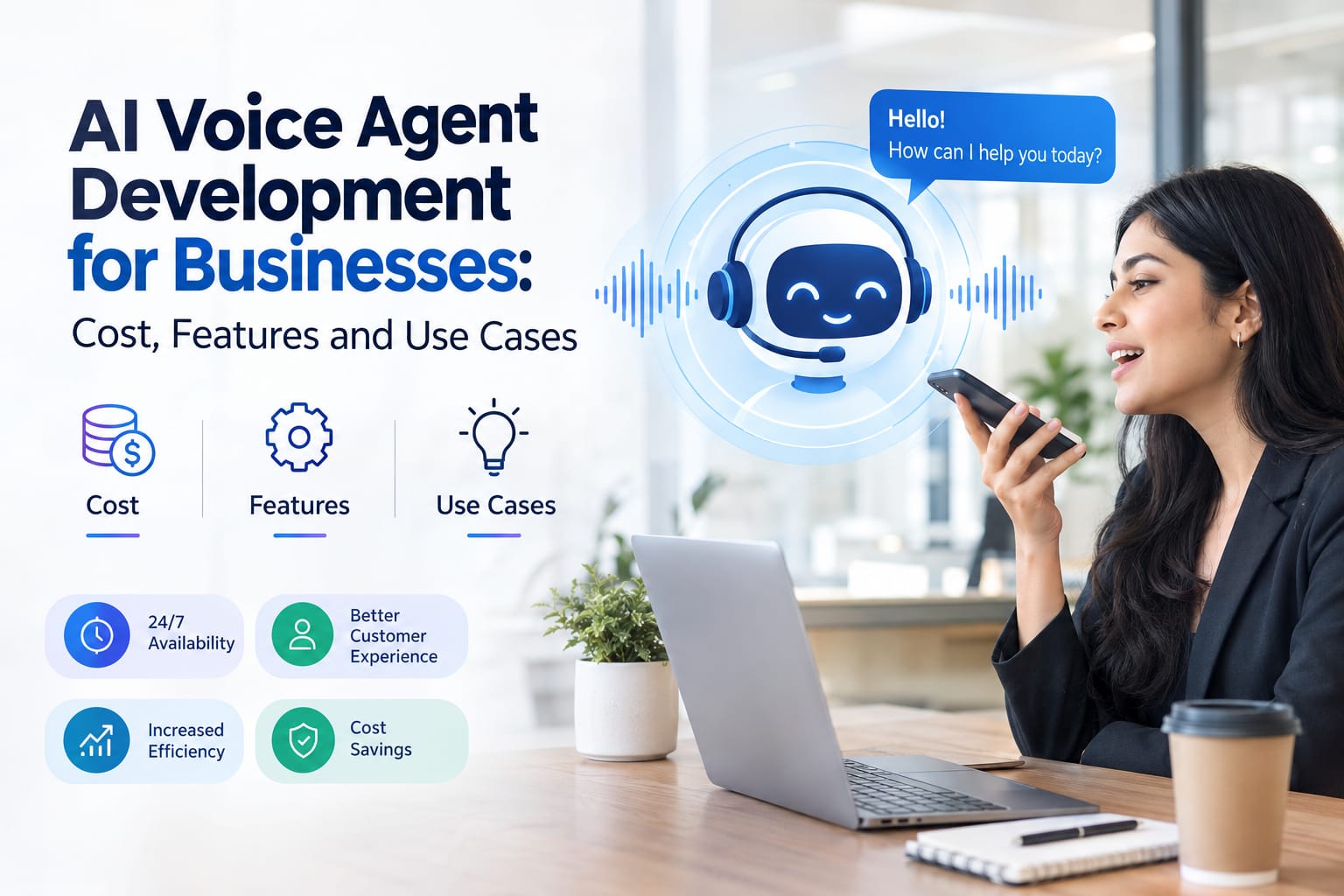
The Big Question
For years, the industry tried to kill the phone call. Companies buried phone numbers, pushed customers toward chatbots and FAQs, and treated voice as a cost center to be minimized.
That strategy is reversing.
Twilio's APJ sales VP Robert Woolfrey put it plainly: "Customers no longer want to bury a phone number. In the past, you would take a phone number and make it as inaccessible on your website as possible to try to deflect from people calling in. Today, we're seeing a surge in voice. Customers are adding phone lines."
The reason is simple: voice AI got good. Voices are no longer robotic. Modern voice agents can handle natural turn-taking, interruptions, background noise, and regional accents. They don't just answer questions they take action. They authenticate customers, update records, process transactions, and complete service tasks.
And the economics are compelling. A voice agent doesn't get tired, doesn't need breaks, and can handle thousands of calls simultaneously. For high-volume, repetitive voice workflows collections, appointment scheduling, order status, KYC verification the ROI is immediate.
The real question isn't whether voice AI works. It's whether you're building it the right way.
Cost Based on Agent Type
AI voice agent pricing has two components: the build cost and the ongoing usage cost. The usage cost is where most of the money goes.
Usage-based pricing (2026 market rates):
| Pricing Model | Rate | What It Covers |
|---|---|---|
| AssemblyAI Voice Agent API | $4.50/hour flat | STT, LLM routing, voice generation bundled |
| xAI Grok Voice | $0.08/min + $0.01/min telephony | Speech-to-speech, voices included |
| ElevenLabs Agents | $0.08/min (Starter) | Conversational AI agents |
| Indian SME market rate | ₹7-9 per minute | AI voice agents for Indian businesses |
For an enterprise handling 100,000 calls per year at an average of 3 minutes per call, usage costs range from ₹21,00,000 to ₹27,00,000 annually at Indian market rates.
Build costs by complexity:
| Agent Type | One-Time Build Cost (India) | Core Capabilities |
|---|---|---|
| Simple IVR Replacement | ₹1,00,000 – ₹3,00,000 | Basic call routing, FAQ answers, voicemail |
| Conversational Voice Agent | ₹3,00,000 – ₹8,00,000 | Natural dialogue, CRM lookup, appointment booking |
| Transactional Voice Agent | ₹8,00,000 – ₹20,00,000+ | Secure authentication, payment processing, multi-system actions |
| Enterprise Multi-Agent System | ₹20,00,000 – ₹50,00,000+ | Multi-agent orchestration, compliance, 100+ integrations |
The hidden cost reality: Advertised platform rates represent only about 20% of true total cost of ownership. The real bill often comes in 3x to 5x higher once LLM tokens, telephony, concurrency slots, and compliance add-ons stack up. Maintenance typically runs 15-25% of the initial build cost per year.
Breakdown by Developer Type (2020-2026)
In India, voice agent development spans from freelance developers to enterprise-grade AI firms:
| Developer Type | Hourly Rate (India) | Minimum Engagement | What They Deliver |
|---|---|---|---|
| Freelancer | ₹1,000 – ₹3,000 | ₹12,500 – ₹37,500 | Basic voice bots, simple IVR, variable quality |
| Small Studio | ₹2,500 – ₹6,000 | ₹60,000 – ₹6,00,000 | Scoped voice agents, CRM integration, maintained delivery |
| Mid-Size AI Firm | ₹6,000 – ₹12,000 | ₹15,00,000 – ₹50,00,000 | Multi-channel voice + chat, enterprise integration |
| Premium Engineering | Under $50/hr (₹4,200) | $10,000 – $25,000 (₹8,40,000 – ₹21,00,000) | Production voice agents, custom RAG, secure deployment |
India's structural advantage: Engineers with comparable technical capability bill at 60-80% less than US rates. Mohali-based Signity Solutions (founded 2009) builds AI voice agents, RAG systems, and enterprise automation at under $50/hr with minimum project budgets of $10,000-$25,000. Delhi-based Quansys AI (founded 2025, bootstrapped) focuses specifically on contact centre automation using voice AI agents and swarm intelligence.
But quality variance is enormous. The key questions that separate real operators from wrapper sellers: Can you show a live voice agent shipped in the last 90 days? Can you explain your turn detection and barge-in strategy? How do you handle telephony format mismatches?
Why Prices Changed in 2026
Three forces have reshaped voice AI economics.
First, speech-to-speech models replaced the three-API stack. Most voice stacks used to stitch together three separate APIs speech-to-text, an LLM, and text-to-speech often hosted by different providers. Every hop added cost, latency, and new failure modes. In 2026, speech-to-speech models handle the entire pipeline natively. xAI's Grok Voice trained on real calls with low-quality telephony audio, background noise, strong accents, and interruptions. The result: natural conversations in 25+ languages at $0.08/min.
Second, the cost curves crossed at 10,000 minutes per month. Below that threshold, bundled platforms win on total cost. Above it, a custom stack using OpenAI Realtime plus LiveKit "wins on cost and control". A fully custom build breaks even only past 500,000 monthly minutes a threshold that makes sense only when voice is a core product differentiator.
Third, enterprise demand shifted from inbound to proactive outbound. Talkdesk launched proactive AI agents for retail and financial services that initiate outbound calls to recover abandoned carts, push loan applications, and handle early-stage collections. Instead of waiting for customers to call, AI calls them first. This shift changes the economics: outbound voice agents are revenue generators, not just cost centers.
Pro Tips to Save Money in 2026
1. Start with a single voice workflow, not omnichannel. Pick one high-volume, repetitive use case appointment reminders, order status, or payment reminders. Prove ROI before expanding to collections, KYC, and sales outreach.
2. Measure cost per resolved call, not cost per minute. A cheaper agent that resolves 60% of calls without human escalation beats a more expensive one that resolves 85%. Voice agents from LiaPlus AI report 90% first-call resolution rates and 60-70% call center cost reduction for enterprise clients.
3. Use speech-aware turn detection, not plain VAD. Plain voice activity detection fires on mid-sentence pauses and filler words. Production teams adopt ML-based turn models. LiveKit's transformer end-of-turn model cut interruptions by 85% versus VAD alone.
4. Set clear escalation triggers. Decide before launch what should transfer to a human: customer asks for a person, agent confidence drops, request falls outside approved scope, customer is emotionally charged, or the action involves refunds or cancellations. Exotel's AI agents escalate complex cases to human teams while handling routine interactions autonomously.
5. Negotiate retained operations from day one. Maintenance runs 15-25% of build cost annually, covering model updates, prompt tuning, and telephony changes. Without this, your voice agent will quietly stop working within 90 days.
6. Test with real-world noise. Real calls come with low-quality telephony audio, background noise, strong accents, and callers who change their minds mid-sentence. Train and test on those conditions, not clean studio audio.
Questions to Ask Before Hiring
Before you hand your budget to any voice agent developer, ask these questions:
1. "Show me a voice agent you shipped in the last 90 days not a demo, a live one in production." Vendors show demos. Operators show production systems with real callers.
2. "What's our cost per resolved call, and how will you measure it?" If they can't answer this, they haven't built production voice agents. Resolution rate is the only metric that captures the full economic picture.
3. "How do you handle turn detection and barge-in?" The right answer involves ML-based turn models, not plain VAD. Barge-in requires canceling LLM calls, tearing down TTS streams, and flushing queued audio.
4. "What's the escalation process? What context travels with the handoff?" The agent must pass full conversation history, collected information, and customer sentiment not just a name and number.
5. "Who owns the agent when the engagement ends?" A dev shop builds and leaves. A SaaS rents you templated agents. A consultancy builds custom agents into your codebase and hands you the keys.
Why Delhi is a Great Hub for AI Voice Agent Development
Delhi-NCR is becoming a serious destination for AI voice agent development, and the reason isn't just cost.
The region hosts a growing cluster of voice AI companies. LiaPlus AI (headquartered in Delhi Cantonment) builds voice AI agents for governments, banks, and e-commerce, handling inbound support, collections, renewals, and KYC in 18+ languages. Their clients see 60-70% reduction in call center costs, 90% first-call resolution, and 50% faster go-live versus traditional IVR providers. They're backed by MeitY, Inflection Point Ventures, and Saudi Arabia's National Technology Development Program.
Quansys AI (New Delhi, founded 2025) focuses specifically on contact centre automation using voice AI agents and swarm intelligence. AI You Imagine (New Delhi, founded 2025) builds AI voice agents, enterprise workflow automation, and CRM integrations for startups, SMEs, and enterprises.
The time zone advantage matters too. A Delhi-based team can sync with Middle East morning, European afternoon, and US East Coast evening covering the full global voice support window.
India's voice AI market is also being recognized globally. Gnani AI partnered with Melento to develop voice-enabled AI agents for enterprise customers across banking, insurance, pharma, and legal services sectors where voice interactions involve sensitive information, regional languages, and complex processes. Gnani provides speech-to-text, text-to-speech, and language model capabilities for enterprise voice applications.
What We Offer
At Innovative AI Solutions, we build AI voice agents that handle conversations and take action without replacing your team.
Our approach:
-
Scoped MVP First. Start with one voice workflow, one channel. Prove ROI in weeks, not months.
-
Cost-per-Call Visibility. We instrument every call, every turn, every escalation. You see exactly what each resolved call costs.
-
Speech-to-Speech Architecture. No three-API stitching. Lower latency, fewer failure modes, natural conversations.
-
Human-in-the-Loop by Default. AI handles volume. Humans handle exceptions. Escalation paths deliver full context.
-
Retained Operations. Monitoring, prompt updates, and flow additions. Your agent doesn't rot because someone forgot it existed.
Our principle is simple: small steps, fast iteration, data speaks.
Frequently Asked Questions
Q: How much does an AI voice agent cost in India?
Usage-based pricing runs ₹7-9 per minute for Indian SME market rates. Build costs range from ₹1,00,000 for simple IVR replacement to ₹50,00,000+ for enterprise multi-agent systems. Global platforms like AssemblyAI charge $4.50/hour** flat, while xAI Grok Voice charges **$0.08/min plus telephony.
Q: How does a voice agent compare to hiring call center agents?
LiaPlus AI reports 60-70% reduction in call center costs and 90% first-call resolution rates for enterprise clients. A voice agent handles thousands of calls simultaneously, works 24/7, and never needs breaks. But if your call volume is too low to reach the cost floor, human agents may still be the better economic call.
Q: What's the biggest mistake companies make with voice agents?
Building the demo and ignoring production reality. Real calls come with background noise, accents, interruptions, and callers who change their minds mid-sentence. A voice agent that works in a quiet office fails in the real world.
Q: How do I control voice agent costs?
Four tactics: (1) Use speech-to-speech models instead of three-API stacks. (2) Cache long system prompts aggressively. (3) Route simple calls to cheaper models. (4) Set per-call time and cost ceilings with automatic human escalation.
Q: Can voice agents handle Hindi and regional Indian languages?
Yes. LiaPlus AI supports 18+ languages including English, Hindi, Arabic, and regional Indian languages. Gnani AI provides speech capabilities for enterprise voice applications across sectors. Microsoft Foundry supports 80+ languages and 140 locales.
Frequently Asked Questions (Extended)
Q: What's the difference between a voice agent and an IVR?
An IVR follows a scripted decision tree. A voice agent understands intent, reasons through complexity, and takes action authenticating customers, updating records, processing transactions, and completing service tasks. The difference is the gap between "press 1 for billing" and a conversation that resolves the billing issue.
Q: How long does it take to deploy a voice agent?
A focused single-workflow agent: 2-4 weeks. Multi-channel voice + chat + CRM integration: 6-12 weeks. Enterprise multi-location: 3-6 months. xAI's Voice Agent Builder claims agents can be configured in under 2 minutes for simple workflows.
Q: Will voice agents replace my call center team?
No. Voice agents handle volume and repetition the calls everyone answers the same way, the transactions everyone processes identically. Your team gets the complex, emotionally charged, judgment-driven calls. The businesses that thrive use AI to amplify human judgment, not replace it.
Contact Us:
Phone: +91 7464 099 059 / +91 9689967356
Email: info@innovativeais.com
Address: 9th Floor, Pearls Best Heights-I, Head Office: 904, Netaji Subhash Place, Delhi, 110034