The Big Question
For decades, security meant building walls. Firewalls, VPNs, and network perimeters kept the bad guys out and everyone inside was trusted. Cloud computing demolished that model.
Applications now live across multiple clouds. Employees work from anywhere. Contractors and third parties need access to specific systems. Machine identities services, APIs, workloads outnumber human identities in most modern enterprises. The network no longer has a clear inside and outside.
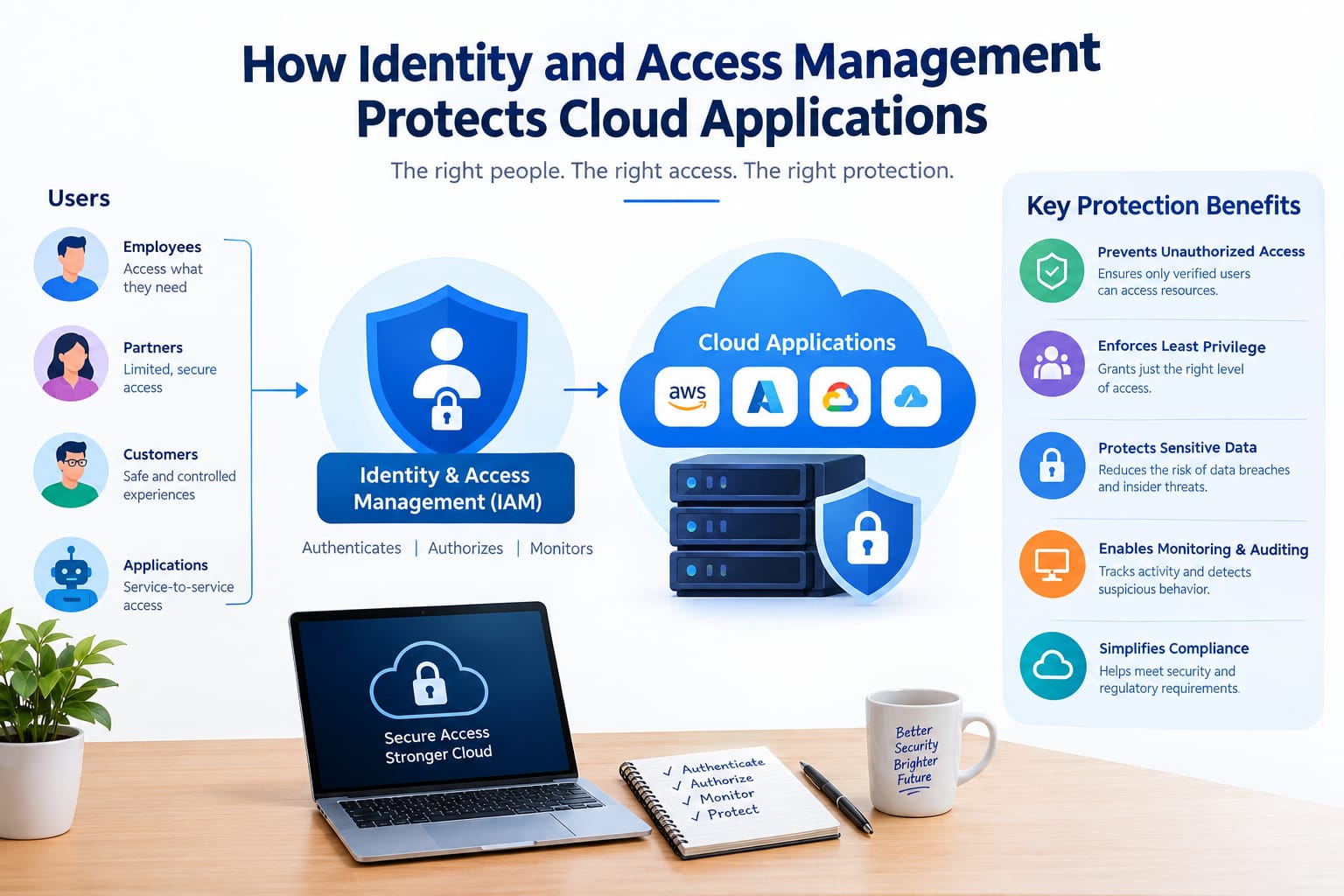
IAM emerged as the answer to this new reality. In a cloud environment, identity is the primary perimeter . Every request, whether from a human or a workload, must be authenticated and authorized before access is granted.
The stakes are high. Compromised credentials and misconfigured permissions allow attackers to escalate privileges, access sensitive data, and disrupt critical workloads . An IAM failure isn't just a security incident it's a direct path to data exfiltration.
The core principle of effective IAM is least privilege: every identity should have exactly the access needed to perform its function, and nothing more . Combined with role-based access control (RBAC), this creates a system where access is deliberate, auditable, and revocable.
In 2026, IAM is no longer just an IT utility. It is the control plane for compliance, security, and operational efficiency in the cloud.
Cost Based on Organization Type
IAM costs vary based on organization size, cloud footprint, and compliance requirements. Here's the 2026 Indian market landscape:
| Organization Type | Typical Annual Investment | What It Covers |
|---|---|---|
| Startup / Small Team | ₹21,000 – ₹1,20,000 | SSO, MFA, basic RBAC, directory sync |
| Mid-Market Enterprise | ₹1,20,000 – ₹6,00,000 | Identity governance, access reviews, API security |
| Large Enterprise / Regulated | ₹6,00,000 – ₹25,00,000+ | Privileged access management, compliance auditing, data residency |
| Global Enterprise (India Operations) | ₹25,00,000+ | DPDP-aligned data residency, cross-border identity governance, AI-driven analytics |
Understanding the pricing models: Identity management software in India typically uses one of three models :
-
Per-user, per-month: A flat fee per active identity. Common for SaaS IAM platforms.
-
Unit or feature-based: Authentication is cheaper than advanced governance or risk-based access controls.
-
Flat annual licensing: Common with enterprise IAM, negotiated rather than published.
For a practical reference, eMudhra's SecurePass offers tiered pricing: Standard at ₹1,744/month for core IAM, Enterprise at ₹2,999/month for scalable IAM with advanced controls, and Premium at ₹9,533/month for full-suite governance with privileged access and data residency .
The hidden cost trap: The quoted per-user rate is rarely the full IAM cost. Implementation fees range from a few thousand dollars to $25,000 for larger deployments. SMS/OTP charges for MFA are often billed separately. Premium support tiers add another layer. And data residency requirements can push organizations toward vendors with Indian data centers at a different price point .
Breakdown by IAM Component
IAM is not a single product. It's a layered architecture where each component addresses specific security and compliance requirements:
| Component | Implementation Cost (India) | Ongoing Cost | Primary Risk Addressed |
|---|---|---|---|
| SSO + MFA | ₹50,000 – ₹2,00,000 | ₹20,000 – ₹80,000/yr | Credential theft, phishing, unauthorized access |
| RBAC / ABAC | ₹80,000 – ₹3,00,000 | ₹30,000 – ₹1,20,000/yr | Excessive permissions, privilege creep |
| Identity Governance (IGA) | ₹2,00,000 – ₹8,00,000 | ₹1,00,000 – ₹4,00,000/yr | Access certification, orphaned accounts, audit readiness |
| Privileged Access Management (PAM) | ₹3,00,000 – ₹12,00,000 | ₹1,50,000 – ₹5,00,000/yr | Admin credential theft, lateral movement |
| API Security | ₹1,50,000 – ₹5,00,000 | ₹60,000 – ₹2,50,000/yr | Unauthorized API access, token theft |
| Audit & Reporting | ₹1,00,000 – ₹3,00,000 | ₹40,000 – ₹1,50,000/yr | Compliance evidence, breach investigation |
The critical insight: The most expensive components aren't always the most urgent. SSO with MFA delivers the highest immediate risk reduction at the lowest cost. Identity Governance and PAM become critical as organizations scale and face audit requirements. Start with identity, expand from there .
Breakdown by Developer Type (2020-2026)
IAM implementation requires specialized skills that most internal teams lack. The Indian talent market offers both opportunity and risk:
| Developer Type | Hourly Rate (India) | Typical Engagement | What They Deliver |
|---|---|---|---|
| Freelancer | ₹1,000 – ₹3,000 | ₹25,000 – ₹75,000 | Basic SSO setup, MFA configuration |
| Small Security Firm | ₹2,500 – ₹6,000 | ₹1,50,000 – ₹5,00,000 | Identity platform deployment, RBAC design |
| Mid-Size Integrator | ₹6,000 – ₹12,000 | ₹5,00,000 – ₹25,00,000 | IGA rollout, PAM implementation, compliance mapping |
| Enterprise Consultancy | ₹12,000 – ₹20,000+ | ₹25,00,000+ | Full IAM transformation, DPDP alignment, AI-driven identity analytics |
India's structural advantage: Security engineers with IAM certifications bill at 60-80% less than US rates. But IAM specifically requires experience with identity platforms (Okta, Microsoft Entra ID, Ping Identity), governance tools (SailPoint, Saviynt), and cloud-native identity (AWS IAM, Azure AD, OCI IAM) .
The critical question before hiring: "Show me an IAM deployment you completed in the last 12 months—not a design document, a live production environment with real users and audit evidence."
Why Prices Changed in 2026
Three forces have reshaped IAM economics in India.
First, DPDP Act compliance became mandatory. India's Digital Personal Data Protection Act (DPDPA) is not just a compliance checkbox. It fundamentally changes how organizations must handle personal data. Under DPDPA, organizations are accountable for who can access which personal data, under what conditions, and with what proof . IAM is the control surface that enforces and demonstrates this accountability.
DPDPA mandates data security measures including encryption, obfuscation, masking, strong access controls, and regular audits . IAM directly supports these requirements through role-based access, authentication controls, and audit trails.
Second, AI-driven identity security became mainstream. AI is transforming IAM from static role assignment to continuous, risk-based access decisions. Machine learning analyzes access patterns, detects anomalies, and proactively identifies threats before they become incidents . Wipro's deployment of SailPoint's IdentityNow solution uses AI to automate provisioning, disable dormant identities, and continuously monitor for anomalies supporting their zero-trust initiatives .
Third, identity sprawl exploded. Organizations now manage human identities (employees, contractors), machine identities (services, workloads), and customer identities across multiple clouds, SaaS platforms, and legacy systems. Traditional IAM wasn't built for this complexity. Modern platforms must unify identity management across this fragmented landscape .
The result: IAM is more necessary than ever, and more expensive to implement poorly.
Pro Tips to Save Money in 2026
1. Start with SSO and MFA not full IGA. SSO with MFA delivers the highest immediate risk reduction at the lowest cost. Deploy it everywhere before you invest in governance tools. Most organizations find that 60-70% of their security value comes from the first 20% of IAM investment.
2. Use identity as the DPDP control plane. DPDPA requires demonstrable access accountability. Rather than building separate compliance reporting, use IAM audit trails as your evidence. Every access decision is logged, every policy change is recorded, every certification is documented .
3. Automate access reviews and certifications. Orphaned accounts and privilege creep are the silent killers of IAM ROI. Over 40% of corporate cloud software budgets are wasted on ghost accounts active licenses assigned to former employees or inactive contractors . Automate de-provisioning and schedule regular certification campaigns.
4. Leverage existing Microsoft investments. If your organization already runs Microsoft 365 E5, Microsoft Entra ID is largely paid for inside that licence . Price Entra before adding a second identity bill. Many Indian estates run Entra as the Microsoft directory and Okta as the front door for everything else.
5. Plan for data residency from day one. DPDPA and emerging rules may restrict cross-border data transfers . Vendors with in-country India tenants (like Okta's AWS India tenants from January 2026) support DPDP-aligned data residency . Planning for this early avoids expensive re-architecture later.
6. Build identity governance into your architecture, not as an afterthought. The question is no longer "who has access to what?" It's "who or what should be given access, under what conditions, and only for as long as it is needed" . Design for continuous enforcement of purpose limitation, least privilege, and accountability.
Questions to Ask Before Hiring
Before you commit budget to any IAM engagement, ask these questions.
1. "How will this IAM deployment support our DPDP compliance?" DPDPA requires demonstrable access accountability. Your IAM partner must understand the regulatory context, not just the technology .
2. "What's your approach to identity governance not just authentication?" Authentication is table stakes. The harder problem is governance: access reviews, certifications, orphaned account cleanup, and audit trails .
3. "How do you handle machine identities?" In most cloud environments, machine identities outnumber human identities. Your IAM strategy must address workloads, services, and APIs not just employees .
4. "Can you support data residency requirements?" If you process Indian personal data, DPDPA may require in-country storage and processing. Ask for vendors with Indian data centers or tenants .
5. "Who owns the identity system after implementation?" A consultancy that builds and leaves is not a partner. Ask for retained operations, monitoring, and policy tuning as part of the engagement.
Why Delhi is a Great Hub for IAM Implementation
Delhi-NCR has become a serious destination for IAM work, and the reason isn't just cost.
The region hosts India's largest cluster of BFSI and FinTech captives 35% of NCR's GCCs constitute the largest cluster of global financial captives in the region . Financial services and fintech are the sectors facing the highest regulatory pressure and the most sophisticated threats. Delhi's IAM talent pool has been forged in this environment.
India's regulatory landscape is also driving demand. DPDPA compliance requires IAM expertise, and organizations in Delhi are actively building compliance-aligned identity architectures because they have no choice . The region's proximity to central ministries and regulatory bodies means faster engagement with the policy environment shaping IAM requirements.
The talent density keeps improving. With a steady pipeline of security engineers, identity specialists, and cloud architects, Delhi offers a combination of cost and capability that's hard to match. And the time zone advantage matters: a Delhi-based team can sync with Middle East morning, European afternoon, and US East Coast evening.
What We Offer
At Innovative AI Solutions, we treat IAM as an engineering discipline, not a compliance checkbox.
Our approach:
-
Identity Audit First. We map every human, machine, and customer identity across your cloud footprint. You cannot secure what you haven't inventoried.
-
SSO + MFA Foundation. We deploy phishing-resistant authentication everywhere before touching governance. The highest-impact, lowest-cost starting point.
-
RBAC with Least Privilege. Role-based access control designed from your actual job functions, not theoretical org charts.
-
DPDP-Aligned Governance. Access reviews, certifications, and audit trails designed to demonstrate compliance with India's data protection requirements.
-
Continuous Monitoring. Anomaly detection, dormant account cleanup, and policy tuning. Your IAM doesn't rot because someone forgot it existed.
Our principle is simple: small steps, fast iteration, data speaks.
Frequently Asked Questions
Q: What is IAM in simple terms?
Identity and Access Management (IAM) is the set of policies and technologies that ensure the right people and machines have the right access to the right resources at the right time, for the right reasons. In cloud environments, IAM is the primary security perimeter .
Q: Why is IAM important for cloud security?
Cloud environments have no traditional network perimeter. Applications, data, and workloads are distributed across multiple clouds and accessed from anywhere. IAM provides the access controls that prevent unauthorized users from reaching sensitive resources .
Q: How does IAM support DPDP compliance?
DPDPA requires organizations to demonstrate accountability for personal data access. IAM provides role-based access controls, audit trails, and access certifications that prove who accessed what, when, and under which policy . Without IAM, you cannot confidently run a DPDPA compliance program.
Q: What's the difference between IAM and PAM?
IAM manages everyday access for all identities. PAM (Privileged Access Management) specifically protects admin and high-privilege accounts. They're priced differently because they address different risk levels .
Q: How much does IAM cost for a mid-size business in India?
For 200-500 users, a practical IAM deployment covering SSO, MFA, RBAC, and basic governance runs ₹1,20,000 to ₹6,00,000 annually, depending on platform choice and compliance requirements .
Frequently Asked Questions (Extended)
Q: Can I use open-source IAM like Keycloak to save money?
Open source has no licensing fee, but the total cost of ownership is not zero. A self-hosted Keycloak deployment over three years costs approximately $199,200 to $211,200 in infrastructure, DevOps time, and engineering labor . For organizations without dedicated infrastructure staff, managed IAM is usually more predictable and ultimately cheaper.
Q: How does IAM support zero trust?
Zero trust assumes no network traffic is trusted regardless of origin. IAM enforces zero trust by continuously verifying identity and device posture before granting access to resources . Every access request is authenticated and authorized, not assumed safe because it comes from inside the network.
Q: What are machine identities and why do they matter?
Machine identities are non-human identities services, workloads, APIs, and applications that need access to resources. In most cloud environments, machine identities outnumber human identities. IAM must manage both .
Q: What's the first step I should take tomorrow?
Inventory your identities. Every user, every service account, every API key. You cannot secure what you haven't catalogued. Then deploy SSO with MFA everywhere. Those two steps address the most common attack vectors, and they cost almost nothing compared to the breach they prevent.
Contact Us:
Phone: +91 7464 099 059 / +91 9689967356
Email: info@innovativeais.com
Address: 9th Floor, Pearls Best Heights-I, Head Office: 904, Netaji Subhash Place, Delhi, 110034