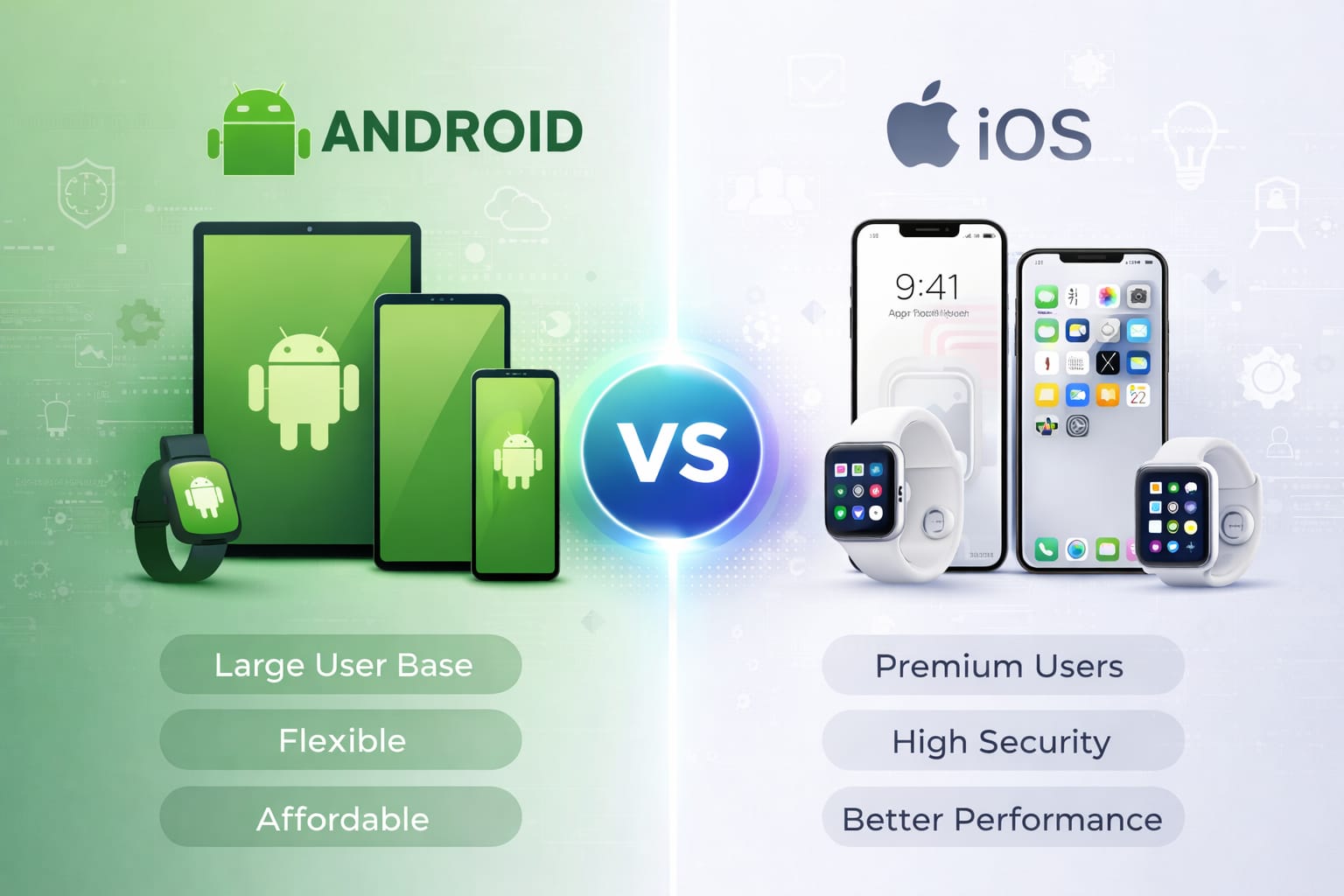
The Platform Question That Shapes Every Indian App Strategy
Every Indian business building a mobile app faces the same decision: Android, iOS, or both? The question sounds simple. The answer is not.
The two platforms serve fundamentally different user bases in India. They have different demographics, different spending behaviours, different device capabilities, and different development costs. Choosing the wrong platform — or the wrong sequence — wastes development budget and delays reaching the users who matter most.
India's mobile market is unique in ways that make the Android vs iOS decision more consequential than in Western markets. Android dominates in device volume by a wide margin, but iOS users account for a disproportionate share of digital spending. A business that optimises for volume may find itself with millions of users and minimal revenue. A business that optimises for revenue may find its addressable market far smaller than expected.
The decision is further complicated by cross-platform frameworks, which allow a single codebase to serve both platforms. React Native and Flutter have made the "both platforms" option more accessible than ever — but they do not eliminate the strategic question of which platform to prioritise for features, performance, and monetisation.
This guide provides a data-backed comparison of Android and iOS app development for Indian businesses. It covers market share, user demographics, development cost, monetisation potential, and a decision framework for choosing the right platform strategy.
Market Reality: What Indian Users Actually Use
Device and Platform Share in India
India's smartphone market is overwhelmingly Android-dominant. This is not a marginal difference — it is a structural characteristic of the market.
| Metric | Android | iOS |
|---|---|---|
| Smartphone OS market share (India) | ~95% | ~5% |
| App downloads share | ~90%+ | ~5–10% |
| Active device base | 600+ million | 30–35 million |
| New device sales share | ~94% | ~6% |
| Geographic concentration of iOS | Metro cities, premium segments | Metro cities, premium segments |
Android's dominance reflects India's device pricing dynamics. The vast majority of smartphones sold in India are priced below ₹25,000, and iOS devices occupy the premium segment above ₹50,000. This creates a direct relationship between platform choice and addressable market.
The Premium Segment Exception
iOS's small market share is misleading when viewed through a revenue lens. India's iOS users are concentrated in the highest-income segments, and their spending behaviour differs significantly from the average Android user.
Where iOS users concentrate:
-
Delhi NCR, Mumbai, Bangalore, Hyderabad premium segments
-
Senior corporate professionals and business owners
-
High-income households in metro cities
-
Early adopters and premium brand consumers
For businesses targeting premium services, high-value transactions, or subscription products, iOS may represent a disproportionate share of revenue despite a small share of users.
Development Cost Comparison
Platform-Wise Development Costs
| Cost Factor | Android Native | iOS Native | Cross-Platform |
|---|---|---|---|
| Simple app | ₹1,50,000–₹3,50,000 | ₹1,80,000–₹4,00,000 | ₹2,00,000–₹4,50,000 |
| Startup MVP | ₹2,50,000–₹6,00,000 | ₹3,00,000–₹7,00,000 | ₹3,00,000–₹8,00,000 |
| E-commerce app | ₹4,00,000–₹12,00,000 | ₹4,50,000–₹14,00,000 | ₹5,00,000–₹14,00,000 |
| Complex platform | ₹10,00,000–₹25,00,000+ | ₹12,00,000–₹30,00,000+ | ₹15,00,000–₹30,00,000+ |
| USD equivalent (simple) | $1,800–$4,200 | $2,160–$4,800 | $2,400–$5,400 |
iOS development typically costs 10–20% more than Android development for equivalent scope. This premium reflects the additional complexity of the iOS ecosystem — stricter review guidelines, fewer device configurations to test but more thorough quality expectations, and a smaller developer pool in India.
Dual Native vs Cross-Platform
| Approach | Cost Index | Timeline | Best For |
|---|---|---|---|
| Android native only | Baseline | Fastest to Android | Android-first strategy |
| iOS native only | 1.1–1.2x | Moderate | Premium/premium-first strategy |
| Both native (separate codebases) | 1.7–2.0x | Longest | Maximum performance, complex apps |
| Cross-platform (React Native/Flutter) | 1.2–1.4x | Moderate | Most startups and SMEs |
Cross-platform development reduces cost significantly compared to building separate native apps. For most Indian businesses, cross-platform offers the best cost-to-coverage ratio in 2026.
Developer Rate Comparison
| Role | Android (INR/hour) | iOS (INR/hour) | Cross-Platform (INR/hour) |
|---|---|---|---|
| Junior developer | ₹500–₹1,000 | ₹500–₹1,000 | ₹500–₹1,000 |
| Mid-level developer | ₹800–₹1,500 | ₹900–₹1,600 | ₹800–₹1,500 |
| Senior developer | ₹1,500–₹2,800 | ₹1,600–₹3,000 | ₹1,500–₹2,800 |
| Mobile architect | ₹2,500–₹4,500 | ₹2,500–₹4,500 | ₹2,500–₹4,500 |
iOS developer rates in India are marginally higher than Android due to a smaller talent pool. The difference is more pronounced at senior levels. Cross-platform rates match Android rates, given the larger JavaScript and Dart talent pools.
User Demographics and Behaviour
Who Uses Which Platform
| Demographic Factor | Android | iOS |
|---|---|---|
| Average income level | Broad range | Higher income concentration |
| Geographic spread | Tier 1, 2, 3 cities and rural | Metro cities primarily |
| Age distribution | Broad, younger skew | Broad, slightly older skew |
| Business decision-makers | Mixed | Higher concentration |
| Premium service consumers | Growing segment | Dominant segment |
| First-time smartphone users | Majority | Minimal |
The demographic differences matter enormously for product strategy. A business selling premium services to metro professionals will find iOS users overrepresented. A business targeting mass-market consumers across India will find Android essential.
Spending Behaviour
| Spending Metric | Android | iOS |
|---|---|---|
| In-app purchase revenue share (India) | ~40–50% | ~50–60% |
| Average revenue per user | Lower | 3–5x higher |
| Subscription conversion rate | Lower | Higher |
| Willingness to pay for premium features | Moderate | High |
| E-commerce transaction value | Broad range | Higher average |
iOS users in India generate disproportionately higher revenue per user despite representing a small fraction of the user base. For businesses monetising through subscriptions, in-app purchases, or premium services, iOS often delivers better unit economics.
Monetisation Potential by Platform
Revenue Models and Platform Fit
| Monetisation Model | Android Fit | iOS Fit | Notes |
|---|---|---|---|
| In-app purchases | Moderate | Strong | iOS users spend more per transaction |
| Subscriptions | Moderate | Strong | Higher conversion on iOS |
| Advertising | Strong | Moderate | Android's larger user base drives ad volume |
| E-commerce transactions | Strong | Strong | Android for volume, iOS for value |
| Premium services | Moderate | Strong | iOS concentration of high-income users |
| Enterprise/B2B | Strong | Strong | Both platforms serve business users |
The India-Specific Monetisation Reality
India's app monetisation landscape differs from Western markets in important ways:
Android monetisation challenges:
-
Lower willingness to pay for apps and in-app purchases
-
Heavy reliance on advertising revenue
-
Price sensitivity across mass-market segments
-
Growing but still limited subscription adoption
iOS monetisation advantages:
-
Higher average revenue per user
-
Better subscription conversion rates
-
Greater willingness to pay for premium features
-
Concentration of high-value users
For businesses with subscription or premium models, iOS often delivers better revenue per user. For businesses monetising through advertising or mass-market transactions, Android's larger user base is essential.
Platform Strategy: Sequencing Your Approach
Three Strategic Options
Option 1: Android First
Launch on Android, validate the product, then expand to iOS. This approach maximises initial addressable market and reduces upfront development cost. It is best for mass-market consumer apps, services targeting tier 2 and tier 3 cities, and businesses with limited initial budgets.
Option 2: iOS First
Launch on iOS, target premium users, then expand to Android. This approach optimises for revenue per user and premium positioning. It is best for premium services, subscription products, and businesses targeting metro professionals.
Option 3: Cross-Platform Simultaneous
Launch on both platforms using React Native or Flutter. This approach maximises coverage from day one and avoids platform-specific development entirely. It is best for most startups and SMEs where time-to-market matters and the product does not require platform-specific capabilities.
Decision Matrix
| Your Business Situation | Recommended Strategy | Rationale |
|---|---|---|
| Mass-market consumer app | Android first or cross-platform | Larger addressable market |
| Premium service targeting metro professionals | iOS first or cross-platform | Higher revenue per user |
| Subscription product | Cross-platform, iOS priority for monetisation | Both platforms needed; iOS converts better |
| E-commerce | Cross-platform | Both platforms drive transactions |
| Enterprise/B2B app | Cross-platform or platform of client preference | Depends on client device policies |
| Advertising-monetised app | Android first | Volume drives ad revenue |
| Limited budget, validating idea | Single platform (Android or iOS based on audience) | Lower upfront investment |
India-Specific Considerations
Device Fragmentation on Android
Android's diversity is both a strength and a challenge. Apps must work across:
-
Budget devices (₹8,000–₹15,000)
-
Mid-range devices (₹15,000–₹30,000)
-
Premium Android devices (₹30,000+)
-
Multiple OS versions (Android 10 through 16)
-
Various screen sizes and resolutions
This fragmentation requires more extensive device testing, which adds to development timeline and cost. iOS, by contrast, has a limited set of devices and OS versions to support.
Payment Infrastructure
| Payment Factor | Android | iOS |
|---|---|---|
| In-app purchase fees | Google Play: 15–30% | Apple: 15–30% |
| Alternative payment options | More flexible | More restrictive |
| UPI integration | Common | Less common |
| Local payment methods | Broad support | Limited support |
India's UPI infrastructure is deeply integrated into Android apps, with more flexibility for alternative payment methods. iOS's payment policies are more restrictive, though recent regulatory changes have opened some flexibility.
App Store Review and Compliance
| Factor | Google Play | Apple App Store |
|---|---|---|
| Review time | 1–7 days | 1–3 days |
| Rejection rate | Moderate | Higher |
| Policy strictness | Moderate | High |
| Developer fee | ₹2,000 one-time | ₹8,500/year |
| Compliance requirements | Data safety declarations | Privacy labels, stricter guidelines |
Apple's review process is stricter and rejections are more common. This adds time to the launch process but also ensures higher quality standards. Google Play's review is faster but policy compliance still requires attention.
Decision Framework: Choosing Your Platform Strategy
Platform Selection Scorecard
| Criteria | Weight | Score (1–5) | Weighted Score |
|---|---|---|---|
| Where your target users are | 30% | ||
| Monetisation model alignment | 20% | ||
| Budget constraints | 15% | ||
| Timeline requirements | 15% | ||
| Feature requirements (platform-specific) | 10% | ||
| Long-term platform strategy | 10% | ||
| Total | 100% | /5 |
Score each platform option independently. The higher weighted total indicates better fit for your specific situation.
Platform Comparison Summary
| Dimension | Android | iOS |
|---|---|---|
| Market share (India) | ~95% | ~5% |
| Development cost | Baseline | 10–20% higher |
| Developer availability | Very large | Smaller |
| Revenue per user | Lower | 3–5x higher |
| Device fragmentation | High | Low |
| Review strictness | Moderate | High |
| Payment flexibility | High | Restricted |
| Subscription conversion | Moderate | Strong |
| Best for | Mass market, volume | Premium, monetisation |
Frequently Asked Questions
1. Should I build for Android or iOS first in India?
Build for Android first if you are targeting mass-market consumers, tier 2 and tier 3 cities, or advertising-monetised apps. Build for iOS first if you are targeting premium services, metro professionals, or subscription products. For most businesses, cross-platform development serves both from day one.
2. Is iOS app development more expensive than Android in India?
Yes, iOS development typically costs 10–20% more than Android for equivalent scope. This reflects the smaller iOS developer pool, stricter review guidelines, and higher quality expectations. Cross-platform development reduces this difference significantly.
3. Which platform generates more revenue in India?
iOS generates disproportionately higher revenue per user despite its small market share. iOS users have 3–5x higher average revenue per user, better subscription conversion, and greater willingness to pay for premium features. Android drives more total revenue through volume.
4. What percentage of Indian users use Android vs iOS?
Android accounts for approximately 95% of India's smartphone market. iOS accounts for approximately 5%, concentrated in metro cities and premium income segments.
5. Can I use cross-platform development to serve both Android and iOS?
Yes. React Native and Flutter allow a single codebase to serve both platforms. This reduces development cost and timeline compared to building separate native apps. Cross-platform is the best option for most startups and SMEs.
6. Which platform is better for subscription-based apps in India?
iOS generally delivers better subscription conversion rates and higher revenue per subscriber. However, Android's larger user base means subscription volume can be higher. For subscription apps, cross-platform development with iOS monetisation priority is often optimal.
7. How does device fragmentation affect Android development?
Android's device diversity requires more extensive testing across budget, mid-range, and premium devices, multiple OS versions, and various screen sizes. This adds to development timeline and cost compared to iOS's limited device set.
8. Is it easier to get app approval on Google Play or Apple App Store?
Google Play review is faster (1–7 days) and generally more permissive. Apple App Store review is stricter (1–3 days) with higher rejection rates. Apple's guidelines are more comprehensive, which requires more careful preparation.
9. What is the best platform strategy for an Indian startup?
For most startups, cross-platform development is the best strategy. It serves both platforms from day one, reduces cost, and avoids the risk of choosing the wrong platform. Android-first is viable for mass-market apps; iOS-first for premium services.
10. How do payment policies differ between Android and iOS in India?
Google Play offers more flexibility for alternative payment methods, including UPI integration, which is widely used in India. Apple's payment policies are more restrictive, though recent regulatory changes have opened some flexibility. Both platforms charge 15–30% fees on in-app purchases.
11. Should I prioritise Android or iOS for an e-commerce app?
Cross-platform is best for e-commerce, as both platforms drive transactions. Android drives volume; iOS drives higher average transaction values. An e-commerce app that serves only one platform loses significant addressable market.
12. How can Innovative AI Solutions help?
Innovative AI Solutions is a Delhi-based mobile app development company with expertise in Android, iOS, and cross-platform development. We help businesses choose the right platform strategy based on their target users, monetisation model, and budget, then build production apps with AI integration where it adds value. Our approach begins with platform strategy assessment rather than a platform preference. Learn more at https://innovativeais.com.
Contact Innovative AI Solutions
Ready to choose the right platform for your mobile app?
We help Indian businesses evaluate Android, iOS, and cross-platform strategies based on their specific users and business model.
Contact Information
Innovative AI Solutions
📍 Netaji Subhash Place, Pitampura, Delhi – 110034
🌐 Website: https://innovativeais.com
📧 Email: info@innovativeais.com
📞 Phone: +91 7464 099 059 / +91 96899 67356
Business Services
• AI Automation
• AI Development
• AI Consulting
• Machine Learning Solutions
• Deep Learning Solutions
• Generative AI Services
• NLP Solutions
• AI Agents
• AI Chatbots
• Voice AI
• CRM Development
• Custom Software Development
• Website Development
• Mobile App Development
About the Author
Abhishek Kumar
Founder & CEO, Innovative AI Solutions
5+ years building production AI systems for Indian businesses. Based in Delhi, serving clients across India.
Ready to build AI solutions for your business?
Innovative AI Solutions — Delhi's leading AI development company. Free consultation available.
Get Free Consultation →
A practical 2026 platform strategy guide for Indian businesses choosing between Android, iOS, and cross-platform app development.
#Android #iOS #AppDevelopment #2026 #PlatformComparison #MobileApps #AndroidVsIOS #AppDevelopmentIndia #iOSDevelopment #AndroidDevelopment #DelhiNCRTech #StartupApps #EnterpriseApps #AppMonetisation #MarketShare #MobileAppStrategy #CrossPlatformApps #NativeDevelopment #AppStore #PlayStore #UserDemographics #TechDecision #AppDevelopmentGuide #DigitalProducts #InnovativeAISolutions
Copyright ©️ 2015–2026 Innovative AI Solutions. All Rights Reserved. | Privacy Policy | Terms & Conditions