Imagine you run a subscription box business in Bengaluru. You have three years of customer data: who signed up, what they ordered, when they cancelled, and how they interacted with your emails. You want to know which of your current customers are about to leave.
You could hire an analyst to manually comb through spreadsheets. Or you could build a machine learning model that does it automatically, learning from the patterns of customers who already churned.
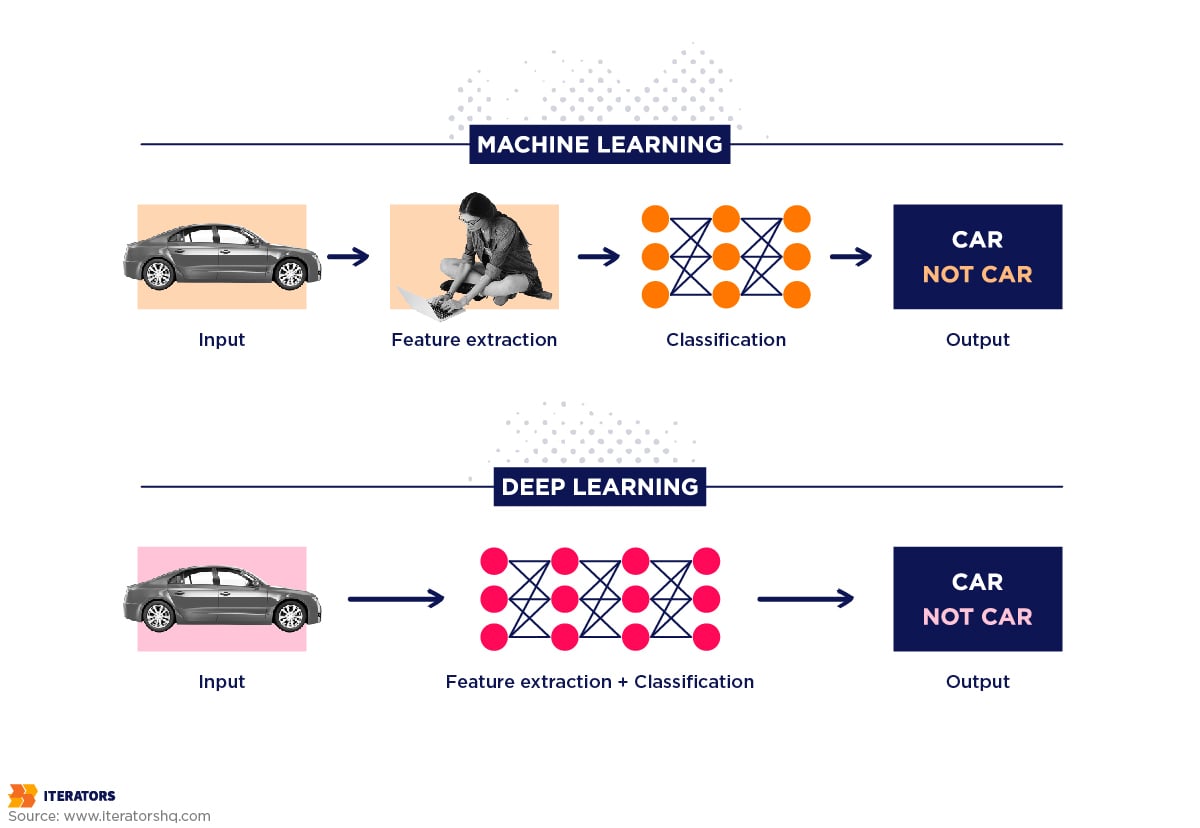
That's the essence of machine learning. It's a branch of artificial intelligence where algorithms learn from historical data to make predictions or decisions without being explicitly programmed for each specific scenario . The human role is significant: you still need to decide which data points matter—whether that's login frequency, purchase recency, or support ticket history. This process, called feature engineering, is one of the defining characteristics of traditional machine learning .
How Machine Learning Actually Works in Business
The mechanics are more approachable than the jargon suggests. You feed your algorithm examples—labeled data, in the case of supervised learning. The model identifies statistical relationships between input variables and outcomes. Then it applies those learned relationships to new, unseen data.
For a customer churn prediction system, you might train a model on two years of historical data where you know which customers eventually left. The algorithm learns that customers who haven't logged in for 45 days, whose order frequency dropped by 60%, and who haven't opened the last three emails have an 80% probability of churning within the next 30 days. When you feed current customer data into that trained model, it flags the ones matching that pattern.
This approach works exceptionally well with structured data—information that fits neatly into rows and columns. Transaction records, customer demographics, sales histories, sensor readings from manufacturing equipment, website clickstream data. If your data lives in a database or spreadsheet, traditional machine learning is almost always the right starting point .
Real Business Applications of Machine Learning
The applications are remarkably diverse, and many of them are probably already running inside your organization without you realizing it.
Fraud Detection in Financial Services: Every time you use your credit card, a machine learning model evaluates the transaction in milliseconds. It compares the purchase against your historical spending patterns, location, merchant type, and timing. If something feels off—a sudden large purchase in a foreign country, multiple rapid transactions—the system flags it or blocks it entirely. Banks in India process millions of these evaluations daily. The models are trained on labeled data: transactions confirmed as fraudulent and those confirmed as legitimate. They learn the subtle patterns that distinguish fraud from unusual-but-valid behavior .
CRM and Sales Intelligence: Modern CRM systems are packed with machine learning capabilities that sales teams often underutilize. Lead scoring models analyze behavioral signals—website visits, email engagement, content downloads, form completions—to rank prospects by likelihood to convert. Pipeline forecasting models evaluate historical deal velocity, stage conversion rates, and rep performance to predict which deals will close and when. For companies using platforms like Vtiger or custom CRM solutions, these ML-powered features transform raw contact data into actionable intelligence .
Manufacturing Predictive Maintenance: A textile manufacturer in Surat with hundreds of looms can't afford unexpected downtime. Machine learning models analyze vibration data, temperature readings, and power consumption from sensors on each machine. The models learn the normal operating signature of healthy equipment, then detect subtle deviations that precede failure. Maintenance teams receive alerts days or weeks before a breakdown, allowing scheduled repairs instead of emergency shutdowns. Studies show this approach reduces unplanned downtime by 30 to 50 percent .
Healthcare Diagnostics Support: Radiologists in Chennai hospitals are using machine learning to pre-screen medical imaging. Models trained on thousands of labeled X-rays and CT scans can flag images that show signs of pneumonia, fractures, or tumors. The radiologist still makes the final call, but the model prioritizes the queue and reduces the chance of missing something in a high-volume workflow. Importantly, the ML approach in these scenarios is often chosen for its interpretability—clinicians need to understand why a model flagged an image before acting on it .
Retail Demand Forecasting: A grocery chain in Pune uses machine learning to predict daily demand for perishable items across its stores. The model incorporates historical sales, weather forecasts, local events, promotions, and even social media signals. It doesn't just look at what sold yesterday; it understands that a cricket match or a festival changes buying behavior in predictable ways. Accurate forecasting reduces waste and ensures shelves are stocked with what customers actually want .
Recommendation Engines: When a customer browses an e-commerce site and sees "products you might like," that's machine learning at work. The algorithm analyzes past purchases, browsing behavior, and similar customers' preferences to surface relevant items. The model doesn't need to understand the products themselves; it just needs to find statistical patterns in who bought what .
The Practical Advantages of Machine Learning
What makes machine learning so widely applicable isn't just its effectiveness—it's its accessibility. A well-chosen ML model can be trained on a standard laptop or a modest cloud instance. Training times range from minutes to hours, not days. The models are often interpretable: a decision tree or logistic regression can explain exactly which factors drove a particular prediction. For businesses in regulated industries—finance, insurance, healthcare—this transparency is not optional. It's a compliance requirement .
Perhaps most importantly, machine learning doesn't demand enormous datasets. A few thousand well-labeled examples can produce a robust model for many business problems. For a startup or SME that hasn't accumulated years of data, this is the difference between implementing AI this quarter and waiting another two years .
Deep Learning: When the Problem Is Too Complex for Human Feature Engineering
Now imagine a different scenario. You run a security company in Gurugram that monitors thousands of CCTV cameras for corporate clients. You want a system that automatically detects when someone enters a restricted area, identifies abandoned objects, or recognizes known shoplifters.
You cannot solve this with traditional machine learning. The raw data—pixels in video frames—is unstructured and enormously high-dimensional. You cannot manually specify the features that distinguish a person from a shadow, or a suspicious object from a piece of luggage left by a legitimate visitor.
This is where deep learning becomes not just useful but necessary.
Deep learning is a specialized subset of machine learning built on artificial neural networks with multiple layers—hence "deep." These networks learn hierarchical representations of data automatically. In an image recognition task, the first layers learn to detect edges and basic shapes. Middle layers combine those into textures and parts of objects. Deeper layers recognize complete objects—a face, a car, a defective product on an assembly line .
The critical difference is automatic feature learning. With traditional machine learning, a human expert decides what the model should look at. With deep learning, the network figures that out on its own, given enough data and computational power .
The Architectures That Power Modern AI
Several neural network architectures have emerged as dominant in different domains.
Convolutional Neural Networks (CNNs) are the workhorses of computer vision. They apply mathematical filters that slide across images, learning to recognize patterns regardless of where they appear. CNNs power everything from facial recognition on your smartphone to quality inspection systems on manufacturing lines to medical imaging analysis .
Recurrent Neural Networks (RNNs) and their more sophisticated variants like LSTMs handle sequential data where order matters. They have internal memory that allows them to consider previous inputs when processing new ones. This makes them suitable for time series forecasting, speech recognition, and any task where context accumulates over time .
Transformers have revolutionized natural language processing. The architecture underlying GPT, BERT, and most modern large language models, transformers use attention mechanisms to weigh the importance of different words in a sentence regardless of their position. This enables the contextual understanding that makes AI chatbots and virtual assistants feel almost human .
Generative Adversarial Networks (GANs) pit two neural networks against each other: one generates synthetic data, the other tries to detect whether it's real. Through this competition, GANs become remarkably good at creating realistic images, videos, and audio .
Where Deep Learning Delivers Business Value
The applications of deep learning cluster around problems involving unstructured data and complex pattern recognition—tasks that traditional algorithms cannot handle effectively.
Voice AI and Speech Recognition: Every time you speak to Siri, Alexa, or a customer service voice bot, deep learning is converting your audio waveform into text, understanding your intent, and generating a response. The complexity is staggering: accents, background noise, speech disfluencies, context-dependent meanings. Deep neural networks trained on millions of hours of speech have made voice interfaces practical for business applications. For companies exploring Voice AI Solutions, this technology now powers everything from automated appointment scheduling to hands-free warehouse operations .
Computer Vision in Manufacturing: A pharmaceutical company in Ahmedabad uses deep learning-powered cameras to inspect every tablet on its production line. The system detects chips, cracks, discoloration, and coating defects at speeds no human inspector could match. It learns from examples of defective products, continuously improving as more data flows through. This is computer vision applied to quality assurance—a domain where traditional machine learning struggles because the visual features that define "defective" are too subtle and varied to specify manually .
Natural Language Processing: When a customer support chatbot understands that "my order hasn't arrived and I'm getting frustrated" is a complaint requiring escalation—not just a query for tracking information—that's deep learning at work. NLP models analyze sentiment, extract intent, and generate appropriate responses. They power document summarization, email classification, and the conversational interfaces that handle millions of customer interactions daily .
Healthcare Imaging: Deep learning models can detect diabetic retinopathy from retinal scans with accuracy rivaling specialist ophthalmologists. They identify tumors in mammograms, classify skin lesions, and flag anomalies in pathology slides. The models learn from thousands of labeled examples, finding patterns that might escape human attention. In India, where specialist availability varies dramatically by region, this technology extends diagnostic capability to underserved areas .
Autonomous Systems: Self-driving vehicles, warehouse robots, and drone delivery systems all rely on deep learning perception stacks. They process camera feeds, lidar point clouds, and radar data in real time, identifying pedestrians, vehicles, obstacles, and road features. The latency requirements are extreme—milliseconds matter—and the environment is endlessly variable. Only deep learning has proven capable of handling this complexity .
The Real Costs of Deep Learning
Deep learning's power comes with significant practical requirements that businesses must honestly assess.
Data Hunger: Deep neural networks typically require tens of thousands to millions of labeled examples to reach their potential. A model that recognizes manufacturing defects might need 50,000 images of both good and defective products. A speech recognition system needs thousands of hours of transcribed audio. If your organization doesn't have this volume of high-quality labeled data, deep learning may not deliver the results you expect .
Computational Demands: Training deep learning models requires specialized hardware—GPUs or TPUs—often in cloud environments that scale to handle the workload. Training can take days or weeks. Inference (running the trained model on new data) is faster but still requires more resources than traditional ML. For organizations without existing GPU infrastructure, this represents a substantial new investment .
The Black Box Problem: Deep neural networks are notoriously difficult to interpret. When a model denies a loan application or flags a medical image as suspicious, explaining why is challenging. The internal representations are distributed across millions of parameters in ways that resist simple explanation. For industries facing regulatory scrutiny—finance, healthcare, insurance—this opacity can be a dealbreaker .
Ongoing MLOps Complexity: Deep learning models require continuous monitoring and retraining. Data drift—changes in the statistical properties of input data over time—can silently degrade model performance. Managing this lifecycle demands specialized expertise that many organizations don't currently have in-house .
Machine Learning vs Deep Learning: A Complete Comparison for Decision Makers
Understanding the theoretical differences is one thing. Applying them to a business decision requires a more granular comparison. The table below breaks down the distinctions across the parameters that actually matter when you're evaluating technologies and vendors.
| Parameter | Machine Learning | Deep Learning |
|---|---|---|
| Data Requirements | Works well with thousands of records; fewer if structured well | Requires tens of thousands to millions of examples |
| Data Type | Structured (tables, spreadsheets, databases) | Unstructured (images, audio, video, raw text) |
| Feature Engineering | Human experts select and create features | Automatic feature learning from raw data |
| Hardware Needs | Standard CPUs; can run on laptops or modest servers | GPUs/TPUs; cloud or dedicated infrastructure |
| Training Time | Minutes to hours | Hours to weeks |
| Interpretability | High; decisions can be traced and explained | Low; "black box" nature limits explainability |
| Typical Output | Numerical scores, classifications, probabilities | Text, images, audio, complex classifications |
| Human Oversight | Significant; requires ongoing feature validation | Minimal during inference; extensive during training |
| Cost Profile | Lower initial investment; accessible to SMEs | Higher upfront costs; requires specialized talent |
| Time to Deployment | Weeks to a few months | Months to a year or more |
| Best Suited For | Tabular prediction, classification, regression | Perception, language, generation, complex patterns |
| Scalability | Scales with data volume, not model complexity | Scales with data, compute, and model architecture |
| Maintenance | Regular retraining; straightforward monitoring | Continuous MLOps; drift detection is critical |
| Regulatory Suitability | Preferred in finance, insurance, healthcare | Challenging without explainability tooling |
| Team Requirements | Data analysts, ML engineers | Deep learning researchers, MLOps specialists |
| When to Choose | Structured data, limited resources, explainability needed | Unstructured data, large datasets, complex problems |
| Example Use Case | Churn prediction, fraud scoring, demand forecasting | Image recognition, voice AI, chatbots, autonomous systems |
The most important insight from this comparison is that neither approach is universally superior. They solve different categories of problems. The decision should be driven by your data, your resources, and your specific business objective—not by which technology sounds more advanced.
A regional retail chain in Nagpur using machine learning to predict inventory demand based on historical sales is not "behind" a tech giant using deep learning for autonomous vehicles. They're solving different problems with appropriately matched tools.
Real Business Examples: How Industries Are Choosing Between ML and DL
The theoretical distinctions become concrete when you examine how organizations across sectors are actually applying these technologies. The following examples draw from documented deployments and industry reports from 2025 and 2026.
Healthcare: Diagnostics and Patient Care
Hospitals in Hyderabad and Chennai are deploying machine learning models to predict patient readmission risk. These models analyze structured data—age, diagnosis codes, medication history, prior admissions—to flag patients who might benefit from additional discharge planning. The ML approach is chosen for its interpretability; clinicians need to understand which factors are driving a patient's risk score .
Meanwhile, radiology departments are using deep learning for imaging analysis. A model trained on tens of thousands of chest X-rays can flag potential pneumonia cases before a radiologist reviews them. The deep learning approach is necessary because the visual patterns distinguishing pathology from normal anatomy are too subtle and varied for manual feature engineering .
Finance: Fraud Detection and Credit Scoring
Banks across India use machine learning for real-time transaction fraud detection. When you make a purchase, an ML model evaluates dozens of features—transaction amount, merchant category, location, time of day, your historical patterns—and assigns a fraud probability score. The model is interpretable; if a transaction is flagged, analysts can see which features contributed to the decision .
Deep learning enters the picture for more complex financial applications: analyzing unstructured documents for loan processing, detecting sophisticated fraud rings through network analysis, or powering the NLP systems that handle customer service inquiries. The tradeoff is accepted because the problem complexity exceeds what traditional ML can handle.
Retail: Personalization and Operations
E-commerce platforms use machine learning for product recommendations—a well-established application where structured behavioral data drives predictions about what a customer might buy next .
Deep learning powers the visual search features that let customers upload a photo and find similar products. It also drives the NLP systems that analyze customer reviews for sentiment and extract actionable feedback at scale.
Manufacturing: Quality and Maintenance
Predictive maintenance is predominantly a machine learning application. Sensor data from equipment—vibration, temperature, pressure, power consumption—is structured and well-suited to ML models that detect anomalies and forecast failures .
Visual quality inspection, however, increasingly relies on deep learning. Cameras capture images of products on production lines, and CNN models identify defects that would be difficult or impossible to detect through manual feature engineering. A textile manufacturer might use ML to predict when a loom needs maintenance, but DL to detect fabric defects in real time.
Education: Personalization and Administration
Educational institutions use machine learning to predict student performance and identify those at risk of dropping out. The models analyze structured data—attendance, assignment scores, engagement metrics—and flag students who might benefit from intervention.
Deep learning powers the adaptive learning platforms that adjust content difficulty in real time based on student responses. It also drives the NLP systems that grade written assignments or provide automated feedback.
Logistics: Route Optimization and Delivery
Logistics companies use machine learning to optimize delivery routes, incorporating traffic patterns, weather, time windows, and vehicle capacity. The problem is fundamentally one of structured optimization—well-suited to ML approaches.
Deep learning is deployed for more complex perception tasks: reading addresses from package images, detecting damage during transit through computer vision, or powering the voice interfaces that allow drivers to interact hands-free.
CRM and Marketing: Lead Scoring and Content
CRM platforms rely heavily on machine learning for lead scoring, churn prediction, and next-best-action recommendations. These are structured prediction problems where historical data drives straightforward modeling .
Deep learning enters marketing through generative AI for content creation, sentiment analysis of customer feedback at scale, and the multimodal systems that analyze video, audio, and text together to understand brand perception.
Customer Support: Chatbots and Voice
Many customer support chatbots use machine learning-based intent classification—understanding what a customer wants and routing to the appropriate response. The models are trained on historical support tickets and are relatively lightweight.
The more sophisticated conversational AI systems—those that handle complex multi-turn conversations, understand context across sessions, and generate natural-sounding responses—are powered by deep learning, specifically transformer-based language models.
Real Estate: Valuation and Lead Management
Real estate platforms use machine learning to estimate property values based on structured data: location, size, age, amenities, recent comparable sales. The models provide instant estimates that guide buyer expectations.
Deep learning drives the image analysis that automatically tags property photos, the NLP that extracts information from listing descriptions, and the chatbots that handle initial buyer inquiries.
HR: Recruitment and Retention
HR teams use machine learning to screen resumes, matching candidate qualifications against job requirements based on structured data. The models can also predict employee attrition risk from engagement surveys and performance data.
Deep learning powers the video interview analysis platforms that assess candidate responses, and the NLP systems that analyze employee feedback at scale to identify cultural issues before they lead to turnover.
E-commerce: Search and Discovery
Product search on e-commerce platforms increasingly uses machine learning to rank results based on relevance signals—click-through rates, purchase data, and query-product matching.
Deep learning enables the semantic search that understands the intent behind a query, even when the exact keywords don't match. It also powers the visual search and recommendation systems that analyze product images.
AI Automation and the Technologies Reshaping Business Operations
Understanding machine learning versus deep learning isn't just an academic exercise. It directly informs how you approach AI automation—one of the most significant business trends of 2026.
The automation landscape has evolved dramatically. It's no longer about simple rule-based systems that follow if-then logic. Modern AI automation combines multiple technologies—some ML-based, some DL-based—to handle complex workflows that previously required human judgment.
AI Agents: The Next Frontier
AI agents represent a convergence of machine learning, deep learning, and agentic architectures. Unlike simple chatbots that respond to queries, AI agents can plan and execute multi-step tasks with minimal human supervision. They can research information, make decisions, and take actions across systems .
Building effective AI agents requires both ML and DL capabilities. The agent's decision-making logic might use ML models trained on structured data about task outcomes. Its natural language understanding and generation capabilities rely on deep learning language models. Its perception—if it processes images or documents—uses computer vision.
For organizations exploring AI Agent Development, the technology stack is inherently hybrid. The key is matching the right approach to each component of the agent's functionality.
Voice AI: Deep Learning's Domain
Voice AI solutions are almost entirely deep learning territory. Converting speech to text, understanding intent, generating natural responses, and synthesizing human-like voice output—these are all tasks where deep neural networks have become the standard approach. The complexity of human speech—accents, intonation, background noise, emotional undertones—exceeds what traditional machine learning can handle .
Businesses deploying Voice AI for customer service, appointment scheduling, or internal operations are leveraging deep learning whether they realize it or not. The technology has matured to the point where it's accessible to mid-market companies, not just enterprises with dedicated AI teams.
WhatsApp Automation and Conversational AI
WhatsApp automation platforms increasingly use a combination of ML and DL. Simple menu-based interactions might use ML for intent classification. More sophisticated conversational flows that handle free-form customer messages require deep learning language models to understand and respond appropriately.
The choice between approaches often comes down to the complexity of the conversations you need to support. If your customers interact through structured menus and simple queries, ML-based automation can be sufficient. If you need to handle natural, open-ended conversations, deep learning is necessary.
Document AI and OCR
Document processing is a hybrid domain. Optical character recognition (OCR) has evolved from rule-based pattern matching to machine learning models that handle varied fonts, layouts, and image quality. Deep learning now powers the more sophisticated document understanding systems that extract meaning from contracts, invoices, and forms—not just characters on a page .
For businesses drowning in paperwork, Document AI offers substantial efficiency gains. The technology can be deployed incrementally, starting with ML-based OCR for simple documents and progressing to DL-based understanding for complex extraction tasks.
CRM Automation and AI Executive Assistants
CRM automation typically relies on machine learning for lead scoring, churn prediction, and next-best-action recommendations. These are structured prediction problems where historical CRM data drives modeling .
AI executive assistants—tools that schedule meetings, draft emails, and manage workflows—require deep learning language models to understand natural language instructions and generate appropriate outputs. The assistant needs to comprehend what you're asking, not just match keywords.
Workflow Automation
General workflow automation often combines multiple AI technologies. An automated invoice processing system might use ML for vendor matching and DL for document understanding. A customer onboarding workflow might use ML for risk assessment and DL for identity document verification.
The key insight for businesses is that AI automation isn't a single technology—it's a spectrum. The right approach depends on the specific tasks you're automating and the data those tasks involve.
AI Adoption Across India: Opportunities Beyond the Metros
One of the most significant trends in 2026 is the geographic democratization of AI. The technology is no longer concentrated in Bengaluru, Hyderabad, and Mumbai. Tier-2 cities are experiencing faster AI skill growth than metropolitan centers, according to multiple industry reports .
This matters for businesses across India because AI capability is no longer a competitive advantage reserved for those in tech hubs. A manufacturing company in Ludhiana can access the same AI tools and talent as one in Pune. A healthcare provider in Patna can deploy diagnostic AI comparable to what's available in Chennai.
The data tells a compelling story. AI-skill mentions on candidate profiles from Tier-2 cities increased 20% year-on-year, compared with 14% in Tier-1 cities. Lucknow recorded the highest growth at 54%, followed by Bhopal at 42% and Jaipur at 31% . Employer demand for AI skills surged 112% year-on-year, and the demand spans functions well beyond engineering .
What does this mean for your business? If you're in Delhi, Gurugram, Noida, or anywhere in the National Capital Region, you're in one of India's most active AI markets. The same is true if you're in Bengaluru, Hyderabad, Chennai, or Pune. But the opportunity extends far beyond these established hubs.
Consider the industrial corridors of Gujarat—Ahmedabad, Surat, Vadodara, Rajkot—where manufacturing companies are adopting AI for quality control and predictive maintenance. Or the textile clusters of Coimbatore and Tiruchirappalli, where computer vision is transforming quality inspection. Or the logistics hubs of Nagpur and Indore, where AI is optimizing supply chains.
In South India, Kochi and Thiruvananthapuram are emerging as AI development centers, while Mysuru, Mangalore, and Hubli are seeing growing demand for CRM and automation solutions. Vijayawada, Visakhapatnam, and Guntur in Andhra Pradesh present significant opportunities for AI-enabled business transformation.
West India remains a powerhouse. Mumbai and Pune lead in financial services AI adoption. Ahmedabad and Surat drive manufacturing AI. Nashik, Nagpur, and Aurangabad represent emerging markets where AI can address specific industrial challenges.
East India's adoption is accelerating. Kolkata's traditional industries are integrating AI into operations. Bhubaneswar, Patna, and Ranchi are seeing growing demand for software and automation solutions. Guwahati and Shillong represent frontier markets where early adoption can create lasting competitive advantages.
Central India—Indore, Bhopal, Raipur, Gwalior, Jabalpur—is perhaps the most underappreciated AI opportunity. These cities have strong industrial bases and growing tech talent, but relatively less competition for AI services compared to the major metros.
The practical implication is that businesses anywhere in India can now access quality AI development services without relocating or paying metro premiums. What matters is choosing partners who understand your industry and can match the right technology to your specific problem.
Why Businesses Need AI in 2026: The ROI Case
The question has shifted from "should we invest in AI?" to "how do we invest wisely?" The businesses seeing returns are those that approach AI as a business transformation tool, not a technology experiment.
McKinsey's research provides the sobering context: only 6% of companies qualify as AI high performers, generating at least 5% of EBIT growth attributable to AI. But those that succeed demonstrate what's possible. The gap isn't about access to technology—it's about implementation discipline .
Where AI Delivers Measurable ROI
Cost Reduction Through Automation: Honeywell's deployment of 15+ internal AI applications reduced human-handled IT support tickets by 80% across 54,000 employees . That's not a pilot project; it's operational transformation. For businesses evaluating AI investments, the ROI calculation should start with the labor hours that can be redirected from routine tasks to higher-value work.
Revenue Growth Through Personalization: Retailers using AI-powered recommendations see measurable increases in average order value and customer lifetime value. The technology that surfaces the right product at the right moment doesn't just improve experience—it directly drives revenue.
Risk Reduction Through Prediction: Financial institutions using AI for fraud detection reduce losses while improving customer experience by blocking fewer legitimate transactions. Manufacturers using predictive maintenance avoid unplanned downtime that costs far more than the AI systems themselves.
Speed Through Automation: AI-powered document processing reduces invoice cycle times from days to hours. Intelligent routing accelerates customer support resolution. Automated quality inspection operates at speeds no human team can match.
The Productivity Multiplier
Perhaps the most significant ROI comes from AI's ability to augment human capability. A single data analyst with AI tools can accomplish what previously required a team. A customer support agent assisted by AI can handle more complex inquiries with better outcomes. A radiologist supported by AI can review more images with higher accuracy.
This isn't about replacing people—it's about making people more effective. The businesses that understand this distinction are the ones seeing the strongest returns.
Why Waiting Is Costly
The competitive dynamics of AI adoption create urgency. As more businesses deploy AI, the baseline for efficiency, customer experience, and decision quality rises. Companies that delay adoption don't just miss out on gains—they fall behind competitors who are already operating at a higher level.
The technology has matured. The implementation paths are clearer. The talent is more available. The excuses for waiting are fewer. For most businesses, the question in 2026 isn't whether to invest in AI, but how quickly they can start.
The Future of AI: What's Coming in 2026 and Beyond
The AI landscape continues to evolve rapidly. Understanding emerging trends helps businesses make technology decisions that won't be obsolete in eighteen months.
Generative AI Matures
The first wave of generative AI focused on experimentation—trying ChatGPT, generating images, exploring possibilities. The next wave is about orchestration and integration. Organizations are moving from standalone generative AI tools to embedded capabilities within business workflows .
For businesses, this means generative AI is becoming less of a novelty and more of a utility. The question isn't whether to use it, but where it creates the most value.
AI Agents Move to Production
Agentic AI—systems that can plan and execute multi-step tasks autonomously—is transitioning from pilot projects to production deployments. Large enterprises are leading adoption, with 40% having deployed agents in at least one function, up from 27% a year earlier .
The practical applications are expanding: automated research assistants, intelligent workflow orchestrators, self-service customer support that actually resolves issues rather than just answering questions.
Multimodal AI Becomes Standard
AI systems increasingly process multiple types of data simultaneously—text, images, audio, video. This enables more natural interactions and broader applications. A customer service AI that can see a product image, hear the customer's description, and access order history provides a fundamentally better experience than one limited to text .
RAG and Contextual AI
Retrieval Augmented Generation (RAG) addresses one of the key limitations of language models: their knowledge is frozen at training time. RAG systems retrieve relevant, current information from external sources and incorporate it into their responses .
For businesses, this means AI systems that can answer questions about your specific products, policies, and data—not just general knowledge. It's the difference between a generic chatbot and an AI assistant that actually knows your business.
Edge AI and Smaller Models
While the largest AI models capture headlines, a parallel trend is the development of smaller, optimized models that run on edge devices. These enable AI capabilities without cloud connectivity, reducing latency and addressing privacy concerns .
For manufacturers, this means AI-powered quality inspection directly on production lines. For healthcare providers, it means diagnostic support without transmitting sensitive patient data. For retailers, it means personalized experiences without the latency of cloud round-trips.
The Infrastructure Challenge
India's AI ambitions face a significant infrastructure gap. The country generates nearly 20% of the world's data but accounts for only about 3% of global data center capacity . This imbalance creates both challenges and opportunities. Businesses should consider how their AI strategy accounts for infrastructure constraints and opportunities.
Frequently Asked Questions
1. What is the main difference between machine learning and deep learning?
Machine learning uses algorithms that learn from data with human guidance in selecting features and defining the problem structure. Deep learning is a subset of machine learning that uses multi-layered neural networks to automatically learn features from raw data, without requiring humans to specify what patterns to look for. The key practical difference is that machine learning works well with structured data and smaller datasets, while deep learning excels with unstructured data like images, audio, and text—but requires much larger datasets and more computational resources.
2. Which is better for my business: machine learning or deep learning?
Neither is universally better. The right choice depends on your specific problem, data, and resources. Choose machine learning if you're working with structured data (spreadsheets, databases), have thousands rather than millions of records, need interpretable results, or have limited budget and time. Choose deep learning if you're working with unstructured data (images, video, audio, text), have access to large datasets and GPU resources, and need to solve complex pattern recognition problems that can't be addressed through manual feature engineering.
3. Can my business start with machine learning and later move to deep learning?
Absolutely, and this is often the smart approach. Many organizations start with machine learning projects that deliver quick wins and build internal AI capability. As they accumulate more data, develop expertise, and identify problems that require deep learning, they can expand their technology stack. The transition isn't binary—most mature AI organizations use both approaches for different applications. Starting with machine learning reduces initial risk and provides learning opportunities before making larger deep learning investments.
4. How much data do I need for machine learning vs deep learning?
Machine learning models can perform well with a few hundred to a few thousand well-labeled examples, depending on the complexity of the problem. Deep learning typically requires tens of thousands to millions of examples. For example, a customer churn prediction model might work well with 5,000 historical customer records. A deep learning model for medical image analysis might need 50,000 or more labeled images to reach clinical-grade accuracy. If your data volume is limited, machine learning is usually the more practical starting point.
5. Is deep learning always more accurate than machine learning?
No. Deep learning excels at specific problem types—particularly those involving unstructured data and complex pattern recognition. But for structured, tabular data problems like sales forecasting, credit scoring, or inventory optimization, well-tuned machine learning models often match or exceed deep learning performance. Deep learning also requires more data to achieve its advantages; with limited data, machine learning can actually perform better. The "deep learning is always better" assumption leads many businesses to waste resources on unnecessarily complex solutions.
6. What industries benefit most from deep learning?
Deep learning delivers the most value in industries that generate or rely on unstructured data. Healthcare benefits from medical imaging analysis, pathology, and drug discovery. Manufacturing uses deep learning for visual quality inspection. Retail and e-commerce leverage it for visual search and personalized recommendations. Financial services use it for document processing, fraud detection, and customer service automation. Media and entertainment rely on it for content generation and recommendation. Any industry dealing with images, video, audio, or large volumes of text can benefit from deep learning.
7. How do I explain the difference to my non-technical stakeholders?
Use an analogy. Machine learning is like teaching someone to identify good fruit by showing them examples and explaining which features matter—color, firmness, smell. Deep learning is like teaching someone to identify good fruit by showing them thousands of examples and letting them figure out the patterns themselves. Machine learning is more hands-on and interpretable; deep learning is more automated but harder to explain. For business purposes, the key point is that machine learning is often sufficient and more efficient for structured problems, while deep learning is necessary for complex perceptual tasks.
8. What are the biggest mistakes businesses make with AI?
The most common mistakes include: choosing deep learning when machine learning would suffice, expecting AI to solve problems without clean data, underestimating the infrastructure and talent requirements, failing to define clear success metrics, treating AI as a technology project rather than a business transformation, and not planning for ongoing model maintenance. The most costly mistake is usually technological overkill—investing in complex deep learning solutions when simpler machine learning approaches would deliver comparable results faster and cheaper.
9. How long does it take to implement machine learning vs deep learning?
Machine learning projects can go from concept to production in weeks to a few months. The models train quickly, and if your data is already structured and accessible, deployment is relatively straightforward. Deep learning projects typically take several months to a year or more. The longer timeline reflects data collection and labeling requirements, longer training cycles, more complex deployment infrastructure, and the need for specialized expertise. For businesses needing quick wins, machine learning offers faster time-to-value.
10. Do I need a dedicated AI team for machine learning?
Not necessarily for initial machine learning projects. Many businesses start by working with external AI development partners or leveraging existing data analysts with ML training. The models themselves can be deployed on standard infrastructure. As your AI initiatives expand, you may want to build internal capability. But you can validate the business value of machine learning without hiring a full AI team. Deep learning projects, by contrast, typically require specialized expertise in neural network architecture and MLOps.
11. Can machine learning and deep learning be used together?
Yes, and this is increasingly common. Many production AI systems use a combination. A customer service platform might use machine learning for intent classification and routing, and deep learning for natural language understanding and response generation. A manufacturing quality system might use machine learning for sensor-based anomaly detection and deep learning for visual defect inspection. The technologies are complementary, not mutually exclusive.
12. What is the cost difference between machine learning and deep learning?
Machine learning projects are generally more affordable. Training can run on standard cloud instances or even local hardware. The models are smaller and faster to deploy. Deep learning requires GPU infrastructure for training, specialized MLOps tooling, and often more extensive data preparation. Cloud costs for deep learning training can run into thousands of dollars per project. The total cost difference can be 5 to 10 times or more, depending on the application. For budget-conscious businesses, machine learning offers a much lower entry point.
13. How do I know if my data is suitable for machine learning?
Your data is likely suitable for machine learning if it's structured (organized in rows and columns), reasonably clean (not too many missing values or errors), and contains historical examples of the patterns you want to predict. You don't need perfect data—real-world ML projects involve data cleaning—but you need enough signal. A few thousand records with relevant features can be sufficient for many business applications. If your data is unstructured (images, text, audio), you're more likely in deep learning territory.
14. What is feature engineering and why does it matter?
Feature engineering is the process of selecting, transforming, and creating the input variables that a machine learning model uses to make predictions. For example, if you're predicting customer churn, you might engineer features like "days since last login," "change in order frequency," and "email engagement score." This requires human judgment about what matters. Deep learning automates this process—the neural network figures out what features to extract from raw data. Feature engineering matters because the quality of features often determines ML model performance more than the choice of algorithm.
15. Will AI replace jobs in my organization?
AI is more likely to transform jobs than eliminate them. Routine, repetitive tasks can be automated, freeing people for higher-value work. Customer support agents assisted by AI can handle more complex inquiries. Analysts with AI tools can process more data and surface better insights. The organizations that handle this transition well focus on retraining and redeployment, not just headcount reduction. McKinsey's research shows that 39% of respondents expect AI to lead to some workforce reduction, but the same research finds that AI high performers are more likely to be growing than shrinking .
16. How do I choose between AI vendors offering machine learning vs deep learning?
Ask vendors to explain their technology choice in business terms. Why is their approach the right fit for your problem? What data do you need to provide? What's the expected timeline and cost? A good vendor will be honest about whether a simpler approach would work. Be wary of vendors who always recommend deep learning—it may indicate a solution in search of a problem, or a desire to justify higher costs. The right vendor will match the technology to your needs, not the other way around.
17. What is the role of GPUs in deep learning?
GPUs (Graphics Processing Units) are specialized hardware originally designed for rendering graphics. They happen to be extremely efficient at the matrix multiplication operations that deep neural networks require. Training deep learning models on CPUs would take impractically long—weeks instead of hours or days. Cloud providers offer GPU instances for deep learning training, which is how most organizations access this capability without investing in physical hardware. Machine learning models, by contrast, typically run fine on standard CPUs.
18. How do I measure the ROI of AI investments?
Start by defining what success looks like in business terms before the project begins. For a fraud detection system, success might be reducing fraud losses by X% while keeping false positives below Y%. For a customer service chatbot, it might be resolving Z% of inquiries without human escalation while maintaining satisfaction scores. Track these metrics against a baseline—what was happening before AI. The ROI calculation includes both the direct benefits (cost savings, revenue increases) and the opportunity costs avoided (time not spent on manual tasks). Be realistic about timelines; many AI projects take 6 to 12 months to show clear ROI.
19. What is the difference between AI, machine learning, and deep learning?
AI is the broadest term—any technique that enables machines to perform tasks that typically require human intelligence. Machine learning is a subset of AI that learns from data without being explicitly programmed for each scenario. Deep learning is a subset of machine learning that uses multi-layered neural networks to learn complex patterns from large datasets. So the relationship is: AI encompasses machine learning, which encompasses deep learning. In practice, when people say "AI" in business contexts, they usually mean machine learning or deep learning applications.
20. How can Innovative AI Solutions help my business choose the right approach?
Innovative AI Solutions specializes in matching the right AI technology to your specific business problem. We start by understanding your data, your objectives, and your constraints. Then we recommend the approach—whether that's a straightforward machine learning model, a deep learning solution, or a hybrid architecture—that will deliver the best results with the resources you have. We don't sell technology for its own sake. We build AI that solves real business problems. Whether you're in Delhi NCR or anywhere in India, our team can help you navigate the machine learning vs deep learning decision and implement a solution that delivers measurable ROI.
Contact Innovative AI Solutions
Ready to transform your business with Artificial Intelligence?
Whether you need Machine Learning models, Deep Learning applications, AI Automation, AI Agents, CRM development, or custom software, our experts can help you build scalable AI solutions tailored to your business.
Contact Information
Innovative AI Solutions
Delhi NCR, India
Website: https://www.innovativeais.com/
Email: info@innovativeais.com
Phone: +91 7464099059
Business Services
-
AI Automation
-
AI Development
-
Machine Learning Solutions
-
Deep Learning Solutions
-
AI Agents
-
AI Chatbots
-
Voice AI
-
CRM Development
-
Custom Software Development
-
Website Development
-
Mobile App Development
Don't let AI confusion cost you time and money. Contact Innovative AI Solutions today for a free consultation and discover which AI approach will deliver the best results for your business.