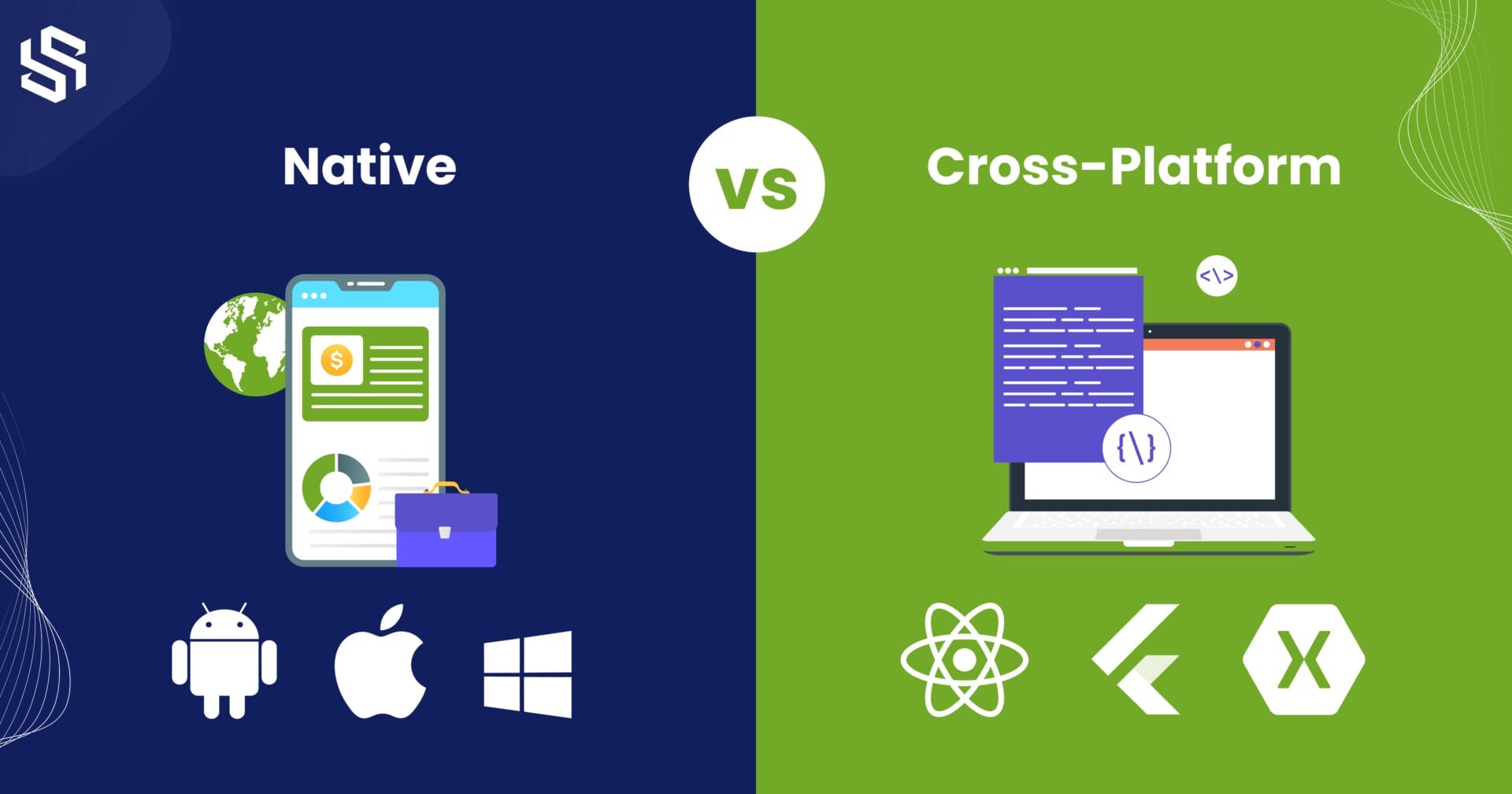
The App Development Decision That Determines Your Budget and Timeline
Every Indian business building a mobile app faces a fundamental architectural choice: native or cross-platform. The decision affects everything that follows — development cost, timeline, performance, and long-term maintenance.
The debate is often framed as a binary: native is "better" but expensive; cross-platform is "cheaper" but compromised. This framing is outdated. Cross-platform frameworks like React Native and Flutter have matured significantly, and the gap between native and cross-platform performance has narrowed for most business applications.
But the choice still matters. Native development remains the right answer for certain use cases — performance-critical apps, hardware-intensive features, and platform-specific experiences. Cross-platform remains the pragmatic choice for most startups and SMEs that need to reach both iOS and Android without doubling their budget.
The cost implications are significant. Mobile app development in India ranges from ₹1,50,000 for simple apps to ₹35,00,000+ for complex platforms, and the native vs cross-platform decision can shift a project by 40–60% in either direction.
This guide provides a data-backed comparison of native and cross-platform development for Indian businesses. It covers cost, performance, timeline, and a decision framework for choosing the right approach for your specific app.
Understanding the Three Approaches
Native Development
Native development uses platform-specific languages and tools: Swift or Objective-C for iOS, Kotlin or Java for Android. The app is built separately for each platform, using the platform's native UI components and APIs.
Characteristics:
-
Separate codebases for iOS and Android
-
Direct access to all device features and APIs
-
Platform-native UI and interaction patterns
-
Best possible performance
-
Highest development cost and longest timeline
Cross-Platform Development
Cross-platform development uses a single codebase to target both iOS and Android. React Native (JavaScript/TypeScript) and Flutter (Dart) are the dominant frameworks in 2026.
Characteristics:
-
Single codebase for both platforms
-
Access to most device features through bridges or plugins
-
Custom-rendered or platform-adaptive UI
-
Good to excellent performance
-
Lower development cost and shorter timeline
Hybrid Development
Hybrid development wraps web technologies (HTML, CSS, JavaScript) in a native container. Ionic and Cordova are common examples.
Characteristics:
-
Web code in a native wrapper
-
Limited access to device features
-
Web-based UI, not native
-
Lowest development cost
-
Performance limitations for complex apps
Hybrid development has largely been superseded by cross-platform frameworks for business applications. For content-focused apps with minimal interactivity, hybrid remains an option. For most Indian businesses, the real choice is between native and cross-platform.
Cost Comparison: What You Actually Pay
Development Cost by Approach
| App Complexity | Native (Single Platform) | Native (Both Platforms) | Cross-Platform | Hybrid |
|---|---|---|---|---|
| Simple app | ₹1,50,000–₹3,50,000 | ₹2,70,000–₹6,30,000 | ₹2,00,000–₹4,50,000 | ₹1,00,000–₹2,50,000 |
| Startup MVP | ₹2,50,000–₹6,00,000 | ₹4,50,000–₹10,80,000 | ₹3,00,000–₹8,00,000 | ₹1,50,000–₹4,00,000 |
| E-commerce app | ₹4,00,000–₹12,00,000 | ₹7,20,000–₹21,60,000 | ₹5,00,000–₹14,00,000 | ₹2,50,000–₹7,00,000 |
| Complex platform | ₹10,00,000–₹25,00,000+ | ₹18,00,000–₹45,00,000+ | ₹15,00,000–₹30,00,000+ | Not recommended |
| USD equivalent (MVP) | $3,000–$7,200 | $5,400–$12,960 | $3,600–$9,600 | $1,800–$4,800 |
The cost pattern is clear. Native development for both platforms costs roughly 1.7–2.0x a single native platform. Cross-platform costs roughly 1.2–1.4x a single native platform — a 30–40% saving versus dual native development.
Developer Rate Comparison
| Role | Native iOS (INR/hour) | Native Android (INR/hour) | Cross-Platform (INR/hour) |
|---|---|---|---|
| Junior developer | ₹500–₹1,000 | ₹500–₹1,000 | ₹500–₹1,000 |
| Mid-level developer | ₹900–₹1,600 | ₹800–₹1,500 | ₹800–₹1,500 |
| Senior developer | ₹1,600–₹3,000 | ₹1,500–₹2,800 | ₹1,500–₹2,800 |
| Mobile architect | ₹2,500–₹4,500 | ₹2,500–₹4,500 | ₹2,500–₹4,500 |
Cross-platform developer rates match Android rates, given the larger JavaScript and Dart talent pools in India. Native iOS developers command a marginal premium due to a smaller talent pool.
Performance Comparison: Real Benchmarks
Runtime Performance
| Performance Dimension | Native | Cross-Platform | Hybrid |
|---|---|---|---|
| Rendering | Platform-native, optimal | Custom or bridged, near-native | Web-based, slower |
| Animation | Excellent, 60fps+ | Excellent (Flutter), good (RN) | Limited |
| Startup time | Fastest | Fast to moderate | Slowest |
| Heavy computation | Optimal | Good with native modules | Poor |
| Memory usage | Most efficient | Moderate | Highest |
| Battery efficiency | Best | Good | Poor |
Native development delivers the best performance because it uses platform-optimized code and direct access to device hardware. Flutter's custom rendering engine delivers near-native performance for most applications. React Native's Fabric architecture has significantly improved performance, though bridge overhead can affect complex scenarios. Hybrid apps perform worst due to their web-based nature.
When Performance Differences Matter
| Use Case | Performance Sensitivity | Recommendation |
|---|---|---|
| Forms, lists, dashboards | Low | Cross-platform sufficient |
| E-commerce, content apps | Low to moderate | Cross-platform sufficient |
| Real-time chat, messaging | Moderate | Cross-platform with optimization |
| Animation-heavy UI | High | Native or Flutter |
| Graphics-intensive apps | High | Native or Flutter |
| Games | Very high | Native or specialized engines |
| AR/VR applications | Very high | Native |
| Camera/ML-intensive apps | High | Native or cross-platform with native modules |
For the majority of business applications — commerce, content, services, dashboards — cross-platform performance is indistinguishable from native to end users. Performance becomes a deciding factor for graphics-intensive, animation-heavy, or hardware-intensive applications.
Development Time Comparison
Timeline by Approach
| App Complexity | Native (Both Platforms) | Cross-Platform | Hybrid |
|---|---|---|---|
| Simple app | 10–16 weeks | 8–12 weeks | 6–10 weeks |
| Startup MVP | 14–22 weeks | 10–16 weeks | 8–12 weeks |
| E-commerce app | 18–30 weeks | 14–22 weeks | 12–18 weeks |
| Complex platform | 28–45 weeks | 20–36 weeks | Not recommended |
Cross-platform development typically saves 20–35% of the timeline compared to dual native development. This saving comes from writing features once rather than twice, and from shared testing and deployment processes.
Development Speed Factors
| Factor | Native | Cross-Platform |
|---|---|---|
| Code reuse across platforms | None (separate codebases) | High (single codebase) |
| UI development | Platform-native components | Custom or adaptive components |
| Feature implementation | Twice (once per platform) | Once |
| Testing | Per platform | Shared test suite |
| Deployment | Separate processes | Unified process |
| Third-party packages | Platform-specific | Cross-platform ecosystem |
When Native Development Is the Right Choice
Native Development Scenarios
Choose native when:
-
The app requires maximum performance (games, AR/VR, heavy graphics)
-
You need deep hardware access (advanced camera, sensors, Bluetooth)
-
The app is platform-specific (iOS-only or Android-only)
-
You are building a flagship product where performance is a differentiator
-
You need the latest platform features immediately on release
-
Your budget and timeline can accommodate dual development
Typical Indian use cases: Gaming apps, AR/VR experiences, advanced camera apps, fintech apps with hardware security requirements, flagship consumer products competing on experience.
Native Development Advantages
| Advantage | Impact |
|---|---|
| Maximum performance | No compromise on speed or responsiveness |
| Full hardware access | All device capabilities available |
| Latest platform features | Immediate access to new OS capabilities |
| Platform-native UX | Perfect adherence to platform conventions |
| Best-in-class reliability | Fewer compatibility issues |
When Cross-Platform Development Is the Right Choice
Cross-Platform Development Scenarios
Choose cross-platform when:
-
You need to reach both iOS and Android
-
Your budget or timeline is constrained
-
The app is business-focused (commerce, services, content)
-
You want a single team maintaining one codebase
-
Your performance requirements are standard, not extreme
-
You want to validate a product before investing in native
Typical Indian use cases: E-commerce apps, service booking apps, content platforms, business apps, MVPs, and most startup products.
Cross-Platform Development Advantages
| Advantage | Impact |
|---|---|
| Single codebase | 30–40% lower cost than dual native |
| Faster time to market | 20–35% shorter timeline |
| Unified team | One team maintains both platforms |
| Consistent UX | Same experience across platforms |
| Easier updates | One codebase to update and deploy |
Decision Framework: Choosing the Right Approach
Decision Matrix
| Your Situation | Recommended Approach | Rationale |
|---|---|---|
| MVP with limited budget | Cross-platform | Fastest, cheapest path to both platforms |
| E-commerce or service app | Cross-platform | Standard performance requirements |
| Content or social platform | Cross-platform | Standard UI patterns |
| Gaming or AR/VR app | Native | Performance-critical |
| Camera or sensor-intensive app | Native or cross-platform with native modules | Hardware access needs |
| iOS-only or Android-only app | Native (single platform) | No cross-platform benefit |
| Flagship consumer product | Native or Flutter | Performance as differentiator |
| Enterprise B2B app | Cross-platform | Standard requirements, cost efficiency |
| App requiring latest OS features | Native | Immediate access to new capabilities |
Approach Selection Scorecard
| Criteria | Weight | Score (1–5) | Weighted Score |
|---|---|---|---|
| Performance requirements | 25% | ||
| Hardware access needs | 20% | ||
| Budget constraints | 20% | ||
| Timeline requirements | 15% | ||
| Platform coverage | 10% | ||
| Long-term maintenance | 10% | ||
| Total | 100% | /5 |
Score each approach independently. The higher weighted total indicates better fit for your specific app.
Cost-Time-Quality Triangle
| Priority | Best Approach |
|---|---|
| Lowest cost | Cross-platform or hybrid |
| Fastest timeline | Cross-platform or hybrid |
| Best performance | Native |
| Best balance | Cross-platform (React Native or Flutter) |
Frequently Asked Questions
1. Is native or cross-platform better for app development in India?
Neither is universally better. Native is best for performance-critical, hardware-intensive, or platform-specific apps. Cross-platform is best for most business applications where cost and timeline matter. For most Indian startups and SMEs, cross-platform is the pragmatic choice.
2. How much cheaper is cross-platform development than native?
Cross-platform development costs roughly 30–40% less than building separate native apps for iOS and Android. For a ₹8,00,000 cross-platform app, dual native development would cost approximately ₹13,00,000–₹16,00,000.
3. Is cross-platform performance good enough for business apps?
Yes, for most business applications. React Native and Flutter deliver near-native performance for forms, lists, dashboards, commerce, and content apps. Performance differences become noticeable only for graphics-intensive, animation-heavy, or hardware-intensive applications.
4. When should I choose native development?
Choose native when your app requires maximum performance (games, AR/VR), deep hardware access (advanced camera, sensors), platform-specific features, or when you are building a flagship product where performance is a key differentiator.
5. Can cross-platform apps access device features like camera and GPS?
Yes. React Native and Flutter provide access to most device features through plugins and native modules. Camera, GPS, push notifications, and biometric authentication all work in cross-platform apps. For highly specialized hardware access, native modules may be required.
6. How long does native vs cross-platform development take?
Cross-platform development typically saves 20–35% of the timeline compared to dual native development. A startup MVP takes 10–16 weeks cross-platform versus 14–22 weeks for dual native. Simple apps take 8–12 weeks cross-platform versus 10–16 weeks native.
7. Which is better for startups: native or cross-platform?
Cross-platform is generally better for startups. It delivers both platforms at lower cost and faster timeline, allowing validation before investing in native development. Native is justified for startups whose product performance is the core differentiator.
8. Is Flutter native or cross-platform?
Flutter is cross-platform. It uses the Dart programming language and compiles to native machine code, but it is not native development. Flutter renders its own widgets using a custom engine, which delivers near-native performance for most applications.
9. Can I switch from cross-platform to native later?
Yes, but it is expensive. Rewriting from cross-platform to native means rebuilding the app from scratch. If you anticipate needing native performance eventually, consider whether starting native avoids a costly migration. For most apps, cross-platform remains sufficient long-term.
10. What is the difference between cross-platform and hybrid?
Cross-platform frameworks (React Native, Flutter) compile to native code and deliver near-native performance. Hybrid frameworks (Ionic, Cordova) wrap web code in a native container and perform significantly worse. Cross-platform has largely superseded hybrid for business applications.
11. How do I choose between React Native and Flutter for cross-platform development?
React Native is better for teams with JavaScript experience and apps with standard UI patterns. Flutter is better for design-heavy apps, animation-intensive interfaces, and multi-platform (mobile + web + desktop) requirements. Team proficiency usually decides.
12. How can Innovative AI Solutions help?
Innovative AI Solutions is a Delhi-based app development company with expertise in native, cross-platform, and hybrid approaches. We help businesses choose the right development approach based on their performance requirements, budget, timeline, and platform coverage needs. Our approach begins with an architectural assessment rather than a technology preference. Learn more at https://innovativeais.com.
Contact Innovative AI Solutions
Ready to choose the right development approach for your app?
We help Indian businesses evaluate native, cross-platform, and hybrid development based on their specific requirements.
Contact Information
Innovative AI Solutions
📍 Netaji Subhash Place, Pitampura, Delhi – 110034
🌐 Website: https://innovativeais.com
📧 Email: info@innovativeais.com
📞 Phone: +91 7464 099 059 / +91 96899 67356
Business Services
• AI Automation
• AI Development
• AI Consulting
• Machine Learning Solutions
• Deep Learning Solutions
• Generative AI Services
• NLP Solutions
• AI Agents
• AI Chatbots
• Voice AI
• CRM Development
• Custom Software Development
• Website Development
• Mobile App Development
About the Author
Abhishek Kumar
Founder & CEO, Innovative AI Solutions
5+ years building production AI systems for Indian businesses. Based in Delhi, serving clients across India.
Ready to build AI solutions for your business?
Innovative AI Solutions — Delhi's leading AI development company. Free consultation available.
Get Free Consultation →
A practical 2026 decision framework for Indian businesses choosing between native and cross-platform app development.
#NativeAppDevelopment #CrossPlatformDevelopment #AppDevelopment2026 #MobileApps #ReactNative #Flutter #iOSDevelopment #AndroidDevelopment #AppDevelopmentIndia #DelhiNCRTech #StartupApps #EnterpriseApps #AppPerformance #DevelopmentCost #AppDevelopmentStrategy #MobileAppComparison #NativeVsCrossPlatform #HybridApps #AppDevelopmentGuide #TechnologyDecision #MobileDevelopmentIndia #AppArchitecture #TechIndia #DigitalProducts #InnovativeAISolutions
Copyright ©️ 2015–2026 Innovative AI Solutions. All Rights Reserved. | Privacy Policy | Terms & Conditions