The Big Question
What happens when your cloud infrastructure fails? When a region goes offline, ransomware encrypts your data, or a misconfiguration corrupts your production environment? The built-in resilience of cloud platforms handles transient faults, but disasters are a different class of event—broad in scope, affecting multiple systems simultaneously, and requiring external intervention guided by a well-defined plan .
Traditional disaster recovery approaches, which often depend on manual processes and rigid infrastructure setups, are no longer sufficient to meet the dynamic demands of modern cloud environments . Automated cloud DR, leveraging Infrastructure as Code, event-driven orchestration, and policy-based failover strategies, is rapidly becoming the new standard.
Cloud DR vs. Traditional DR
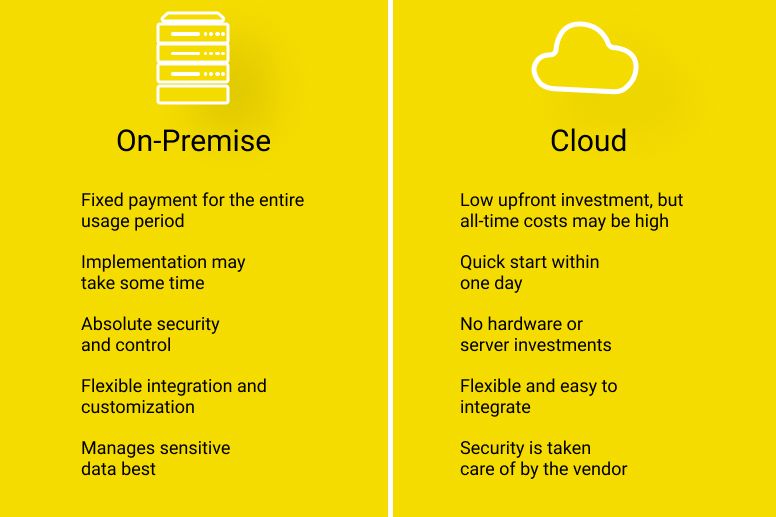
The shift to cloud-based disaster recovery represents a fundamental change in how organizations approach resilience :
| Aspect | Traditional DR | Cloud DR |
|---|---|---|
| Cost | High upfront capital expenditure for duplicate hardware and data centers | Pay-as-you-go operational expenditure; no additional hardware required |
| Scalability | Limited by physical infrastructure capacity | Elastic scaling across cloud regions and providers |
| Complexity | Manual processes, high IT overhead | Automated orchestration with policy-driven workflows |
| Speed of Recovery | Hours to days, depending on logistics | Minutes to hours with automated failover |
| Testing | Costly, often disruptive | Non-disruptive testing in isolated cloud environments |
| Geographic Resilience | Requires multiple physical sites | Built-in geographic redundancy via cloud providers |
| Compliance | Manual evidence gathering for audits | Automated reporting and recovery validation |
The cloud fundamentally changes DR assumptions. Traditional strategies of maintaining duplicate infrastructure are being replaced by options like pilot light, warm standby, and active-active failover that support faster recovery and geographic resilience without constant full-capacity spend .
The Core Framework: RTO and RPO
Every disaster recovery strategy is built on two critical metrics :
Recovery Time Objective (RTO)
The maximum acceptable time to restore business operations after a disaster occurs. RTO defines how quickly a system must be restored and represents the organization's tolerance for downtime .
Recovery Point Objective (RPO)
The maximum acceptable amount of data loss measured in time. RPO determines how frequently data must be backed up and reflects how much data a business can afford to lose during a disaster .
These metrics must be tied to business impact not just technical opinions. Higher-criticality components demand faster recovery and more frequent data protection .
The Criticality Tiering Framework
Not all workloads need a heroic recovery plan. Recovery should reflect business criticality . Over-engineering low-impact services wastes resources; under-preparing high-impact ones risks serious consequences .
Tier 0: Mission Critical
Systems where downtime is not an option and cost saving is secondary to continuity. These systems directly drive revenue, safeguard customer trust, or impact lives. Examples include financial platforms, healthcare systems, and security infrastructure .
Typical requirements:
-
SLOs above 99.99%
-
RTO measured in seconds
-
RPO approaching zero
-
Active-active, multi-region deployment typically required
Tier 1: Business Critical
Systems essential to day-to-day operations and customer experience that can tolerate brief disruptions as long as recovery is fast and data loss is minimal. Examples include e-commerce platforms, customer-facing applications, and partner portals .
Typical requirements:
-
SLOs around 99.95%
-
RTO and RPO measured in minutes
-
Active-active or warm standby deployments often used
Tier 2: Business Operational
Systems that support internal teams and processes. While not directly customer-facing, they're essential for productivity and operational continuity. Examples include reporting platforms, internal dashboards, and administrative tools .
Typical requirements:
-
SLOs around 99.9%
-
RTO and RPO measured in hours
-
Active-passive with warm or cold standby deployment
Tier 3: Administrative
Non-critical workloads that support background operations or serve low-urgency use cases. Examples include archival platforms, sandbox environments, training portals, or batch-processing tools .
Typical requirements:
-
SLOs below 99.9%
-
RTO ranging from hours to days
-
Backup and restore approach typically used
Disaster Recovery Patterns
Selecting the right DR pattern determines whether your recovery strategy meets targets without overspending. The choice of pattern directly affects cost, recovery speed, and infrastructure footprint .
Backup and Restore
The simplest and most cost-effective pattern. Data is regularly backed up and restored on demand when needed.
Best for: Low-criticality workloads with tolerance for longer recovery
RTO: Hours
RPO: Hours
Cost: Lowest
Pilot Light
A minimal version of the environment is always running in the standby region with only core services active. During a disaster, the environment scales up to full capacity .
Best for: Moderate tiers where cost optimization is important
RTO: Minutes to hours
RPO: Minutes
Cost: Low (minimal infrastructure always running)
Warm Standby
A partially provisioned environment runs at reduced capacity in the secondary region, ready to scale up quickly. Continuous data replication ensures minimal data loss .
Best for: Higher tiers with aggressive but not extreme recovery targets
RTO: Minutes
RPO: Seconds to minutes
Cost: Medium (scaled-down capacity always running)
Active-Active
Two or more environments are fully operational and serving live traffic simultaneously across multiple regions. If one environment fails, others continue handling the load with zero or near-zero disruption .
Best for: Mission-critical systems requiring near-zero downtime
RTO: Near-zero
RPO: Potential zero
Cost: Highest (full capacity in multiple regions)
The Seven-Step Implementation Plan
A practical, proven framework for building a cloud DR plan consists of seven key tasks :
Step 1: Define Scope and Targets
Create a tiered RTO/RPO matrix and dependency map to drive design decisions :
-
List applications and services, assigning tiers with RTO/RPO targets
-
Map dependencies databases, secrets/keys, identity, DNS, queues, third-party APIs
-
Identify compliance constraints data residency, encryption, retention
-
Get stakeholder sign-off on classifications before proceeding
Step 2: Select DR Patterns per Tier
Match each workload to a recovery pattern that aligns with cost, performance, and risk . For each tier, document the approach for compute, storage, networking, and data protection.
The decision framework: A backup-to-cloud pattern works for low-criticality workloads, while real-time replication supports strict RPO and RTO. Choose patterns that meet targets without paying for idle capacity .
Step 3: Engineer Data Protection and Integrity
Ensure data is recoverable, consistent, and tamper-resistant :
-
Define replication/backup cadence by RPO, including databases, object stores, and SaaS exports
-
Use immutability or object lock for backup copies
-
Enforce key management and encryption standards
-
Plan application-consistent snapshots and verify restore order of operations
-
Use replication strategies based on RPO targets synchronous across availability zones for high-priority data, asynchronous across regions for lower priority
Step 4: Automate Infrastructure and Cutover
Remove manual bottlenecks during a disaster :
-
Codify DR infrastructure (networking, security groups, compute, storage) in scripts or runbooks
-
Automate data restore, configuration injection (secrets, endpoints), and schema migrations
-
Pre-stage DNS changes, health checks, and traffic steering rules
-
Document rollback procedures
-
Use declarative, idempotent scripts and build safeguards like retry and circuit-breaker logic for reliability
Step 5: Validate with Progressive Testing
Testing proves the plan works and keeps teams ready :
Test types:
-
Tabletop exercises: Walkthrough of decisions and runbooks with all stakeholders
-
Partial failover: Move a subset of services and validate end-to-end behavior
-
Full failover: Shift production under controlled conditions and measure outcomes
Cadence: Test tier-1 services quarterly and other tiers semiannually. Add ad-hoc tests after major releases, architecture changes, or provider incidents .
Pass criteria: RPO and RTO targets met, data integrity verified, security and operations at steady state, and rollback executable if critical checks fail .
Step 6: Operational Controls: Cost, Drift, and Security
Keep DR ready without runaway spend or configuration drift :
-
Right-size warm capacity by scheduling scale-down outside drills
-
Monitor configuration drift between production and DR (versions, images, policies)
-
Enforce least privilege, segregate DR credentials, and log all DR actions
-
Tag resources and set budget thresholds to track accountability and chargeback
Step 7: Package the Evidence and Govern
An effective DR plan should be provable and audit-ready :
-
Assemble monthly evidence: RTO/RPO matrix, test results, backup/replication reports, drift findings
-
Review at quarterly business reviews—update risk register and remediation timelines
-
Refresh the plan after major releases or architecture changes
-
Treat the DR plan as a living document, reviewed every six months with all relevant teams
Orchestration and Automation
The shift from manual to automated DR is delivering measurable results. Automated disaster recovery architectures can achieve up to 65% reduction in recovery time compared to conventional solutions .
Infrastructure as Code
Provision networks, compute, and storage in the recovery region using declarative templates. Predeploy CI/CD pipelines in every region so they're ready to run immediately when needed .
Safe Automation Principles
When automating recovery procedures :
-
Apply manual approvals when necessary to balance speed with control
-
Build safeguards like retry and circuit-breaker logic for any custom code
-
Use thorough DR drills to test every phase and validate recovery targets
-
Ensure trained operators can oversee and intervene if issues arise
DR-as-a-Service
For organizations where DR processes are too complex or in-house resources are constrained, DRaaS provides enterprise-grade recovery capabilities on a subscription basis :
-
Access enterprise-grade recovery capabilities without millions in infrastructure investment
-
Achieve aggressive RPOs and RTOs that would be impractical with limited resources
-
Test recovery plans regularly without disrupting production environments
-
Scale protection up or down as the business grows
The Communication and Governance Imperative
A DR plan is only as good as the communication around it. Build a clear communication strategy that defines who makes decisions, who gets informed, and how information flows during a DR event :
Key roles to define:
-
Who declares a disaster and closes an incident
-
Who runs operations tasks, testing, and validation
-
Who manages internal and external communication
-
Who leads retrospectives and root-cause analysis
Critical preparation:
-
Provide step-by-step instructions with prerequisites (scripts, credentials, configurations)
-
Establish cross-functional war rooms for quick coordination
-
Prepare communication channels and message templates in advance
-
Define escalation paths for recovery status communication
-
Ensure root-cause issues are addressed before recovery begins to prevent repeated failures
Accessibility and Availability of DR Assets
Disaster recovery succeeds only when both the plan and the tools needed to execute it remain available under all failure conditions :
-
Store DR documentation, scripts, and recovery components in highly available, secure locations
-
Replicate DR assets across regions
-
Maintain offline or printed copies for worst-case scenarios
-
Predeploy CI/CD pipelines in every region
-
Protect credentials, certificates, and scripts with replication and secure access controls
Frequently Asked Questions
Q1: What is the difference between cloud backup and cloud DR?
Cloud backup creates copies of data for long-term retention and restoration. Cloud DR replicates entire workloads and applications so they can be spun up quickly in the cloud during an outage. Backup protects the data; DR protects both the data and the systems that run it .
Q2: What recovery times can cloud DR achieve?
With replication and continuous data protection, some cloud DR solutions can achieve RPOs of seconds and RTOs of minutes for mission-critical systems. Less critical systems may be scheduled for longer intervals .
Q3: How do I know if I need full disaster recovery or just backup?
If the business can tolerate extended downtime while restoring from backups, backup may be sufficient. If systems need to be operational within minutes or hours, full DR with replicated environments is required .
Q4: What are the main risks of not having a cloud DR plan?
Extended downtime and revenue loss, permanent data loss from ransomware or corruption, inability to meet compliance regulations, and reputational damage from service unavailability .
Q5: How can Innovative AI Solutions help?
We help organizations design, build, and operationalize cloud disaster recovery strategies from business impact analysis and RTO/RPO definition to automated orchestration and continuous validation. Based in Delhi, serving clients across India.
Why Delhi is a Great Hub for Cloud Resilience Innovation
Delhi is emerging as a hub for cloud and resilience innovation, backed by a thriving IT services ecosystem and a growing number of global delivery centers. Indian enterprises across BFSI, healthcare, government, and IT services are adopting cloud DR to meet regulatory requirements, protect customer data, and ensure business continuity in an increasingly uncertain world.
What We Offer at Innovative AI Solutions
-
Cloud DR Strategy: We help you define recovery objectives, tier workloads, and select appropriate patterns
-
Automated Orchestration: We help you implement Infrastructure as Code and event-driven failover workflows
-
Testing and Validation: We help you design progressive testing that proves recovery targets
-
Governance and Compliance: We help you establish cost controls, drift monitoring, and audit-ready evidence packaging
Final Thought
The goal of disaster recovery is not just to recover—it is to recover within the time and data loss tolerances your business requires. The shift is clear: from manual, expensive, and uncertain to automated, provable, and cost-effective. Organizations that invest in disciplined cloud DR planning now will be the ones that survive inevitable disruptions with minimal impact.
Contact Us:
Phone: +91 7464 099 059 / +91 9689967356
Email: info@innovativeais.com
Address: Netaji Subhash Place, Pitampura, Delhi – 110034
Website: https://innovativeais.com
About the Author
Abhishek Kumar
Founder & CEO, Innovative AI Solutions
5+ years building cloud, AI, and enterprise systems. Based in Delhi, serving clients across India.
Related services: to apply this in your business, explore our AI development services and DevOps and CI/CD.