The Big Question
Every business has backups. But backup and disaster recovery are two different things.
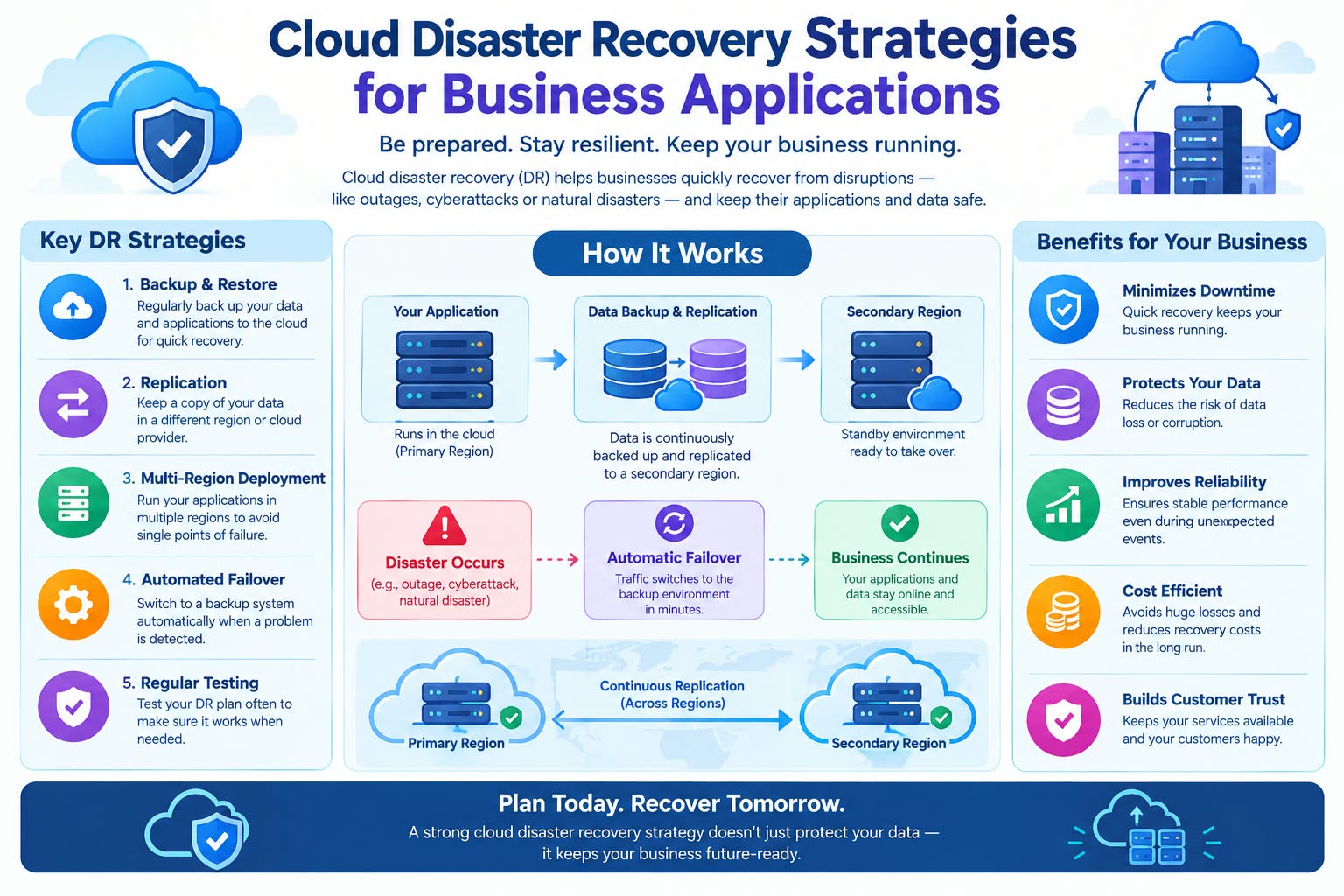
Backup is a copy of data. Disaster recovery is the ability to get the business running again. You can have perfect backups and still be paralyzed for days during a real failure because you never tested the recovery process, never documented the recovery sequence, never verified the dependencies.
The data confirms this. Sophos's 2025 report showed that the proportion of backups used for ransomware recovery dropped to a four-year low of 53%, down from 73% the previous year. This means nearly half of businesses cannot effectively recover from backups when hit by ransomware. The reason isn't that backups don't exist. It's that backups are unavailable when needed encrypted, deleted, or never tested.
The root cause: backup is typically treated as a cost center, not the core of business continuity. The engineering hours spent keeping backup infrastructure running are the most underestimated cost line in DR budgets. Most DR budgets account for tools and storage, but ignore the human cost of keeping backup infrastructure operational.
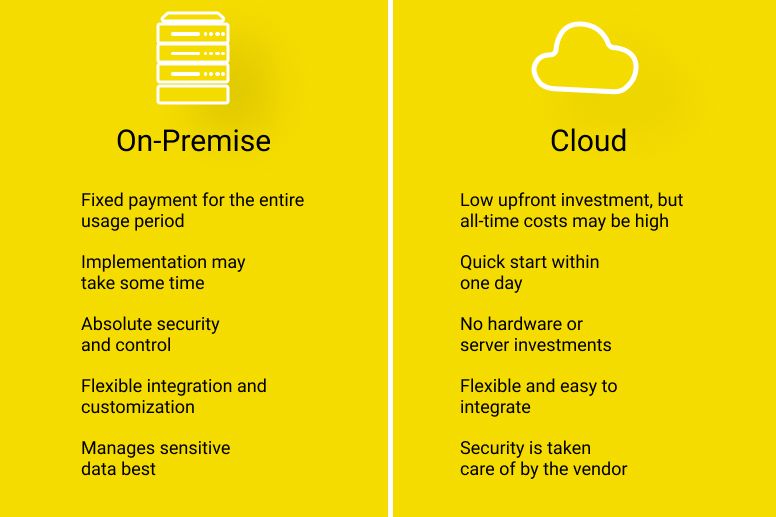
Cloud changed the economics of disaster recovery. Traditional DR required maintaining an idle secondary data center that burned money whether used or not. Cloud DR replaces idle hardware with on-demand capacity, activated only during real failures. But this doesn't mean cloud DR is cheap. It means the time distribution of costs has changed low during normal operations, high during failures.
Cost Based on Recovery Architecture
Cloud DR costs depend on the recovery architecture you choose. The more automated the architecture and the shorter the RTO, the higher the cost. Here are the four mainstream models with their 2026 cost profiles:
| Recovery Architecture | Implementation Cost (India) | Monthly Run Cost | Typical RTO | Best For |
|---|---|---|---|---|
| Backup + Restore | ₹50,000 – ₹1,50,000 | ₹5,000 – ₹20,000 | Hours to days | Non-critical systems, internal tools |
| Snapshots | ₹80,000 – ₹2,50,000 | ₹15,000 – ₹50,000 | Hours | Databases, file systems |
| Pilot Light / Warm Standby | ₹2,00,000 – ₹6,00,000 | ₹40,000 – ₹1,20,000 | Tens of minutes to hours | POS, CRM, retail ERP |
| Active-Passive / Active-Active | ₹5,00,000 – ₹20,00,000+ | ₹1,50,000 – ₹6,00,000+ | Under 5 minutes | Trading systems, core banking |
Azure Backup India reference pricing: An Indian SME running 10-20 Azure VMs pays between ₹8,000 and ₹25,000 per month. But note Azure Backup's dual billing model: an instance fee based on provisioned disk size, and a storage fee based on actual data in the vault. A VM under 50GB costs about ₹415/month in instance fees, 50-500GB about ₹830/month, with storage billed separately at $0.05/GB/month.
Snapshot vs backup India pricing: AceCloud's Noida region snapshot pricing is ₹0.0069/GB/hour (about ₹5.04/GB/month), and backup storage is ₹0.0034/GB/hour (about ₹2.54/GB/month). 1TB of snapshots runs about ₹5,158/month, and 1TB of backup about ₹2,542/month.
The real cost of downtime: ITIC's 2024 survey showed that 41% of enterprises lose between $1 million and $5 million per hour of downtime. Splunk and Oxford Economics put the average cost of downtime in 2026 at $15,000 per minute ($900,000 per hour), with Global 2000 companies losing a combined $600 billion annually.
Cost Based on RTO/RPO Targets
RTO (Recovery Time Objective) and RPO (Recovery Point Objective) determine architectural complexity and cost. These are not abstract concepts they are operational metrics defined per workload:
| Workload Type | RPO | RTO | Cost Driver |
|---|---|---|---|
| Transactional databases, payment systems, core banking | < 15 minutes | < 1 hour | Continuous replication, hot standby capacity |
| POS, CRM, retail ERP | 15-60 minutes | 2-4 hours | Warm standby, periodic sync |
| Tele-sales, operations CRM | 1-4 hours | 4-8 hours | Pilot Light, on-demand startup |
| File systems, LMS, internal reporting | 4-24 hours | 8-24 hours | Backup + restore, low-cost storage |
The tighter the RTO, the more expensive the architecture. Minute-level RTO requires hot or warm standby, with compute running continuously. A 4-24 hour RTO can use Pilot Light, with most resources activated only during a failure. The same workload, with different architecture choices, can see DR costs differ by multiples.
Breakdown by Developer Type (2020-2026 Rates)
Cloud DR implementation and maintenance requires specialized skills. India's talent costs are as follows:
| Role | India Hourly Rate | US Hourly Rate | Core Responsibility |
|---|---|---|---|
| Cloud Operations Engineer | $20 – $40 | $80 – $150 | Backup strategy, recovery testing, monitoring |
| SRE / Reliability Engineer | $35 – $65 | $120 – $200 | RTO/RPO design, automated failover |
| Disaster Recovery Architect | $50 – $90 | $150 – $250 | Multi-region architecture, compliance mapping, test strategy |
| Managed DRaaS Team | $40 – $80/hour | $150 – $300/hour | Fully managed recovery execution, 24x7 monitoring |
India's structural advantage: Engineers with cloud DR experience cost 60-80% less than their US counterparts. But the critical question is: "Show me a production environment where you actually executed a failover in the last 12 months." Anyone can write a design document. Only teams that have executed real recovery deserve trust.
Why Costs Changed in 2026
Three forces have reshaped cloud DR economics.
First, failure modes shifted from hardware to software. A decade ago, the primary failure mode was a data center power outage or cooling failure. Today's failure modes are almost always software problems: configuration changes, DNS automation bugs, OS patches that pass every automated check yet still break production. This means physical redundancy is no longer fully effective. Azure's two September 2026 failures an AI service disruption in Sweden Central and a gateway failure across 18 regions both stemmed from control plane software issues, not hardware failure.
Second, ransomware now targets backups themselves. Modern ransomware doesn't just encrypt production data it directly attacks backups, deleting or encrypting them to destroy recovery options. Immutable backups (WORM/locked retention) and air-gapped backups have become standard, not optional. NIST SP 800-209 recommends considering air-gapped solutions for systems that need to recover from cyberattacks.
Third, compliance requirements tightened. India's DPDP Act sets a penalty ceiling of ₹250 crore for serious data processing failures. A backup vault that attackers cannot silently delete has moved from "nice to have" to close to a compliance control. Data residency requirements also affect cross-region replication design cloud regions must be within the same geographic boundary to satisfy tax and law enforcement requirements.
Pro Tips to Save Money in 2026
1. Define RTO/RPO by workload, not one-size-fits-all. A "15-minute" RPO that has never been tested is no different from a number that doesn't exist. Each workload needs independent RTO/RPO definitions. Trading systems and internal reports should not have the same recovery target.
2. Use incremental backups, avoid full snapshots. At hundreds of terabytes of scale, full snapshots versus incremental-only storage can differ by hundreds of thousands of dollars per year in storage costs. Full snapshots for services like Aurora are especially expensive.
3. Implement immutable backups. Once written, no one can modify or delete them during the retention period. This is easy to deploy on most cloud platforms and is the first line of defense against ransomware.
4. Test recovery, not just backup. The 3-2-1-1-0 framework: 3 copies, 2 media types, 1 offsite, 1 immutable, and 0 recovery test errors. The last item is the most commonly skipped, and the most important.
5. Automate failover, but not fully automatically. IEEE research shows that automated DR architectures integrating IaC, event-driven orchestration, and policy-based failover achieved 65% reduction in RTO. But full automation needs thorough testing before it can be trusted.
6. Consider managed DRaaS. 88% of organizations plan to move to DRaaS within two years, with cost optimization as the primary motivation. Fully managed models account for 46.6% of the DRaaS market, with enterprises willing to pay for turnkey orchestration, monitoring, and compliance reporting.
Questions to Ask Before Hiring
1. "Show me a production environment where you actually executed a failover in the last 12 months." Anyone can write a design document. Only teams that have executed real recovery deserve trust.
2. "How often do you test recovery?" A DR plan that has never been tested is no plan at all. The right answer involves regular testing, verifying data integrity, and measuring actual RTO against targets.
3. "How do you handle backups becoming an attack target?" Modern ransomware targets backups. The right answer involves immutable storage, multi-person authorization, and air-gapped copies.
4. "Who owns failback after failover?" The meter doesn't stop when the disaster ends. Failback runs its own meter compute runs continuously until the switch completes, and all changes during the outage need to be replicated back.
5. "If our production environment is fully compromised, can backups still restore?" This is the ultimate test. The answer should be "yes, because we have air-gapped copies." If the answer is "probably," that's not good enough.
Why Delhi Is a Great Hub for Cloud DR
Delhi-NCR has India's densest cluster of Global Capability Centers (GCCs) 35% of NCR's GCCs constitute the region's largest cluster of global financial captives. These organizations run cloud-native platforms across AWS, Azure, and GCP, where multi-account landing zones, managed EKS clusters, and fully automated CI/CD pipelines are table stakes. Cloud DR is not an optional feature it's the foundation of business survival.
India's DRaaS market is growing rapidly. The Asia-Pacific region recorded the highest CAGR at 14.25%, with government pushes for cloud growth to stimulate GDP. Indian enterprises are increasingly adopting cloud DR to meet DPDP compliance requirements while reducing the capital expenditure of traditional secondary data centers.
Delhi's time zone advantage matters too. A Delhi-based team can sync with Middle East morning, European afternoon, and US East Coast evening covering the global support window.
What We Offer
At Innovative AI Solutions, we treat cloud disaster recovery as an engineering discipline, not a compliance checkbox.
Our approach:
-
RTO/RPO Mapping First. Define recovery targets by workload. Trading systems and internal reports have different requirements.
-
Architecture Selection Based on Business Needs. Backup + restore for non-critical systems. Pilot Light for systems that can tolerate hours of downtime. Active-Passive for trading platforms.
-
Immutable Backups and Secure Vaults. Write-once, no modifications. Multi-person authorization. Air-gapped copies for the most critical systems.
-
Automated Failover with IaC. Event-driven orchestration, policy-based failover. Reduced manual intervention, lower recovery time.
-
Regular Recovery Testing. Verify data integrity, measure actual RTO against targets. Document and rehearse the full recovery process.
-
Retained Operations. Monitoring, testing, optimization. Your DR plan doesn't rot because someone forgot it existed.
Our principle is simple: small steps, fast iteration, data speaks.
Frequently Asked Questions
Q: What's the difference between backup and disaster recovery?
Backup is a copy of data. Disaster recovery is the ability to get the business running again. You can have perfect backups and still be paralyzed for days during a real failure because you never tested the recovery process, never documented the recovery sequence, never verified the dependencies.
Q: What are RTO and RPO?
RTO (Recovery Time Objective) is the maximum time a system can be down. RPO (Recovery Point Objective) is the maximum amount of data you're willing to lose. These are operational metrics defined per workload, not global numbers.
Q: How much does cloud DR cost?
Depends on architecture. Backup + restore: ₹50,000-₹1,50,000 implementation, ₹5,000-₹20,000/month run. Active-Active: ₹5,00,000-₹20,00,000+ implementation, ₹1,50,000-₹6,00,000+/month run. Downtime itself costs $300,000 to $5 million per hour.
Q: Why are immutable backups important?
Modern ransomware doesn't just encrypt production data it directly attacks backups. Immutable backups (WORM/locked retention) ensure backups cannot be modified or deleted during the retention period, even if administrator credentials are compromised.
Q: Can cloud DR protect against all failures?
No. Azure's two 2026 failures showed that software control plane issues can affect 18 regions simultaneously. Physical redundancy is no longer fully effective. You need to design for cross-cloud or hybrid architectures to handle a single provider's global failure.
Frequently Asked Questions (Extended)
Q: Should I choose Active-Active or Active-Passive?
Active-Active has near-zero RTO but high steady-state cost double compute, double storage. Active-Passive has an RTO of about 15-60 minutes and moderate steady-state cost minimal secondary compute. The choice depends on whether the business can tolerate 15-60 minutes of downtime.
Q: How much budget should I allocate for cloud DR?
A practical reference: DR spending should not exceed 15% of your total cloud bill. If it does, you may be over-replicating data or have an inefficient recovery design. Start with critical workloads and tier your strategy by RTO/RPO.
Q: How often should I test my DR plan?
At least quarterly. Testing needs to verify three things: recovery of the correct data version, systems coming online in the correct dependency order, and data integrity after recovery. A DR plan that has never been tested is no plan at all.
Q: What's the first step I should take tomorrow?
Pick one workload. Just one. Define its RTO and RPO. Check whether your current recovery time meets those targets. If it doesn't, where's the gap? That's your starting point. Not with a strategy document about cloud disaster recovery transformation.
Contact Us:
Phone: +91 7464 099 059 / +91 9689967356
Email: info@innovativeais.com
Address: 9th Floor, Pearls Best Heights-I, Head Office: 904, Netaji Subhash Place, Delhi, 110034