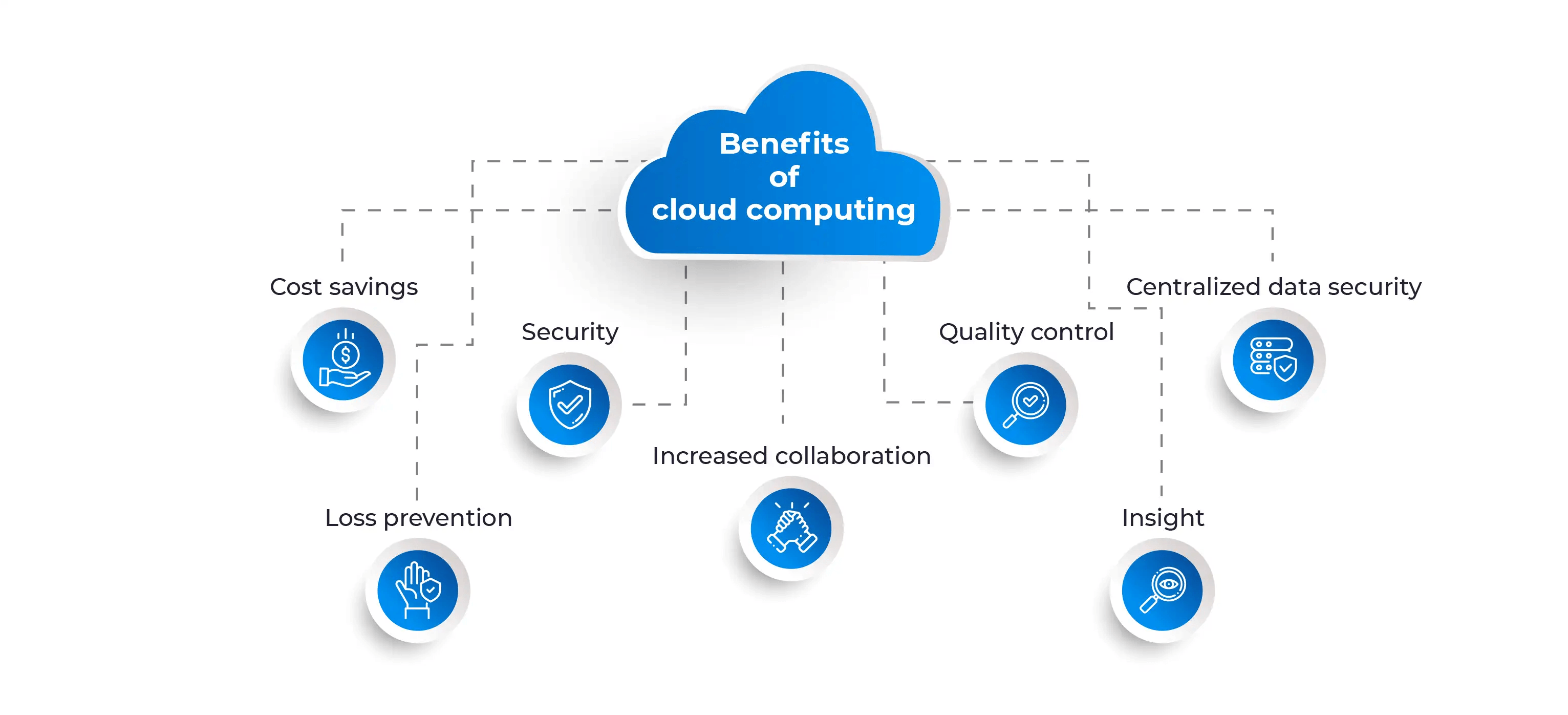
The Big Question
What happens when your application needs sub-10ms latency but your cloud data center is a hundred miles away? When data sovereignty laws require that customer data never leaves a specific region, but your most cost-effective compute is elsewhere? When your AI workload needs hundreds of GPUs, but your on-premises cluster has only a handful?
The right answer to where each application should run is rarely the same for every workload. The goal of effective workload placement is to match each application's requirements latency, data sensitivity, compute intensity, and cost constraints with the environment that best meets them. As the cloud-edge continuum expands, this is one of the most consequential decisions an enterprise architect makes.
The Workload Placement Challenge
Cloud workload placement is the process of deciding where to run a given application or service. The decision framework is a multi-dimensional optimization problem . At its simplest, it involves choosing between on-premises, public cloud, private cloud, and edge environments. In practice, it also involves decisions between specific regions, availability zones, clusters, and even individual nodes.
Modern cloud environments present a complex set of placement options, each with its own strengths and limitations. A workload that performs well in one context may be expensive, slow, or non-compliant in another. The placement decision is a structural choice that determines your application's cost structure, performance envelope, and operational overhead for its entire lifecycle.
Factors Influencing Placement
| Factor | Description |
|---|---|
| Latency and Performance | Time-sensitive applications demand low-latency proximity, which often points to edge computing. Data transfer speed and network bandwidth are also critical. |
| Data Sovereignty and Compliance | Regulatory requirements (GDPR, HIPAA, local data laws) may require data to remain within specific geographic boundaries. |
| Cost | Public cloud offers pay-as-you-go flexibility, but data transfer and storage costs can accumulate quickly. Fixed costs may favor on-premises for predictable, sustained workloads. |
| Resource Requirements | AI/ML and high-performance computing often need specialized hardware like GPUs . Standard web apps may have lower requirements. |
| Security and Governance | Sensitive workloads may require the stronger isolation of a private cloud or on-premises environment, or a zero-trust architecture. |
| Integration Needs | Ease of integration with existing on-premises systems or other cloud services is a key factor. |
| Application Architecture | Microservices often benefit from multi-cloud distribution, while monolithic apps may be simpler to place in one location. |
The Decision Framework: Matching Workloads to Environments
Different environments are best suited for different types of workloads. A high-level mapping:
| Environment | Best Suited For |
|---|---|
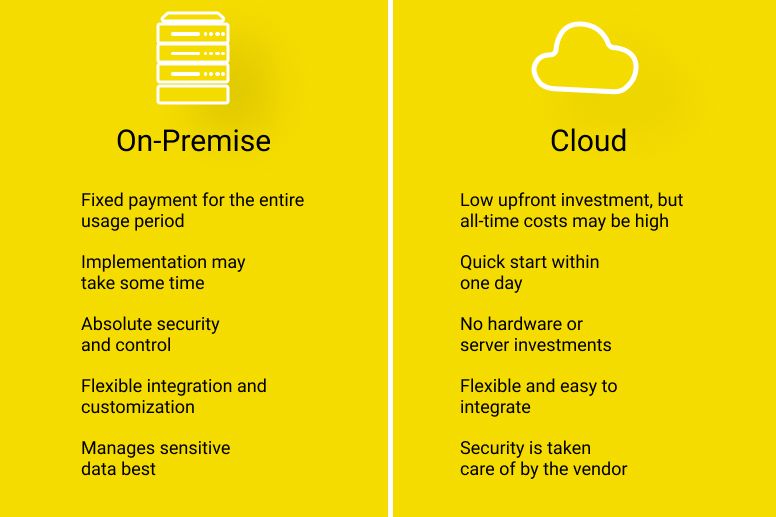
| On-Premises | Legacy systems that are difficult to migrate, workloads with strict data sovereignty or low-latency requirements, and predictable, sustained workloads where fixed costs are lower. |
| Public Cloud | Dynamic, scalable workloads (web apps, microservices), development and testing environments, and applications with variable or unpredictable resource needs. |
| Private Cloud | Workloads that require high security, control, and isolation, but still benefit from cloud-like scalability and automation. |
| Edge | Real-time applications requiring sub-10ms latency (autonomous systems, IoT, AR/VR), where data can be processed close to the source to save bandwidth and improve response times. |
| Multi-Cloud | Redundancy, avoiding vendor lock-in, and leveraging best-of-breed services from different providers. |
Advanced Placement Methods
Intelligent and Predictive Scheduling
Research has significantly advanced workload placement, moving beyond simple heuristics. A three-tier architecture proposed for cloud data centers uses a Non-dominated Sorting Genetic Algorithm II (NSGAII) for multi-objective optimization of virtual machine allocation and an LSTM-based model for accurate workload prediction, outperforming baseline approaches in energy consumption, migration reduction, and prediction accuracy .
For Kubernetes environments, KubeAI uses Proximal Policy Optimization (PPO), a reinforcement learning technique, to make smarter placement decisions based on a wide range of real-time metrics not just CPU and memory, but also disk I/O, network latency, node temperature, and inter-pod communication patterns. This enables more informed scheduling . Another framework, HyQoS-Sched, prioritizes quality-of-service (QoS) in multi-tenant clusters, combining constant monitoring, priority-aware placement, and resource tweaks to reduce wait times by 28% during peak loads and cut energy consumption by 15% .
Container and Microservice Placement
Containerized applications and microservices require granular placement strategies. Frameworks like kubeDelphi provide a modular Kubernetes framework for intelligent, policy-driven placement and rescheduling, allowing operators to define custom objectives like cost, energy efficiency, and resource utilization, and apply them to workload scheduling . This is particularly relevant for optimizing microservice performance and cost in hybrid and multi-cloud environments.
Placement for Specialized Workloads
Generative AI workloads present unique placement challenges. They demand heterogeneous resources (GPUs, CPU cores, high-bandwidth memory) in highly variable combinations. Current cluster schedulers, which often treat placement as scalar capacity packing, can lead to resource fragmentation where nodes appear partially utilized but have no available GPUs, leaving other resources stranded. Residual-Aware Geometric Packing (RAGP) addresses this by representing workload demand and server residual capacity as multi-dimensional vectors and using cosine similarity to match workloads to nodes with complementary resource profiles, reducing fragmentation and improving utilization .
Implementation Roadmap
Phase 1: Discovery and Assessment (Weeks 1-3)
-
Inventory your workloads. Map all applications and their technical and business requirements. Categorize them by latency sensitivity, data footprint, security classification, and cost model.
-
Map your environment landscape. Identify all available deployment targets—regions, clouds, edge sites—and their capabilities, constraints, and costs.
Phase 2: Define Placement Policies (Weeks 4-6)
-
Establish placement criteria. Define the decision logic for different workload types (e.g., "All customer data must stay in the EU region").
-
Automate placement decisions. For Kubernetes environments, implement intelligent schedulers (like KubeAI or HyQoS-Sched) that can enforce policies and continuously optimize placement .
Phase 3: Monitor and Iterate (Weeks 7-12+)
-
Monitor performance and cost. Continuously track key metrics of deployed workloads.
-
Assess the fit. Adjust placement policies if workloads are not meeting their targets, or if new, better options become available.
-
Re-evaluate. As your application portfolio and the cloud landscape evolve, your placement strategy should adapt.
Frequently Asked Questions
Q1: What is cloud workload placement?
It is the decision-making process of selecting the most appropriate environment (public cloud, private cloud, edge, on-premises) for each application based on its specific requirements, constraints, and business objectives.
Q2: Why is workload placement important?
A poor placement decision can lead to high costs, poor performance, security risks, and compliance violations. Good placement ensures applications run efficiently, securely, and cost-effectively.
Q3: How is workload placement evolving?
It is moving from static, rule-based decisions to dynamic, policy-driven, and AI-optimized scheduling. Intelligent schedulers now consider a broad range of real-time metrics and can learn to make better placement decisions over time .
Q4: What is the role of AI in workload placement?
AI and machine learning are being used to analyze resource demands, predict workloads, and identify optimal placements. Reinforcement learning models like PPO can even learn to make scheduling decisions based on complex objectives in dynamic environments.
Q5: How can Innovative AI Solutions help?
We help organizations design, build, and operationalize strategic workload placement capabilities from workload assessment and policy definition to intelligent scheduler implementation and performance monitoring. Based in Delhi, serving clients across India.
Final Thought
The shift is clear: from static, one-time placement decisions to dynamic, intelligent, and continuous optimization. Organizations that master workload placement will be the ones that achieve the right balance of cost, performance, and compliance. They will see their applications run faster, their cloud bills shrink, and their governance become more effective.
Contact Us:
Phone: +91 7464 099 059 / +91 9689967356
Email: info@innovativeais.com
Address: Netaji Subhash Place, Pitampura, Delhi – 110034
Website: https://innovativeais.com
About the Author
Abhishek Kumar
Founder & CEO, Innovative AI Solutions
5+ years building AI, cloud, and enterprise systems. Based in Delhi, serving clients across India.
Related services: to apply this in your business, explore our cloud services and RAG development.