The Big Question
What happens when sending data to the cloud takes too long? When autonomous vehicles need to make split-second decisions, or a factory robot requires instant feedback? Traditional cloud architectures cannot keep up with the demands of these real-time applications. The answer is edge cloud computing an architecture that processes data at the network edge, slashing latency and enabling the next generation of intelligent services.
What Is Edge Cloud Computing?
Edge cloud computing is a distributed IT architecture that processes data at the edge of the network, close to where it is generated, rather than in a centralized cloud data center. It is a natural evolution of cloud computing, responding to the explosive growth of Internet of Things (IoT) devices and real-time applications like interactive gaming, smart healthcare, and the tactile internet .
In this setup, heavy computational tasks are offloaded from user devices and from distant central clouds to nearby edge servers . This dual approach ensures that applications demanding instant response get the speed they need, while the central cloud handles less time-sensitive, more resource-intensive workloads.
The Edge-Cloud Collaboration
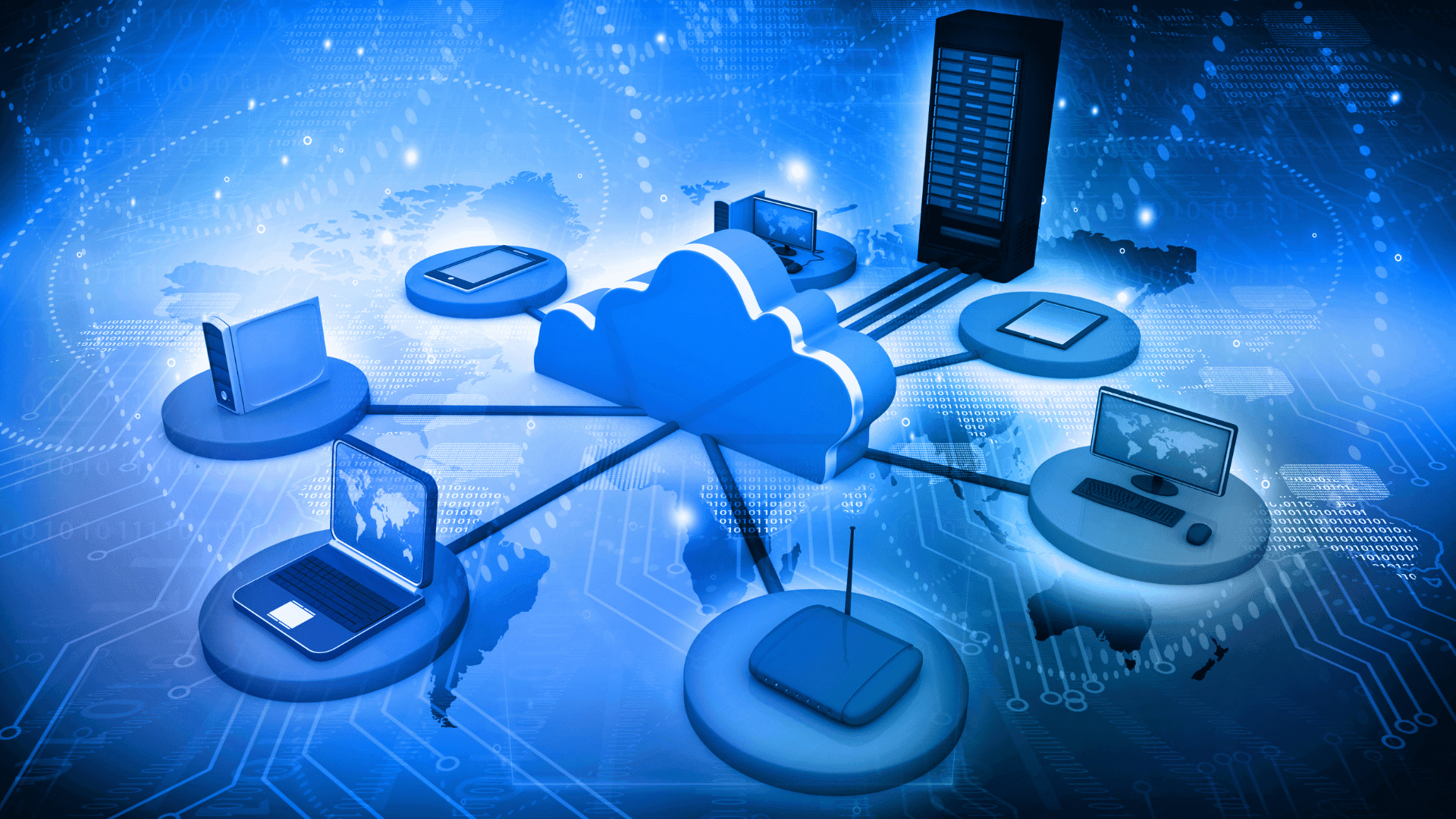
Edge and cloud are not competitors but partners in a collaborative architecture. The "edge-cloud continuum" leverages the strengths of both: low latency from the edge and massive, scalable compute power from the cloud .
-
Edge Nodes: Handle data preprocessing, real-time decision-making, and local caching for immediate responses .
-
Central Cloud: Manages heavy analytics, machine learning training, and long-term storage of non-urgent data .
This synergy is crucial for optimizing performance, cost, and energy use.
Why Edge Cloud Matters: The Need for Speed
The primary driver for edge cloud computing is the need to overcome the high response delays of traditional cloud systems . For sensitive applications, these delays are not just inconvenient; they are a fundamental barrier.
The Latency Problem
Research shows that edge-cloud collaboration can reduce the average response delay for these sensitive workloads by over 33 times compared to traditional cloud-only systems . This is achieved by processing data at the edge, keeping it physically close to the user and bypassing the "long haul" to and from a centralized data center.
Key Performance Gains
Beyond latency, edge cloud delivers significant operational benefits:
| Benefit | Description | Example Outcomes |
|---|---|---|
| Reduced Energy Consumption | Optimizes task offloading decisions to minimize total system energy use. | An EDCO algorithm cut total system energy use by up to 28% . |
| Improved Reliability | Reduces failures caused by missed latency deadlines. | Cut task failures from delay violations by more than 45% . |
| Lower Carbon Emissions | Enables green computing by allowing workloads to be shifted to areas with renewable energy. | A proposed strategy reduced carbon emissions by 3.14% while also increasing operating profits by 18.78% . |
How Edge Cloud Works: The Architecture
A functional edge-cloud system is not a monolithic deployment but a complex orchestration of technologies.
1. The Offloading Decision: A Complex Optimization
A core challenge is the task offloading problem: deciding exactly where to run each computation. Devices have to weigh a variety of factors against each other: local energy use, transmission energy, delay, and computational resources at the edge and cloud .
The Problem: It's a mixed-integer non-linear programming (MINLP) problem. NP-hard by nature, it requires algorithms that can find practical solutions quickly .
The Solution: Modern systems are moving toward "cognitive" and "agentic" solutions that use heuristic-based algorithms to make these decisions in real time. For example, the "Energy and Delay-aware Cooperative Offloading (EDCO)" algorithm chooses whether a task should run on the device, an edge server, or the cloud, optimizing for energy and delay . This is complemented by innovations like fragment caching, where intermediate results from common computational tasks are stored at the edge for reuse, further cutting down on redundant processing .
2. The Architecture in Practice: Serverless and Kubernetes
Newer architectures are leveraging cloud-native technologies to manage edge complexity.
A Cloud-Edge Serverless Model: This model uses a Kubernetes-based approach to deploy applications. The central cloud can deploy and manage services, while business logic is deployed to edge nodes (using frameworks like KubeEdge) for local data processing and instant response. This approach brings serverless simplicity to the edge, allowing developers to focus on code rather than infrastructure management .
3. The Pilot in Italy: A Real-World Test
A practical example of this is happening in Italy. The Department for Digital Transformation is funding a €1 million pilot project where edge cloud infrastructure will be installed at access points of fixed and mobile networks. This large-scale experiment aims to measure the tangible benefits of edge computing in real operational contexts .
This is a key technology for advanced applications like artificial intelligence, IoT, digital health, smart mobility, and real-time streaming .
Implementation Roadmap
Phase 1: Assessment and Use Case Definition
-
Identify the Pain Point: Pinpoint a specific latency-sensitive use case be it a factory floor control system, an AR application, or a smart city solution .
-
Audit Workloads: Categorize your workloads into "sensitive" (requiring edge processing) and "tolerant" (suitable for the core cloud).
-
Define Performance Metrics: Set clear targets for latency, energy consumption, and reliability.
Phase 2: Pilot and Build
-
Start Small: Select a bounded, non-mission-critical application for your first pilot.
-
Choose a Framework: Select a cloud-native toolset, like Kubernetes (KubeEdge), to manage your edge nodes .
-
Implement Data Caching: Deploy a caching strategy at the edge to reduce redundant processing for frequent tasks .
-
Collaborate with Providers: Engage telecom network providers, as access to their infrastructure is a key requirement for this architecture .
Phase 3: Scale and Optimize
-
Optimize Offloading Decisions: Implement an algorithm to balance energy, delay, and cost by dynamically deciding where tasks run .
-
Monitor and Measure: Use continuous performance monitoring to track latency, energy use, and reliability.
-
Scale and Integrate: Expand your edge network to new sites and integrate it with your central cloud operations.
Frequently Asked Questions
Q1: What is Edge Cloud Computing?
Edge cloud computing is an architecture where data processing is performed at the edge of the network, close to the devices and sensors generating it. It aims to reduce latency and bandwidth use for real-time applications .
Q2: How does it differ from traditional cloud computing?
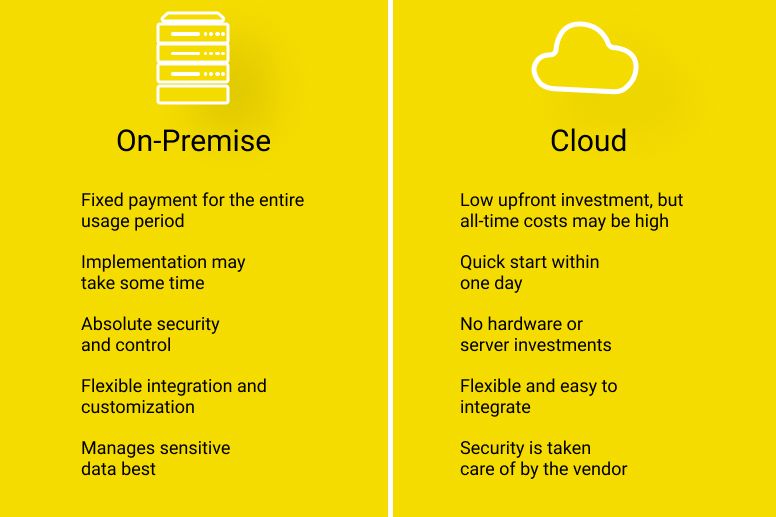
Traditional cloud computing relies on centralized data centers, which can introduce significant latency. Edge cloud distributes computing power to the "edge," enabling ultra-low-latency responses for time-sensitive tasks .
Q3: What are the primary benefits?
The primary benefits are a drastic reduction in latency (up to 33x faster), lower energy consumption, improved reliability, and the enablement of new applications like autonomous vehicles and smart manufacturing .
Q4: What industries benefit most?
Industries with latency-sensitive applications benefit most. This includes automotive (autonomous driving), manufacturing (industrial IoT), healthcare (remote surgery, real-time monitoring), and media (AR/VR, interactive streaming) .
Q5: How can Innovative AI Solutions help?
We help organizations design, build, and operationalize edge-cloud strategies. Our expertise covers workload assessment, platform selection, and implementation, helping you unlock the potential of edge computing. Based in Delhi, serving clients across India.
Why Delhi is a Great Hub for Edge Cloud Innovation
Delhi and India are at the forefront of digital adoption and network modernization. The region's combination of a massive, mobile-first population, a growing telecom network, and a strong IT services ecosystem make it a natural hub for developing and deploying edge cloud solutions.
What We Offer at Innovative AI Solutions
-
Edge Cloud Strategy: We help you identify high-value use cases and design a migration roadmap.
-
Architecture Design: We design cloud-native architectures that intelligently allocate workloads between edge and core cloud.
-
Implementation Support: We help you deploy and manage edge node infrastructure and integrate it with your existing systems.
Final Thought
The shift is clear: from a centralized cloud to a distributed, collaborative continuum. Edge cloud computing is not just an evolution; it is the fundamental architectural shift that enables the next generation of real-time, intelligent applications. The organizations that invest in this technology now will be the ones to lead in the low-latency, AI-driven future.
Contact Us:
Phone: +91 7464 099 059 / +91 9689967356
Email: info@innovativeais.com
Address: Netaji Subhash Place, Pitampura, Delhi – 110034
Website: https://innovativeais.com
About the Author
Abhishek Kumar
Founder & CEO, Innovative AI Solutions
5+ years building AI, cloud, and enterprise systems. Based in Delhi, serving clients across India.
Related services: to apply this in your business, explore our cloud services and AI development services.