The Big Question
What happens when your cloud infrastructure's environmental footprint becomes a board-level concern? When investors demand ESG reports with verifiable carbon data, regulators enforce energy efficiency standards, and customers choose providers based on sustainability commitments?
Green Cloud Computing answers these questions by embedding sustainability into the very fabric of cloud services. The shift from traditional cloud to green cloud represents a structural change in how enterprises think about technology, strategy, and sustainability .
What Is Green Cloud Computing?
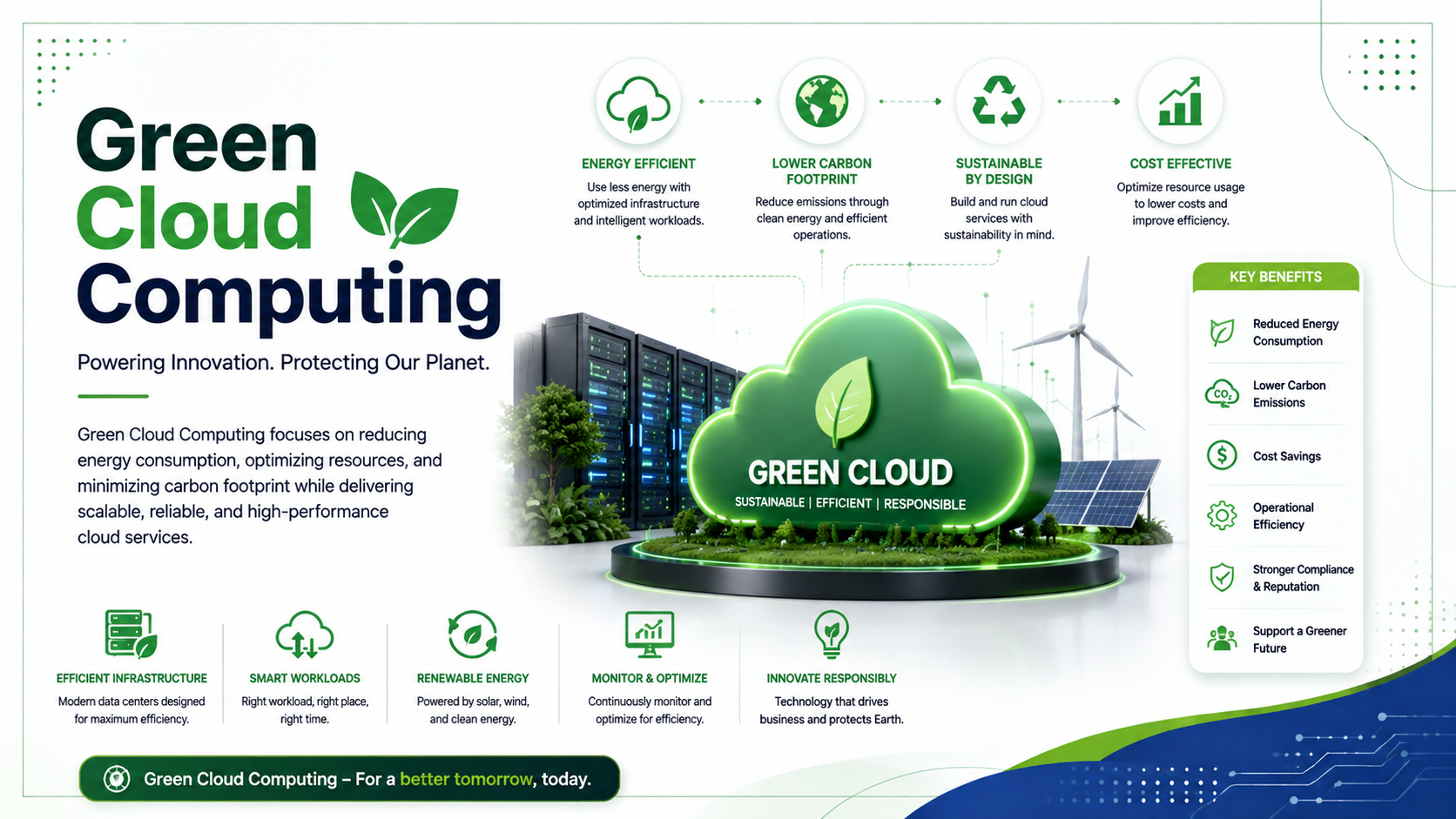
Green Cloud Computing refers to the use of eco-friendly technologies in data centers, combining the power of cloud computing with environmentally responsible practices . It represents a commitment to energy efficiency, reduced carbon footprint, and sustainable resource use going beyond traditional cloud computing which focuses primarily on flexibility and scale .
The Core Distinction
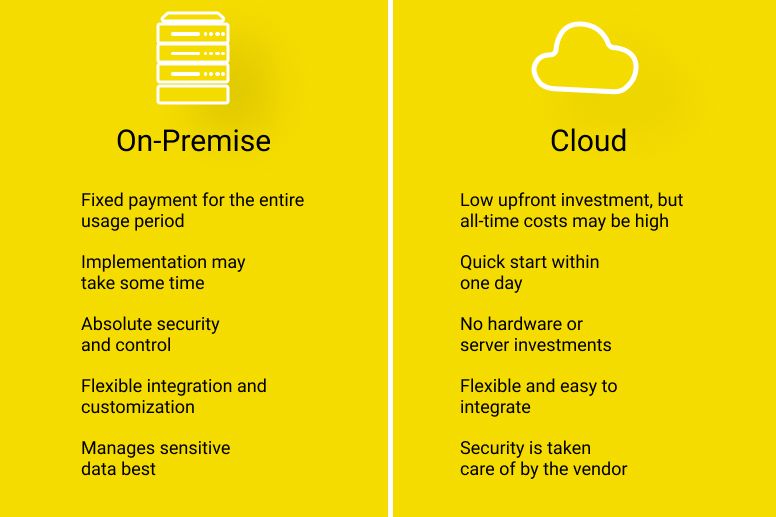
While all green cloud computing can be considered cloud computing, not all cloud computing can be considered green. The difference lies in the intentional and proactive approach to sustainability that Green Cloud Computing embodies .
The goal: To reduce energy consumption, carbon emissions, e-waste, and resource consumption in cloud infrastructures while maintaining high standards of performance and reliability .
Key Benefits of Green Cloud Computing
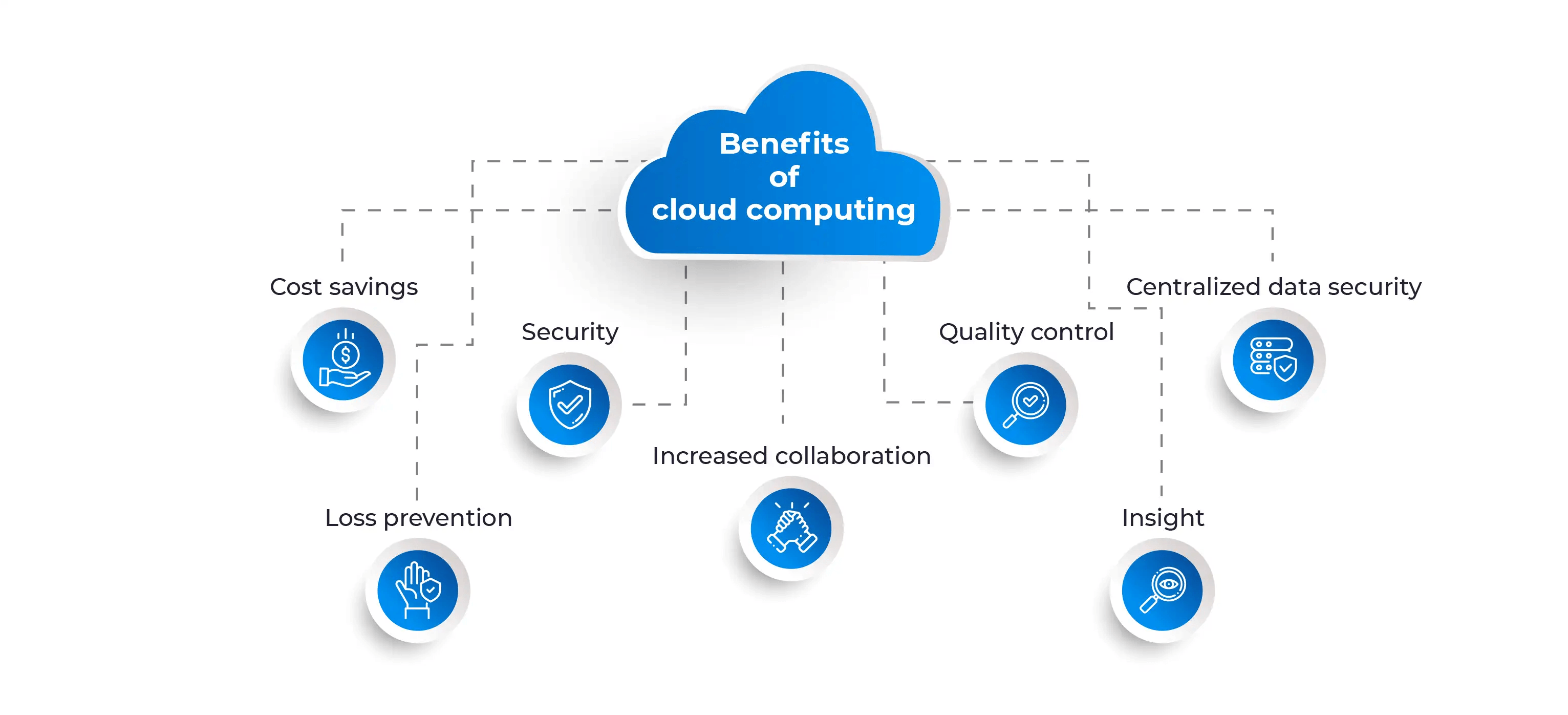
Organizations adopting green cloud computing realize significant value across multiple dimensions:
| Benefit Category | Impact |
|---|---|
| Lower Operating Costs | Consolidating infrastructure and improving utilization reduces energy bills and operational expenses. Moving to the cloud can reduce Total Cost of Ownership (TCO) by 30-40% . |
| Regulatory Compliance | Helps meet ESG reporting requirements under frameworks like the EU's CSRD, IFRS S2, and GRI 305 . |
| Investor Confidence | Firms with high ESG ratings show significantly higher operating margins . |
| Competitive Advantage | 76% of companies now prioritize the use of environmentally friendly cloud solutions . |
| Operational Efficiency | Pay-for-use models and auto-scaling reduce waste and improve resource utilization . |
How Green Cloud Computing Works
Cloud service providers employ multiple strategies to achieve greener data centers. These efforts target efficiency improvements in four key areas: energy sources, facility design, infrastructure optimization, and workflow management .
1. Energy Sources: Transitioning to Renewables
Green cloud providers prioritize using renewable energy wind, solar, or hydro to power their data centers, often with large battery banks for energy storage .
Real-world commitments:
-
Google Cloud has been carbon-neutral since 2007 and matched 100% of its electricity consumption with renewable energy since 2017, now pushing toward 24/7 carbon-free energy by 2030 .
-
Amazon Web Services reached 100% renewable energy matching in 2023, reporting its cloud infrastructure is 3.6 times more energy efficient than traditional on-premises data centers .
2. Facility Design: Efficient Data Centers
Providers locate data centers in cold climates, underground, or even on the ocean floor to reduce cooling costs. They also apply excess heat generated in data centers to warm nearby buildings .
Key innovations:
-
Advanced cooling systems: Liquid cooling and modular rectifier-to-inverter configurations for achieving zero-level PUE (Power Usage Effectiveness) metrics .
-
Smart facility management: Using AI-powered cooling systems and predictive analytics to optimize energy consumption .
3. Infrastructure: Hardware and Software Optimization
Green cloud providers deploy hardware that consumes less energy and use strategies such as dynamic voltage and frequency scaling (DVFS) to reduce power consumption .
Key technologies:
-
Virtualization: Enables server consolidation, allowing multiple workloads to run on fewer physical machines .
-
Containerization: Lightweight, efficient resource utilization .
-
Heterogeneous CPU-GPU scheduling: Optimizes computational energy usage .
-
Tiered storage solutions: Optimizes data placement for efficiency .
4. Workflow: Intelligent Resource Management
Carbon-conscious workload scheduling matches computational tasks to the availability of renewable energy, ensuring performance objectives are met with minimum environmental impact .
Key strategies:
-
Dynamic workload scheduling: Shifting workloads to times when renewable energy is abundant .
-
Auto-scaling: Adjusting capacity based on demand to avoid overprovisioning .
-
Right-sizing resources: Matching compute resources to actual workload requirements .
-
Automated virtual machine relocation: Tracking carbon intensities by following changes in regional power emission rate levels .
The Role of AI in Green Cloud Computing
Artificial Intelligence is emerging as a major catalyst in the quest for more efficient energy consumption in cloud computing . The synergy between AI and Green Cloud Computing is redefining how companies approach digitalization and sustainability .
AI-Powered Energy Optimization
By analyzing energy consumption patterns, AI enables a precise understanding of actual needs, facilitating adjustments. This ability to predict and adapt directly contributes to consumption reduction a key aspect of Green Cloud .
How AI helps:
-
Predictive analytics: Machine learning algorithms anticipate usage peaks and adjust capacity accordingly, minimizing energy requirements during periods of lower demand .
-
Intelligent cooling systems: AI optimizes data center cooling by analyzing temperature patterns and adjusting systems in real-time .
-
Advanced predictive analytics: Detects anomalies and optimizes overall data center efficiency .
Better Data and Resource Management
AI can identify redundant or unnecessary information by analyzing data patterns, contributing to more efficient use of storage space. This optimization reduces both storage-related costs and the ecological footprint associated with maintaining large-scale infrastructures .
Emerging trend: Recent developments incorporate machine learning to dynamically balance server loads, enhancing adaptability to changing workloads and overall energy efficiency .
The Business Case: Why Green Cloud Matters Now
The Regulatory and Investor Pressure
The push for greener, more efficient cloud operations is shaking both sides of the screen whether you're running the servers or renting them .
-
Regulatory: Since 2018, more than 170 new ESG regulations have been introduced globally. The EU's CSRD now requires around 50,000 companies to publish audited sustainability data .
-
Investor: 72% of businesses say ESG performance increases investor appeal .
-
Customer: 76% of companies now prioritize the use of environmentally friendly cloud solutions .
The Financial Case
Green cloud isn't just about compliance it's about competitive advantage:
-
Lower operating costs: Reduced energy consumption translates directly to lower cloud bills .
-
Improved access to ESG financing: Companies with strong ESG performance attract better financing terms .
-
Enhanced brand reputation: Demonstrating commitment to sustainability builds trust with customers and partners .
Real-World Results
Accenture helped a mining company migrate 2,416 servers to the cloud using myNav Green Cloud Advisor, cutting the data-center carbon footprint by 90%, saving 5,000 tons of CO₂, and unlocking significant cost and efficiency benefits .
Implementation Roadmap: Building a Green Cloud Strategy
Phase 1: Assessment (Weeks 1-4)
-
Audit your cloud footprint: Identify idle servers, inefficient workloads, and areas of over-provisioning .
-
Set carbon reduction targets: Define clear goals aligned with your organization's ESG commitments.
-
Select sustainability-focused providers: Evaluate cloud providers based on their renewable energy commitments and efficiency practices .
Phase 2: Optimization (Weeks 5-8)
-
Implement auto-scaling: Scale resources dynamically based on demand to reduce waste .
-
Right-size resources: Eliminate over-provisioned instances .
-
Adopt serverless architectures: Use Function-as-a-Service (FaaS) to eliminate idle compute consumption.
Phase 3: Advanced Strategies (Weeks 9-12+)
-
Enable carbon-aware workload scheduling: Align workloads with renewable energy availability .
-
Deploy AI-powered optimization: Use machine learning for predictive resource management .
-
Integrate sustainability metrics: Include carbon footprint and energy efficiency in performance dashboards.
Frequently Asked Questions
Q1: What is Green Cloud Computing?
Green Cloud Computing refers to the use of eco-friendly technologies in data centers, combining cloud computing's power with environmentally responsible practices. It represents a commitment to energy efficiency, reduced carbon footprint, and sustainable resource use .
Q2: Is the cloud already green?
Not exactly. Traditional cloud computing focuses on flexibility and scale, not necessarily sustainability. Green cloud takes an intentional, proactive approach to environmental responsibility .
Q3: What are the business benefits of green cloud?
Key benefits include lower operating costs (30-40% TCO reduction), regulatory compliance, improved investor confidence, and competitive advantage as 76% of companies prioritize sustainable cloud solutions .
Q4: How does AI help green cloud?
AI optimizes energy consumption by analyzing patterns, predicts usage peaks to adjust capacity accordingly, identifies redundant data for storage optimization, and powers intelligent cooling systems for data centers .
Q5: How can Innovative AI Solutions help?
We help organizations design, build, and operationalize green cloud strategies from assessing your carbon footprint and selecting sustainability-focused providers to implementing AI-powered optimization and ESG reporting frameworks. Based in Delhi, serving clients across India.
Why Delhi is a Great Hub for Green Cloud Innovation
India is actively contributing to the advancement of greener and more efficient cloud computing . Indian researchers are publishing extensively on green cloud computing, with conferences and studies in Gharuan, Vijayawada, and New Delhi . The region's combination of IT talent, manufacturing scale, and government support for digital India initiatives positions it as a leader in sustainable cloud adoption.
What We Offer at Innovative AI Solutions
-
Green Cloud Strategy: We help you assess your cloud footprint and design a sustainability roadmap.
-
Optimization Implementation: We help you right-size resources, implement auto-scaling, and enable carbon-aware workload scheduling.
-
AI-Powered Optimization: We help you deploy machine learning for predictive resource management.
-
Compliance and Reporting: We help you meet ESG reporting requirements.
Final Thought
The shift is clear: from treating sustainability as a nice-to-have to embedding it as a core business imperative. Green cloud computing is not just about reducing environmental impact it's about building more efficient, cost-effective, and resilient IT infrastructure for the future. The organizations that embrace green cloud now will achieve both environmental responsibility and competitive advantage.
Contact Us:
Phone: +91 7464 099 059 / +91 9689967356
Email: info@innovativeais.com
Address: Netaji Subhash Place, Pitampura, Delhi – 110034
Website: https://innovativeais.com
About the Author
Abhishek Kumar
Founder & CEO, Innovative AI Solutions
5+ years building AI, cloud, and enterprise systems. Based in Delhi, serving clients across India.
Related services: to apply this in your business, explore our cloud services and AI development services.